I’m a journalist, travel writer, editor and copywriter based in Melbourne, Australia. I write pacy travel features, edit edifying websites and fashion flamboyant copy. My articles and photographs have appeared in publications worldwide, from inflight to interior design: I’ve visited every continent, and have lived in three. Want to work together? Drop me a line… 

Follow


Of pharaohs and heroes: Journey to Egypt
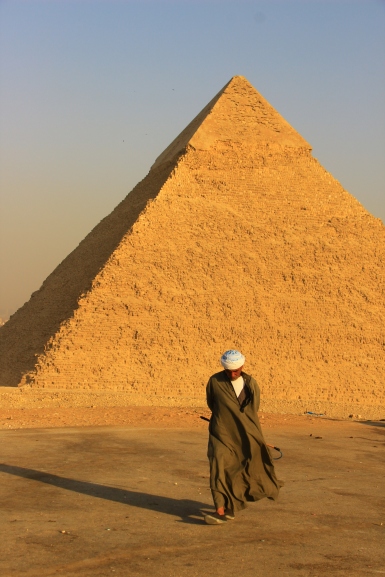
The Pyramids of Giza, Egypt.
Photo: Belinda Jackson

I am so pleased to publish this blog about my recent article in Luxury Travel magazine. This is the first story I’ve written for a mainstream publication about Egypt since its revolution, back in 2011. The feature had the invaluable support of Abercrombie & Kent, which maintains
its Cairo office, staffed by charming, knowledgeable Cairenes.


While
other countries affected by civil unrest and terrorism events have
slipped back onto the travel pages within weeks of the events, I feel
Egypt – where I have lived and continue to return to every year – has
been punished too harshly, and it suffers deeply the loss of one of its
key sources of income.


The people lean heavily on
tourism with good reason: their undeniable treasures include the Pyramids
of Giza, the colossi at Abu Simbel, the gracious and eternal Nile. And
they’re just three of its riches.


Egyptians
say that once you’ve drunk from the Nile, you’ll always return.

Maybe
you’re not up for a cup of river water, hopefully this article will
inspire you to visit – or to return.


‘We
come to visit the gods. Stern of face, empty of eye, they stare. Blank,
sightless eyes see nothing, yet see everything in the future and back to
the ancient world. The colossal sculptures of Abu Simbel are in Egypt’s deep south, touching on the border with Sudan, and are the jewel of the appropriately named Nile in Style journey with Abercrombie & Kent.

“Nowhere
are there so many marvellous things, nor in the whole world beside are
there to be seen so many works of unspeakable greatness,” wrote
Herodotus of Egypt in the fifth century BC. Fifteen centuries later,
he’s still on the money.’

Click here to read on about my journey down the Nile.

Egyptian style makes a comeback in ‘balady chic’ movement

lanternsLast year, I was building a kitchen in my apartment in Cairo. I knew the tiles I wanted – classic arabesque style. You know, I wanted something out of an Andalusian palace or a Turkish mosque in my kitchen, please. I showed a photo to the tile salesman, who smarmily told me that they don’t have those tiles in Egypt.
“You don’t have those tiles? They’re along the walls of the ahwa (traditional café) downstairs!” I fumed.

The roll of his eyes said what his mouth wasn’t saying: “So old-fashioned, crazy foreigner.”

Happily, I found the traditional tiles, now made by a savvy Spanish company (and paid a bomb for them). Since then, I’ve spotted these (new) tiles everywhere, as part of a resurgence in what’s been dubbed ‘balady chic’. The word balady translates as ‘my country’ or ‘local’. So balady chic celebrates traditional Egyptian design, and it’s coming from the cool kids of Cairo.

This trip, I found an awesome tray featuring a reworking of the Hamza, or hand of Fatima, a powerful symbol that wards off evil, from local manufacturer Joud (it’s website is joudness.com – but Egyptians pronounce the ‘j’ as a ‘g’ – cute). I also raided the fabulously haphazard, historical market Khan al-Khalili yet again for yet more beautiful metal light shades (nagafa), belted into elaborate forms in the noisy, dark metal workshops spotted throughout Islamic Cairo. And they’re not a new story, but the handmade soaps (think: milk & honey, and olive oil – how much more Arabian can you get?) and organic cotton towels from Nefertari found their way into my bag for Christmas presents (see nefertaribodycare.com).

Easy on the eye, and better in the stomach, the hottest place in the upmarket, Nile-side part of Maadi is Baladina, for classic Egyptian food such as fatta and shawarma, beautifully done and served, rather ironically, by slim-hipped waiters in gellibayas and little white cotton caps. In fact, there are a few cool, new Egyptian food chains in town: try the ‘healthy’ koshary, made with green wheat and brown rice, at Zooba, Cairo Kitchen published its fantastic cookbook last year and I love El Dokan’s balady décor.

So great to see Egyptians taking pride in their own design history. Long may it last (before it gets copied by knock-off foreign companies).

Notes from a roadtrip: Egypt

I’ve been told to sit and be quiet while we gun it to Cairo, along the Red Sea coastline.


roadtrip4

The Driver needs to concentrate, dodgung potholes and trucks covered with pictures of Mickey Mouse – which doesn’t make them benevolent road companions in the slightest.

From the road from El Gouna, in Egypt’s south coast, we glimpse the Sinai peninsula – that much maligned buffer between Egypt and its arch-rival, Israel. We also spy container ships lurking in the bright waters, waiting their turn to pass through the Suez Canal.

At 3in el Sokhna now, having paused for a speeding ticket and salmonella at a roadside petrol station.

I can hear prayers from the mosque while we wait to pay the road toll, admiring the colours of the desert at sunset.


KNOW IT ALL: Alexandria, Egypt. Five essential things to consider before you go…

On the Corniche, at Alexandria, Egypt

KNOW IT ALL: Five essential things to consider before you go… 


1 You will get lost the minute you
turn inland from the Corniche, which runs along the waterfront. Just
accept it. 

2 Egyptians call it Iskandariyah, but most people understand
Alex. 

3 Steer clear of the city in July and August.

Cairo’s playground goes crazy in
summer: expect traffic jams and you won’t see the sand for beach
umbrellas. 

4 Avoid Alex’s grubby, public beaches and go private. Montaza
and El Maamoura are clean and funky, with paid admission. San Stefano
beach, opposite the Four Seasons hotel, also has a happening beach club
scene. 

5 Historically inhabited by Greeks, and by the sea: eat fish! The
best include Hosny in Montazah Beach and the Greek Club, near Qaitbay
Fort, which has spectacular views.


This article by Belinda Jackson was published in Sydney’s Sun-Herald Traveller section.

Summer reading: a not-very-definitive list

My first (and last) English Christmas was a shock to many senses: there was snow (albeit very light, very dirty), there were Brussels sprouts (surely only the English consider them a celebratory food) and there was television.

As our Australian marketing machines constantly tell us, our Christmases are all about the beach, cricket and low-level sunburn. So to be huddled in front of the telly watching soap omnibuses seemed a curious way to spend the festive season.

It’s not quite television, and the weather here in Melbourne has been exemplary this year: not too hot, not too cold, but I’ve come over all Northern hemisphere and am catching up on a small mountain of unread fiction, with a travel bent, of course.

Here’s a little list of recent releases from Australian authors that have made a welcome appearance on the bedside table.

The most recent of the list is by prolific South Australian author Fiona McIntosh, who I have long admired for her adult fantasy series (think Lord of the Rings fantasy, not the other type, smutsters). She has turned out a fast-paced romance set in WWI Cairo, Gallipoli and post-war London. Nightingale ticks all the boxes, with handsome men, golden women and love found and lost in traumatic times. Does the girl get her man? It’s over to you… (Penguin Books, $29.99)

Action seekers know Matthew Reilly is the man to turn to when you want to be left breathless from reading (to give you a suggestion of his pace, the Sydney writer drives DeLorean DMC-12 – the car from Back to the Future). His latest book, The Great Zoo of China is, as the title indicates, set in China and has an absolute cracker of a premise, which I just can’t tell you about. His heroine, CJ Cameron, is a tad too tough, tenacious and intelligent for wimpy me to relate to, but I could not put this book down. That was a week of lost sleep (Pan Macmillan, $39.99)

And finally (not in the picture, as it’s already been nabbed by my mum), Stateless is the second in the Heritage trilogy about the evolution of the State of Israel. Written by Alan Gold and Mike Jones, it caused a ruckus in our house with the highly controversial throw-away line that the Egyptian army is known to be cowardly. Eeep! Otherwise, Stateless races along with plenty of secret plots and dastardly tyrants from Roman-occupied Jerusalem to post-WWII Russia. The first in the trilogy is called Bloodline, I’ll be seeking it out. (Simon & Schuster Australia, $29.99)

The next on the list is Tony Park‘s The Hunter (‘A missing woman, a serial killer at large… man is the most dangerous predator of all’). I’m not that into murder as entertainment, but this book moves from South Africa to Zimbabwe and the Masai Mara game reserve in Kenya, which I love. And in the appendices, Park also shares travel tips from his extensive experience of travelling in Africa (Pan Macmillan, $29.99)

I hope you’re all enjoying a great summer read, or if you’re further north and not nose-in-book, the plotlines in the soaps have improved.

See you all in 2015!

Belle

Eid Mubarak (and no gory photos, this year)

Kakh al-Eid. Photo: Belle Jackson

Eid Mubarak (Happy Feast), every one.

This may be my first posting during the annual celebration of Eid al-Adha that doesn’t feature a photograph of a bloody carcass. Instead, I offer you a far more genteel photo of Kahk alEid, a sweet shortbread that’s traditionally eaten during the Small Feast, Eid al-Fitr, which follows the fasting month of Ramadan.

Eid al-Adha is the Great Feast, which celebrates the occasion when God asked the prophet Abraham to sacrifice his son. Abraham agreed, but at the last minute, God replaced his son with a sacrificial lamb. So today, if you can afford it, you sacrifice a four-legged animal and offer a third of the meat to the poor (of which there are many in the Middle East at the moment, it’s sad to note).

Back home, here in Australia, the Lebanese bakery where I bought these kahk al-Eid told me they call the tasty pastry ma3moul. Either way, its crumbly sweetness is perfect with a glass of dust tea (no sugar). This shortbread pastry is filled with walnuts and scented with orange blossom water and dusted with icing sugar. There’s also a pistachio and rosewater version which sounds great but leaves wanting, and yet a third with dates, which is sprinkled with sesame seeds.

And instead of watching butchers across Egypt sacrifice animals, and seeing the blood-red handprints
that people use as a talisman against the evil eye, we carved an enormous leg of Australian lamb (a really, REALLY big lamb), ate salads scented with cinnamon and cumin, and the homesick amongst the Egyptian diaspora in my house talked of home, and how it has changed couple of years.

The traditional greeting during the feast is ‘Eid Mubarak,’ where ‘mubarak’ means ‘happy’ – not to be confused with the deposed military dictator Hosni Mubarak. Now, as you well know, there’s a new military dictator, Fattah al-Sisi. The question on the streets in Cairo is: should we now be saying Eid Sisi?

(Oh you’re a bloodthirsty lot, aren’t you? Yes, those links will take you to postings from previous years. Please don’t click there if you’re a squeamish type. And if you do click there, and then get upset, don’t go complaining to me. I told you so.)

Ten travel experiences that will change your life


Characters of Egypt. Photo: Belinda Jackson.

If you’ve been living under a rock (or possibly not in Australia), you may have missed the launch of the fabulous new Traveller website, from Fairfax Media. To kick off, a handful of us were asked for 10 travel experiences that changed our lives. I nominated hanging off a glacier on Russia’s Mt Elbrus and watching the cultural puzzle click in India, but also experiencing the absolute inability to communicate (in South Korea) and travelling in the Middle East (oh, there are SO many ways this has changed my life). 

Here are my two published experiences below, and you can click here to read the full story, which includes seeing Rome’s Colosseum, going on safari on the Masai Mara and visiting the former Nazi concentration camp Auschwitz.

There are holidays that help you relax and unwind, then there are
travel experiences that change your entire outlook on life. Here, some
of Traveller’s most well-travelled writers name the experiences that
changed their lives – and could change yours, too.

Where: South Korea and beyond

The experience: Finding yourself in a truly foreign culture
How it will change your life:
One
of the great joys of travel is connecting with a local without a tour
guide babying you through the conversation.There are those little
milestones – the first time you buy water, order a meal, score a date in
a foreign language.
I thought I was pretty slick: I could fumble
French, shout Spanish, read Russian. My mime skills were excellent, the
vocabulary list in my travel guides well-studied. But my global
communication skills foundered, profoundly, in South Korea.
I’m
sitting in an empty café in Seoul. According to the photos around us, it
sells noodles. I would like noodles. Every time I suggest a noodle
dish, the waitress shakes her head. So I point. She shakes. Point.
Shake. Point. Shake. I give up, I find a vending machine. (Later, I
learn I was sitting in a closed restaurant.)
Having the complete inability to communicate is a humbling experience. It is a reminder that the world is a far bigger place than just you and your orbit. – Belinda Jackson
More: english.visitkorea.or.kr/enu/index.kto

Where: The Middle East

The experience: See life beyond the newsreels
How it will change your life:
They do things big in the Middle East: the Great Pyramid of Gizas,
Iran’s Persepolis, the Sahara desert and the Empty Quarter, to name a
few. Steer clear if you like orderly queues, traffic lights and 10pm
bedtimes.
The standard backdrop for the Middle East in news
bulletins is of tanks, screaming masses and men in epaulettes. The
reality on the ground – save a few war zones – is about traffic jams,
happily shouting friends and men in epaulettes (what’s not to love about
a good uniform?).
Men and women live in different spheres, pork
and booze are largely off the menu and if you’re foreign, you’re rich.
Yes, there are camels and shisha (tobacco water pipes) and you will see
belly dancers. Yet there are also chic beach resorts, the sneaky
late-night bars and saucy cabarets, the deep and abiding love of
football (that’s soccer). And while headscarves can polarise a nation,
from Iran to Oman, the passion for fashion is alive and kicking, with
the same obsession for black.
Let go: travelling in the Middle
East requires sinking deep into a rich, cultural morass. Deep down,
you’ll realise, we all just want the good life. – Belinda Jackson.

2013: a year in the world

Sri Lanka masks

Happy New Year!
By now, most of you in the northern hemisphere should be scrounging around for the asprin or box sets of Dr Who – or, judging from Facebook, run a marathon or some other such oxygen-sucking activity. Here in the southern hemisphere, there are thoughts of work tomorrow. Ugh. Let’s not go there.

It’s raining here, the Christmas pudding is back on the boil and it’s time for tea and reflection. The tea is Russian Earl Grey, from Harrods, which seems a good way to kick off a year in the world…

…I’m not going to win points for originality, but I fell in love with London again: the cheesy, the touristy, the lot, from Harrods to London Bridge.
The city’s on a high, with energy levels up there with the London Eye. The Tate Britain has
just opened after a £45-million renovation, the Shard glimmers over
Southbank, the grungy quarters have reinvented themselves as edgy design
destinations, cashing in on their bad old days, when the High Street
might be known as the Murder Mile… it was all fabulous (except the serious cold snap, but hey, that’s London in November).

Leopard spotted in Yala National Park, Sri Lanka


For sheer sell-your-pants-off stories, Sri Lanka left all other destinations in the shade. It didn’t hurt that the Lonely Planet named it one of 2014’s must-visit countries.The food, the fabulously quirky fantastic shopping, the leopard spotting and the warmth and security of the country all stitch together for a great holiday destination, without overwhelming the sub-continental novice.

This was also the year I learned to make gnocchi, rekindling a post-Aitkin love of pasta.
The destination: the King Valley, in northern Victoria, just a shade
under our modest little Alps. The teachers: the Pizzini and the Simone
families. Forget milk and honey, this is the land of pork and prosecco.

The year 2013 also finally brought a return to Egypt, this time
to bring the Small Girl to her other spiritual (and ethnic) home. I saw
how a population can survive when all the news reports we see tell us
they are being gassed in the streets and chased by tanks. They just keep
going on: going to work, to school, to the market. And they just keep
hoping the generals and the politicians – the big men – treat them
better than pawns on a chessboard.

Fashion parade in Thimphu, Bhutan

I know Egypt will recover, hopefully
soon after the next presidential elections. But in the meantime, Tahrir
Square, the scene of the revolutions, is lush and green, well maintained
and clean. I have never seen it look better. So there is some good come
out of this whole, messy Arab Spring.

The most unexpected experience was attending Bhutan‘s first indigenous fashion parade, beneath the stars in the mountain kingdom. Visiting two tiny countries at either end of India – Sri Lanka and Bhutan – was an eye-opener as to the powerhouse of the sub-continent, and how these tiny nations fight to maintain their identities in the face of ‘a billion shouting Indians’ (their words, not mine).

This year and next mark a flurry of solar activity, resulting in the best showings of the Northern Lights, the Aurora Borealis.

Deck 9, Midnatsol,

About the same time as I was teetering on a rolling deck of the Hurtigruten, somewhere in northern Norway,
trying to take a photo that wasn’t just a series of squiggles, the
Southern Lights, the Aurora Australis, were reportedly putting on a
great show in Tasmania, about an hour’s flight from home. With another winter of high solar activity ahead, maybe that’s next year’s goal?

Here’s wishing you peace and happiness for 2014 (with the Year of the Horse promising prosperity, to complete the trifecta).

I shopped the world’s largest IKEA and survived: Stockholm icons

This is not IKEA, this is Nybrokajen, one of Stockholm’s beautiful
waterfront streets. Far more picturesque. Photo: Belinda Jackson.

It’s been pretty wet here in Stockholm. I’ve traded Cairo’s sun for snow, Giza ponies for Dalarna horses. The people in both Egypt and Sweden both wear a lot of black, but instead of busting my chops to exercise in Ahly Sports Club in Cairo, today I did my daily walk in the world’s largest IKEA, in Kungens Kurva, in southern Stockholm.

The trip was an essential one for my brother, in the midst of renovations, but yes, I was keen for a perve.

Let me report back: the store layout is just as confusing as any other IKEA store, they really do eat meatballs and it was packed with families on a wet Sunday afternoon. One of the ninth hells? Quite possibly. However, some may be appeased by the revelation that they serve booze in the cafeteria with those meatballs. 

I was going fine until I split from the Swedish speaker and on the hunt for bathroom hooks, when I realised there are no English signs, a marked absence of staff and my shabby Swedish doesn’t include the word for ‘bathroom’.

Yes, it was big, mighty big. But I survived, and recuperated with the classic cinnamon bun, kanelbullar (dreadful version from a supermarket, here’s a recipe for a real one) and the delicious-sounding, but absolutely revolting saffron buns, lussekatter as well as västerbottensostpaj (a super-rich, super-fabulous cheese pie that rivals anything I ate in Cairo for cholesterol).

Next stop on a quest for all things Swedish: the new ABBA museum. Oh yeah, I’m ticking the boxes…

Sign of the times at the pointy end of Egyptian tourism

Photo: Belinda Jackson
The first time I visited the Pyramids, I went through the front door with several hundred other foreigners, all lining up for a photo of ‘kissing’ the Sphinx or ‘holding’
a pyramid by the fingertips.
The other day,  I went round the back, where a
handful of guards nearly fell over to see someone, and the touts couldn’t believe their luck at not one, but two carloads of visitors, even if they were all Egyptian (including one suspiciously blonde one in the middle).
Sitting on the boot of our cars, they literally corralled us into a private car park to negotiate the hire of two caretas (carriages) and two horses.
Those who have been held hostage high on a camel until they paid up big will be pleased
to know not even the locals can resist the Giza Pyramid mafia.
A camel driver. Photo: Belinda Jackson
Let me tell you this: Egyptians visit the Pyramids in a whole different way to us foreigners. Toss the guidebook, forget about learning kings’ names and studying informative plaques earnestly.
It’s all about the photos, the freedom of the desert surrounds and the physicality of being beside something so magnificent, that you forget about the traffic jams, the pollution, the protests and the curfews that see you trapped indoors after 7pm on a Friday night thanks to the current army
curfew.
The newspapers are reporting an 80 percent drop in tourism to Egypt, which, based on what I saw at the Pyramids on a sunny autumn afternoon, should read more like 95 percent.
There were three young Americans, skinny, bearded and wearing
the obligatory Arafat scarf, there was a Euro-couple celebrating the
end of a Cape Town to Cairo adventure, and a small tour group of Russians
snavelling basement-bargain travel. That’s all.
Forlorn camel owners perked up when they saw us coming, and Giza’s notoriously
overworked and underfed horses were fleet of foot and ready to run. My little
grey mare, Sousou, is surely the fastest pony in Giza.
It’s been a very long time since I rode around the Pyramids in the daylight. Usually, I’d
ride on a full moon, flat out down the plateau at full gallop, breathing in the
cool desert night air. In broad daylight, it’s a whole different ballgame. You
see the stones the size of basketballs that your horse is dodging. You see the
concrete wall that the horses aim for at full tilt, before swerving left to
pass through the exit gate. You see the snarling curs that lick around the
ponies’ hooves, snapping at ankles as you pass.
It’s consoling to know that the Pyramids remain unchanged while Egypt twists and
wrenches itself into a new form. But the lesson from Afghanistan and China is
that you can never take even heroic art and architecture for granted.
Global Salsa

Well, you’ve scrolled this far. What do you think? Drop me a line, I’d love to hear from you.

Privacy Settings
We use cookies to enhance your experience while using our website. If you are using our Services via a browser you can restrict, block or remove cookies through your web browser settings. We also use content and scripts from third parties that may use tracking technologies. You can selectively provide your consent below to allow such third party embeds. For complete information about the cookies we use, data we collect and how we process them, please check our Privacy Policy
Youtube
Consent to display content from - Youtube
Vimeo
Consent to display content from - Vimeo
Google Maps
Consent to display content from - Google