Ta-daaaaaaaaaah! It’s Dublin. Hopefully all you need to know (and some you didn’t). But try to squish a city into two pages, and there’ll be some casualties.
Click here to get the lowdown. Slainte!
I’m a journalist, travel writer, editor and copywriter based in Melbourne, Australia. I write pacy travel features, edit edifying websites and fashion flamboyant copy. My articles and photographs have appeared in publications worldwide, from inflight to interior design: I’ve visited every continent, and have lived in three. Want to work together? Drop me a line…
Ta-daaaaaaaaaah! It’s Dublin. Hopefully all you need to know (and some you didn’t). But try to squish a city into two pages, and there’ll be some casualties.
Click here to get the lowdown. Slainte!
So I was in the Philippines last week, and in a post-tropics slump, all I feel inclined to show you is this picture. Now, it doesn’t look so amazing, but it IS. Yes, it’s a car park. But what a car park.
Manila is renowned for its filthy traffic jams, and there’s almost no room on the streets for the motorbikes, taxis and jeepneys – extended jeeps that are the local public transport – so this car park is the coolest. It stacks cars up along a wall, moving them up and down, and even left to right – like pieces of lego.
Hand on my heart, I can safely report this is the first time I have ever taken such a picture. It may well be the last…
The fish are elusive, the ancient rock art sensational and camp conditions suited to gourmet tastes at Kimberley Coastal Camp, in northern Australia.
Ass’s milk may be off the menu but there are other ways to feel like Cleopatra.
It’s a truism that to become beautiful, you become sinfully ugly in the process. Take, for example, this Egyptian treatment that promises to turn me into a velvet-skinned vixen: strip naked, feed the skin a sticky marinade and get mummified in papyrus. Sooo attractive.
It’s hot and the pollution is thick as Vegemite back in Delhi and it’s only 6am. Love a good start to the day. Delhi’s main train station is doubling as a dorm this morning, with bodies stretched out on every surface. They roll impatiently as I wake them with a vigorous exercise in daylight robbery with the rickshaw drivers.
My last day in Delhi is a mild disaster: it’s Sunday and all the main markets are closed – Delhi has gone out for brunch. I’m up early, so may as well chase some saris around Purana Kila, the old fort, for some nice photos, and then hunt down some decent coffee at Open Hand cafe in the backpacker paradise of Pahaar Ganj before lunch with my Kashmiri fixer extraordinare, Shaafi. The coffee is as good as I was led to believe, and I’ve even picked up some gorgeous Earl Grey tea and cruised an overpriced emporium selling Kashmiri stuff.
It happens in every country that the next/last city is more expensive than the city you’re currently staying (and hopefully shopping) in. And there’s always a convincing reason. The Varanasi traders push the point hard. “Delhi is so expensive because the tourists are there and it’s a big city. If you buy from the source, it’s cheaper,” says one persuasive shopkeeper.
Yet in Delhi, they tell you they have the buying power, so it’s economies of scale that keep the prices down. Just creates a holiday filled with buyer’s remorse or no shopping done at all. But delightfully, the emporium makes my Kashmir purchases seem like downright bargains. Oh I’m such a sceptic. Perhaps everything I bought is plastic/nylon/woven by non-virgins etc.
Back at the hotel, as I manhandle my massive luggage into the lift bound for the airport and Australia, I meet a ghostly Englishman covered in heavy bruises, great chunks gouged out of his bloodied legs and lots and lots of that yellow paint that mums put on your knees.
“What happened to you?” I ask, being careful not to get too close.
“Fell under a houseboat in Kashmir. It was a bit rickety.”
“Bloody hell. And?”
“Two weeks in a Kashmiri hospital…” he says with a touch of battle pride. “Between the call to prayer five times a day and the dead bodies waiting for three days to be collected…”
He tails off. I’m glad he’s tailed off.

From first glance, there’s not a whole lot going for Jammu, one of the main towns of the northern Indian region of Jammu & Kashmir (J&K).
The areas around railway stations are notoriously grotty. So this being India, we’re talking multiples of grottiness.
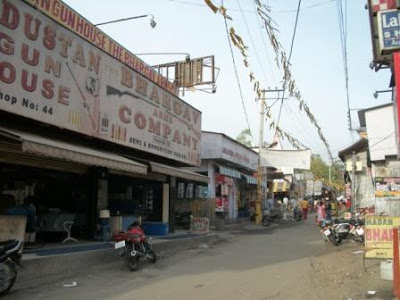
But perhaps I’m being too harsh: with a quick walk around the surrounds, I cruise the shoddy markets for a shotgun, a fake pashmina and also freshly cut up papyrus doused in lemon. So it can’t all be bad.
Hmmm. Apparently I have to take the shotgun off the list. Nazir from the super helpful tourism office (who lists his weaknesses as sunglasses and American women) has just clarified: I need to be in the army to buy a gun from one of the many shops I just walked past. However, the fake pashminas and papyrus are all mine for the taking.
Tonight: it’s the overnighter to Delhi and then after a quick shop, it’s onward and upward to Hong Kong and (hopefully) sunny Safety Beach!
PS: some of you will know I’ve already hit Safety Beach, but thanks to dodgy internet, couldn’t post. So here you are…
Unfortunately, there is rather more trekking and far less pony action that I’d hoped on this pony trek in the Kashmir valley.
Not too early this morning, after a small temper tantrum about sitting on an animal whose legs are only marginally longer than mine, I team up with Balah (‘White’ in Kashmiri) and Moonti (aka ‘Pearl’), the ever-patient Salim and the ponies’ owner, Aktor, to climb up to where the snow starts on what is apparently classed as a mid-Himalayan hike.
At 19, Aktar, with his Bollywood looks, bemoans his inflamed wisdom teeth and betrothal to a girl he doesn’t like. Balah and Moonti take us down toward the village, past women collecting rare medicinal mushrooms that reap 10,000 rupees (about $250) a kilo (hmmm, that sounds SO suss when I put it like that) or balancing massive loads of firewood on their heads, then we turn right, straight up the hill.
“Come with us!” calls one of the women from a small group, energetically pacing the track in scarves and flowing trousers. They’d leave me for dead. Mind you, so do the ponies, who once Aktar decides it is too rough to ride them, run off up the mountain to leave me gasping in their wake.
It’s too early in the season to do the celebrated ridge-top circuits. The peaks are still crowned with snow that’s melting into the rushing river that passes my tent with a roar like Delhi traffic.
So we climb to the point where the snow peters out and the wildflowers start – little purple wannabe-orchids, yellow cowslips and small clusters of pretty white blooms. In another couple of weeks, the pastures will be full of gypsies and their goats, sheep and ponies. They’re on the way up here, from 600km from down south, droving their animals up to the summer grazing.
But for now, it’s just the five of us, a picnic of boiled eggs, potatoes, carrots and more fabulous macaroons, and the whoosh of the wind through the pine trees.
So we’re in the jeep gunning it to the hiking trailhead of Naranagh, in central Kashmir. We are: my guide, Salim, the driver Daba and a small white chicken from Delhi.
Daba, who’s young and cheerful, has an eye for the ladies, and the flash of a sequined dupatta (scarf) has his attention wandering from the road to the fields where such well-dressed winsome creatures are working.
Thankfully, the chicken kicks up a racket if Daba takes the corners too sharply, which send the little white bird skidding across the back seat. His rebuke makes Daba slow down, and for that I’m happy.
The fields are lined with fresh green poplars and fields of bright yellow mustard flowers and there’s still snow on the high peaks.
A hundred roadsigns flash by. Reading roadsigns in Kashmir is like reading a Forrest Gump book: “Life is a journey. Complete it.” “Mountains are for pleasure. Only if you drive at leisure.” And my favourite, obviously targeting female Punjabi tourists, “Don’t gossip, let him drive.”
For a region so torn apart by war (which of course everyone here blames on Pakistan), Kashmir is obsessed with safety.
We reach the camp and dump our gear and I check out my tent for the night. Lots of blankets. Hot water bottle. Torch. Toilet paper. Excellent. But I’m worried about the chicken. Will it survive the cold night? I should have let the guys sacrifice it on the butcher’s concrete steps the minute we bought it.
However, back in the kitchen tent for hot milky tea and macaroons, I hear a familiar squeak and it’s the chicken, nosing around the camp stove. It gets greedy for warmth and with a squawk, it’s singed its features and is running around the tent, screeching. Into your box this minute, chicken.
The village of Naranagh is dominated by an old Hindu temple, whose picturesque ruins sit on green grass nibbled to MCG levels by a battalion of trekking ponies, making it the perfect place for … a game of cricket.
All Kashmiri boys play cricket and, it appears, all Kashmiri boys can bowl. After admiring their skill while the girls are schlepping past with urns of water on their heads, we take a preparatory trek up to a local beauty spot, two hours up, an hour back along a rushing river fed by the summer thaw. It’s good to be in the clean air after the fug of Delhi, but my thighs aren’t so grateful.
That night, the scent of fragrant Kashmiri tea, with its cardamom, cinnamon and sugar, pervades the tent, the guys joke in a mix of Kashmiri and the local gypsy dialect, the chicken is having chicken dreams and chirrups in its sleep and all is well in the world.
The safety announcements were in one language only, and it wasn’t mine. And there are no other blondies on the plane. Praps they’re all going on the direct flights to Srinigar, instead of stopping momentarily in Jammu. We’re on the way to Kashmir.
The northernmost state of India has been on and off the tourist trail since Partition, thanks to the concentration of Indian Muslims living here, and the constant attempted infiltration of Pakistani ‘mischief-makers’, as one columnist today charmingly called those who have been found responsible for the 2008 Mumbai bombings.
So ‘hello’ is no longer ‘namaste’ but asalaam alyukum’ and ‘thank you’ has changed from ‘danyawat’ to ‘shukrai’. Sound familiar, Cairo?
Writing in the anti-government newspaper, the Hindustan Times, columnist Vir Sanghvi says, “The real target of the Hindu right is not Pakistan. It is the Indian Muslim…all Indian Muslims …can they be portrayed as traitors who enjoy the facilities offered by India but remain Pakistani at heart.“
Case in point is the news that India’s star tennis player Sania Mirza is going to marry Pakistani Shoaib Malik, a world-class cricketer. The gossip mags have had a field day with such vital information as Mirza being a traitor to India and Malik not good enough for her etc etc. And so the world turns.
Flying up to the capital of the state of Kashmir, Srinigar, the plane bounced around but I seemed to be the only one concerned. When I looked out the window, all was explained: we were ploughing through a massive cloud bank on top of a Himalayan peak. Enough said.
The next couple of nights are on a houseboat on the incomparibly beautiful Lake Dal, then on the ponies into the Himalays.
Weather: cold.
Pyjama assessment: Poor.
I was stuck in traffic. Nothing new in Delhi.
The city is plagued by traffic jams of epic proportions. Perhaps not as bad as Cairo, where midnight traffic jams are a constant occurrence, nevertheless, it’s a sprawling city and crossing it can take hours.
Waiting at traffic lights is a shopper’s paradise – if you like blow-up plastic dolls, bunches of roses, car window shades (handy) or… Vogue magazine.
There was a tap on the window and a little trader about 10 years old flashed a shiny, plastic-covered copy of this month’s India Vogue in my face. When I declined, he pulled out the big guns.
“GQ? House Beautiful? Look, madam, Elle Deco!”
Eventually, he left, to be replaced by another boy bearing an enormous pile of books – Paolo Cohelo, Dan Brown and Geoffrey Archer were lined up his arm, as well as Salman Rushdie’s fabulous Midnight’s Children and The White Tiger, winner of the 2008 Booker Prize by Aravind Adiga.
“But madam, The White Tiger!” entreated the lad. With no space in my bags, I declined, but he persisted while I was stuck at the longest lights change in living history, straining The White Tiger through the tiny crack of open car window. Beseiged by visions of my enormous luggage, I declined again.
Finally, I asked him, “Well, is it a good book?” He didn’t speak English, I reached for my wallet, the lights changed and I’m left bookless. Onward and upward, we continued on to the beautiful Lotus temple, a Ba’hai temple on the southern fringe of the city for some much-needed peace, meditation and damned fine architecture. Shades of Sydney Opera House, anyone?