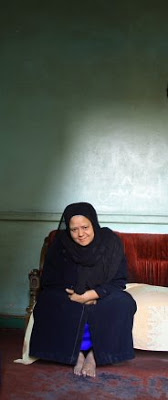
I’m a journalist, travel writer, editor and copywriter based in Melbourne, Australia. I write pacy travel features, edit edifying websites and fashion flamboyant copy. My articles and photographs have appeared in publications worldwide, from inflight to interior design: I’ve visited every continent, and have lived in three. Want to work together? Drop me a line… 

Follow


Veiled truths of Siwa women

Out here in the remote oasis of Siwa, the women of both dominant species – donkeys and humans – are kept under wraps and away from temptation. The women are heavily cloaked, walking fabric shops, while the female donkeys are kept in a village away from the town, the males brought there to mate with them.

Photographing women is out of the question, and even tiny girls on their way to school refused my requests. The boys were less reluctant, the men: media tramps.

So for once it paid off to be a female journalist (the downsides: bathrooms and leery men), and I was met two groups warm, funny girls who work in a co-op arrangement, performing the traditional embroidery for which the oasis is known, as well as weaving palm leaves and trunks into an array of household goods, such as pots and beautiful baskets.

I met a girl called Mabrooka today, which means congratulations. I thought I’d heard wrongly when she told me her name. I thought she was congratulating me for something. She and her friends paid out on me in Siwan, laughing as they worked.

Their work ends up in the US and they have a regular client in Italy, and they are paid well – more than many men earn working the traditional agricultural pursuits of date and olive farming. They are not city girls: their eyebrows are ungroomed, their skin is sun darkened and they don’t have the obsession of colour coordinating of the flashy Cairo city girls.

They are not pretty girls. Their features aren’t fine and there’s not even the addiction to large amounts of eye kohl. They’re all unmarried, only the unmarried ones are allowed such freedom to be out of the house.

When Siwi women marry, they won’t venture out of the house socially except for extreme cases – weddings, the birth of a child… and when they do leave the house, they are heavily cloaked in a blue and white embroidered piece of fabric over their clothes, that covers from head to toe, and black gauze fabric across their faces. You see them tearing past with children in a cart on the back of a donkey or motorbike, the wind whipping at their robes, nothing but black faces. (I took a pic of a dummy in the local museum to give you an idea – naughty hussy, she’s not covering her face!)
Of the working girls, one wore a niqab, but the others had just scarves thrown over their heads, hair covered with a sort of cummerbund.

They let me take a photograph of them, but only once they had covered their faces. I caught big eyes looking into the camera from behind a thin veil of fabric. The girl in the niqab could almost have been smug, but then I couldn’t read her face. She was the meekest of them all, compared with a couple who were positively ebullient. I was struggling with them with language, then toward the end, I remembered my book in the car, we started to hit it off, and then it was time to go… I was sad I had to leave just as it was all going off.

I did feel so bad learning that it takes up to six days to weave one basket. It really shows how much we devalue this work.

[PS In between, hundreds of economic refugees fleeing Africa for the riches of Europe were shipwrecked off the Libyan coastline. Here’s an interview for RTE Radio…

Oasis life: Siwa

What is it that makes people fall in love with Siwa? Is it the isolation? With an 11-hour bus journey, or eight hours by car, Siwa’s not exactly on the way to anywhere.

The oasis is 50km from the Egypt-Libyan border, set on the lip of the Great Sand Sea, which stretches the length of the country, where thousands of sand dunes shift shapes as the wind takes them. Siwans identify themselves as Siwi first, and Egyptian second. They speak their own, unwritten language that is shared with Berber tribes from across north Africa, including Morocco and Tunisia, and dress, think and act differently to that of their Egyptian counterparts.At night, Siwa town, population 10,000, is quiet as only a desert town can be quiet. The sand seems to suck the very sound from the air. In comparison, Cairo’s ever present grumbling, even when asleep, is like an old dog revisiting grand fights, growling and moaning while its eyes are closed. All I can here is the click of my keyboard, the crackling of the beeswax candles and what I think is the occasional night bird.Instead of heavy trucks and souped-up cars, the main mode of transport is by careta, or donkey cart. However, like its brethren, the less remote Bahirayya oasis, Siwa’s young guys are far more interested in cheap Chinese motorbikes than donkey carts. The main town is built around old Shali fortress, a collection of mudbrick buildings huddled together for safety. For hundreds of years, Siwans defended their turf against ravaging invaders and greedy governments but, the story goes, a deluge of rain here in the desert in the 1920s washed away the structures which today cling to the ground like a dinosaur’s carcass, sliding gently back into the earth from which they came. The oasis has all the hallmarks of an Arabian fantasy; palm trees, cool sweetwater springs, pink flamingos and shallow salt water lakes, also a delicate shell pink from the salt that lies beneath the surface. Siwa doesn’t wake early, so the sleepy soundtrack is one of calls to prayer and the braying of a dismayed donkey as each morning the oasis awakens slowly to its contemplative life, far from a world of package tours, shouts and touts.

Match making

The locals say that Egypt lost the 2010 World Cup (that’s football/soccer, to the unawares) largely because its taxi system was so bad (the meter is but a decorative concept, seat belts optional and a pricing system based on the quality of your shoes). But if the FIFA authorities had seen the crush outside the stadium last week as legit ticket holders such as yours truly tried to get into the Egypt v Zambia qualifier for the World Cup, they would have had another reason.

The stadium, in the north of the city, holds 80,000 people in three classes. The third-class tickets to the match cost just 5 pounds (about A$1.70) and reportedly sold out in two hours, while our luxurious first class tickets (forget Gold Class cinema, it’s seats, people, you get seats!) cost LE50 or A$17-ish.

We rocked up late, only 1½ hours before the match, and once our patriotic Egypt flags had had their sticks removed by the guards, and our bodies searched for lighters (hello, this is Egypt?? People smoke professionally here), we were let at the gate. Except there was a crowd of say 300 people at the gate, all with legitimate tickets, all clamouring to get in. Apparently the stadium was full.

“This is so … Egypt,” muttered one of the group as we joined the mass which was attempting to strain itself through the gates. So it was shoulders to the wheel, the boys made a circle around us two girls, and we pushed, like everyone else, to the steel turnstile gates ahead of us, the only things between us and football utopia. A guy near us called out, “You have girls with you! Go up ahead! They’ll surely let you in!”

Someone dropped food on the ground and it was trampled into a brown sludge that stuck to our shoes. When we got to the top, we were all separated, and there was a fence between us and the gate, which we climbed, bodies shoving and groaning.

“Does it ever get like this in Australia?” asked Amr.

“Only during the Boxing Day sales,” I told him. But as I was lifted off my feet when the crowd surged once again, I thought that nobody in their right mind would be doing this for a pair of cheap knickers.

We finally got through, I was plucked free by a guard who saw my white face and hauled me out, shoving me through the gate. Once in, we found the third-class boys had taken over half of first class seats, mostly handsome, wide-mouthed young boys, cheeky little buggers who fought and crowed and shouted naughtily through the whole game.

The stadium was a sea of flags and the orchestra a series of hand-held and big drums that rolled like a war march, as the stadium chanted, “Misr! Misr! Misr!” (Egypt! Egypt! Egypt!).

The cameras picked up the president’s son (and unofficial president-elect) Gamal Mubarak, and Samira and I had strips of black, white and red, the Egyptian colours, painted across our faces. Egyptians also do Mexican waves, though I’m not sure what they’re called here. Everyone wore something red, the girls co-ordinating their higaabs (headscarves) in the national colours.

Zambia wasn’t given a hope in hell against Egypt, the current African champions, so when they tied 1-1, the devastation amongst the home crowd was palpable. The pleas to the umpire, the entreaties, the heads in hands… some just stood up in the crowd and held their arms open wide in supplication.

But Egypt just couldn’t get past Zambia’s clever, hard-working goalkeeper, and we filed out quietly, our flags drooping along with the hopes for an Egyptian victory. A few people threw empty bottles toward the by-now empty pitch, and despondency descended on the cold city that suddenly seemed a lot darker.

Getting hitched, Part II

For those of you who can’t get enough of weddings, the latest wedding I attended was that of Mokhtar and Samira. This time, I actually knew the couple getting married, as opposed to gatecrashing or being brought along as wedding arm candy.

The format for an Egyptian hotel wedding (as opposed to raucous street weddings) goes as such: couple sit on a raised platform while the guests are each photographed with them, then each guest drinks thick, sweet sherbaat, sort of like raspberry cordial without the water. Sugar-fuelled, the dancing begins. Firstly, as with western weddings, the newlyweds take to the dance floor. Samira wore a beautiful gown, the bodice heavily encrusted with sequins and the skirt trailing across the dance floor through a cloud of billowing smoke.

Then couples join them on the floor, and finally, everyone else get up to dance them into their new life, sometimes surrounding the couple , clapping, or taking turns to dance with either the bride or groom. The boys were feeling energetic, so they tossed Mokhtar in the air, for good measure while his sisters danced around Samira, kneeling like handmaidens to a princess.

There are many differences – most Egyptian weddings are dry occasions, dominated by a DJ who, despite being perhaps 25, is conveniently deaf to any requests to turn down the volume and the reverb, and there are no speeches. The paperwork has been done earlier, so there’s no officialdom, thought there was a point when the bride and groom changed each others’ rings from the right hand to the left.

The similarities include the big white dress and there’s also the big white cake. There’s also the faintly rugbyesque scrum for the bride’s bouquet (taken out neatly by a girl I thought was married) and a bevy of pretty little girls in baby versions of a wedding gown. They chose not to have a bellydancer (I was ok with that, see earlier posts of plumpy Russian strawberry blondes in pink body stockings).

Just before it was cut, I drifted over to take a look at the cake, to find the three-tiered affair rising UP THROUGH THE TABLE in a puff of smoke, like a genie emerging from the bottle.

Nobody else seemed to notice… Samira and Mokhtar glided over to cut the cake, feeding each other mouthfuls of the creamy affair that would later feature on the dessert buffet, and at midnight, disappeared to their penthouse room overlooking Cairo before travelling to the seaside resort town of Hurghada for a week-long honeymoon.

Mabrook (congratulations), Mokhtar and Samira.

Forgiveness, pleasure and grace: a lesson in Arabic

“The Arabic language is very rich,” said didactic Nael, one of my first friends in Egypt, and himself a French teacher. The more I learn about Arabic, the more I have to agree.

The great apartment block I live in is known as Borg el Samah, ‘tower of forgiveness…’Almost everyone’s name has a meaning – my old cleaning lady, Sabah, was named after the morning, I met a girl the other day whose name means ‘inspiration’, and a guy whose name translates as ‘pleasure’. I giggle naughtily every time I say it. He is charmed, but confused.

In a country where English language books routinely cost $50 for the shoddiest paperback, I found the massive, massive Ken Follett ‘Pillars of the Earth’ (the doorstopper about building England’s cathedrals) for a miserly 20LE ($6) on a grubby street corner the other day and today’s find was a $3 copy of ‘Midaq Alley’ by Nagiub Mahfouz, Egypt’s only Noble Peace Prize for Literature for his epic ‘Cairo Trilogy’. The dog-eared book has the names of two previous owners written on the inside cover, both girls, Nashwa (‘ecstasy’ or ‘elation’) and Hala (‘lunar halo glory’).

And this week’s lesson: khartoum (yes, like the Sudanese capital) actually means hose in Arabic. I know this cos my shower hose, khartoum el douche, broke and I had to replace it.

On my way to my Arabic lesson (don’t get too excited, people, my new teacher thinks I’m thick as two short planks) I was reading my notes on the metro and a woman sat down beside me and said, ‘Are you learning Arabic? You are very smart. I will test you. Can you write my name?” Her name, dammit, started with one of the Arabic letters that has no English translation, ‘gh’. For Ghada. I had to stick my tongue out to write it. However, she was very nice, as befits a person whose name means ‘charming; graceful woman’.

The Sun City

I realise I haven’t written much – if anything – about my new place, and the point of this blog was to get a bit up close and personal, unlike my newspaper articles. So: I now live in Heliopolis, as the foreigners call it. The locals call it Misr el Gedida, or New Egypt. The ancient Greeks, if they read the name, would have translated it as ‘Sun City’.

I saw some photos from the turn of the century, and this area wasn’t much more than fields. Then – and I admit freely to paraphrasing liberally from my Lonely Planet amongst other sources – a cashed-up Belgian industrialist, Edouard Louis Joseph, Baron Empain, built his desert city 10km from Cairo in the early 1910s. It was a planned city, though walking around it today, you could dispute that, judging by the amount of times you’ll get lost and the inaccuracy of the maps. But then, hey, people get lost in Canberra, too.

There are some notable landmarks here, the most striking being the Baron’s palace. He went all Asian and had built a Hindu palace (see the pic) by French architect Alexander Marcel. It is visible when you drive to and from the airport. So there you are expecting Pyramids and Sphinxes, and the first and last thing you see in Egypt is a palace littered with statues of the elephant god Ganesh and Hindi dancing girls.

Apparently it is hugely haunted, and has underground tunnels leading to the nearby Catholic basilica, and was the site of satanic rituals in the 1990s. The Lonely Planet explains – “The fantastical look of the place contributed to a citywide panic in 1997 about ‘Satanists’ allegedly holding rituals here – turned out there were a bunch of upper-class teenage heavy-metal fans.”

I mentioned to an unnamed (of course) Cairo friend who was delighted to learn that his antics of smoking hash and listening to Metallica there has made it into the global guidebook. It still is a creepy, though absolutely striking, memorial. The Baron is now interred in the basilica.

Nearby is Hosni’s House – aka home of the Egyptain president and dynasty builder, Hosni Mubarak. There’s also a swathe of military headquarters, which led to Heliopolis being bombed when Egypt was at war with Israel.

Going back a little earlier, the elegant, old Amphitrion cafe was a drinking spot for Allied soldiers in both world wars and there are more than 4000 British Indian Army soldiers buried in the Heliopolis War Cemetery.
There are such cute streetnames as Cleopatra Street, some of the city’s most beautiful turn-of-the-century villas and still a few formal gardens, such as the one near my apartment, have not yet been built on top of.
But the most striiking architecture is the row of white Moorish buildings along the chic Baghdad and Al-Ahram streets. Divine, many look like they’re ready for condemnation, human habitation indicated only by a rusting satellite dish. But Heliopolis is once again on the rise, with KFC, McDonalds and Pizza Hut built into these beautiful buildings’ ground floors, a flush of tiny, artisan handcraft shops dealing in jewellery, leather and antiques, and the sight of more than one beautifully kept balcony up on high, indicating the true wealth of the suburb.

Getting hitched…

Last night was the fourth wedding or engagement I have attended (or inadvertently gate crashed) in the past fortnight.

The first was while I popped into a hotel to pick up a friend, and we found ourselves embroiled an engagement zaffa in the foyer, sort of like a formal annoucement where the engaged couple walk down an aisle lined by friends and the traditional noisy, clashing band with handheld drums and wailing mizmars, a long horn, going full roar, with a bit of dancing and LOTS of camera phone action. The second was an engagement knees-up at the cool After Eight jazz club in Downtown, one of my favourite bars, but also one of Cairo’s smokiest. So we toasted the couple, danced to the house DJ’s bizarre music – which flipped from Supertramp to Arab pop to 50s rock-and-roll in three songs – and fell out onto the street gasping for fresh air after a few hours. The third was a Libyan wedding. A seven-day affair, the bride was from a very, very rich family who decided to go the traditional Egyptian street wedding for one of the nights, where you erect a tent in the street and family and friends pour in to see the bride and groom on their white love seat and have a bit of a boogie. The couple were heralded by two men on fiery Arabian horses whose riders rode straight into the waiting crowd and through the long corridor archway of twinkling lights churning up the carefully created sawdust designed ‘welcome mat’ out the front of the tent. Inside, there was a brightly painted cart serving sham homous (the hot, spicy tomatoey, lemony drink with whole chick peas in it) rugs on the floor and round tables with white tablecloths and seats tied with sashes.

There was no belly dancer, the bride, in a blue gown, was up on the tables dancing, much to the crowd’s delight. Perhaps because a lot of their workers live there, the family chose to erect the colourful wedding tent in a very poor part of the suburb of Giza, near the Pyramids. It also coincided with the public holiday for the Prophet’s Birthday, so naturally, every man and his dog who lived in the area wanted to get into the tent.I wouldn’t be exaggerating to say there were 200 people in the tent with another 100 trying to get in, mostly small boys lifting the sides of the tents to ooze through to ogle the rich guests dancing. The crush was incredible. My escort for the evening kept muttering disgustedly (and bad-temperedly), “These people don’t know not to come if they’re invited!” But the family diderect the tent in their backyard. The fourth wedding event, the wedding of Mokhtar and Samira, was my favourite, so I’ll save for their own blog. Till then…

Getting tongue around shisha, TB and mishmish

I was in a shisha café the other night up the back of Sheraton Helipolis, in the north of the city. It was very chic and urbane, serving espresso and the fragrant, bubbling tobacco pipes. There was even a menu in Arabic and English. Firstly, there were the listings of what flavoured tobaccos they have, ranging from the most popular, the foul-smelling grape, to much nicer mint (think Alpine cigarettes), fruity peach, apricot and cherry, refreshing lemon and girly rose.

Then, at the bottom of the list, was the item ‘Medical Layy’ for LE2 (60c). The layy is the long tube that curls up from the water pipe and to your mouth. Most cafes use disposable plastic mouth pieces to stop germs, but (and you can tell I was out with doctors at this café), the layy is a breeding ground for germs, and one of the most common ways that tuberculosis is transmitted in Egypt. We all got medical layys. Mine was even bambu (pink). Too cute.

Received wisdom is that smoking a full pipe is the equivalent of knocking off a packet of cigarettes in one hit. It’s also common knowledge that photographing yourself smoking never looks great – the drawn-in cheeks and such. So no, I don’t have a decent pic. Here’s some dude I snapped in Midan Hussein, who’s pulling it off a whole lot better.

There is a career pattern in cafes, of which I was unaware, having met shisha boys with degrees, thanks to Egypt’s current economic situation – before the Global Economic Crisis there was the great Egyptian economic stuff-up, it appears. So anyway, cafe (ahwa) career paths: you start on the shisha, then move to the bar and finally as cashier. Just as well, because sucking smoke all day can’t be good for you in a country without worker’s compensation.

If you were going to be a shisha boy, setting up the water in the shisha pipes, balancing coals on the tobacco etc, then having a speech impediment that makes you slur the ‘sh’ sound is not advisable. Yet they’re out there. So the other night, I wanted (ayza) an apricot-flavoured (mishmash) shisha. “Ayza mismish shisha” I wanted to order from the guy. To which he would have had to reply, “La, mafeesh mishmish shisha.” No, there is no mishmish. Naughty, naughty, shouldn’t laugh. Going to hell. Oh yeah… I had lemon.

Wild-eyed in the Cairo night

So it’s the weekend, you’ve been out, had dinner, a maybe few drinks and then… not in the mood for a club? Why not ride a camel around the back of the Pyramids? What a great idea.

People, I am serious. We’d been out, eaten, drinks, and then someone looked up into the sky. Full moon! Midnight! It’s time to go horseriding! So three cars of us flew out to Giza where stables line the fence around the Pyramids. Even though it was past midnight, the streets were full of young guys on horses, galloping – yes galloping – wildly up the tracks that lead out of the city and into the desert – a distance of less than a kilometer.

By daylight, this area is a tourist hub, with touts leading riders from across the globe out around the Pyramids and past the Sphinx on camels, horses and even a donkey or two. By night, the locals come out to play (at half the price), especially during the full moon, which clearly lights the sandy desert.

We saddled up, my flighty grey mare pulling at the bit and skittering sideways when a band of about 15 boys flew past us. She spotted a few horses in a separate group in front of us and took off. Great. I was riding a leader, not a follower.

There were just five of us riding, and we finally got into a cohesive group, turned a corner past a few shops and there it was – the desert sand and the pyramids in the full moon. We cantered easily for about 20 minutes to a hill lit with fires, where guys sold hot tea – no polystyrene cups, we were drinking from glassware, baby.

We sat on logs pulled around a carpet (they SO know how to do this desert style thing), everyone smoked a cigarette, then mounted up again for home. We cantered the desert, my horse ever alert for the rocks and shale that marks part of the desert, the pyramids to my left, lit eerily with an orange glow. (Yes, it’s a gratuitious horse and pyramid shot taken in the day, months ago.)

As we rode through Giza yet more packs of boys (and a few squealing girls) on horses were heading out into the night, accompanied by at least one annoyingly loud quad bike and a dune-bashing car.

We turned our horses into the stables, to see a final group of about seven saddling up, and bringing up the rear were two wild boys high up on a pair of camels, about to set out. I looked at my watch. It was 3am.

Windswept and interesting

Everyone loves a good windswept look – think Kate Winslet in Titanic. But on Saturday, it all got a bit ridiculous, with a fierce wind, the khamaseen, whipping across the city.

This wind tears across the country from the west, hauling great quantities of dust and sand with it. It was said to have choked Napolean’s soldiers during their invasion of Egypt from 1798–1801, which you can believe if you heard the shutters and windows crashing during the night, when it howled like a banshee. I had left a window open, with the shutters closed, the night before, and the next morning, everything was coated in a thick layer of dust, which I’m still mopping up.

According to Al-Alhram journalist Gamal Nkrumah’s column this week, the month of Mechir or Amshir, the sixth month of the Coptic calender,”invariably 8 February to 9 March, is the month of howling winds and sandstorms, which is why it is named after the ancient Egyptian god of winds, Mechir”.

Cairenes have explained the weather as 10 days of cold and rain or howling winds, then 10 hot days when the clothes you wore yesterday are completely out of kilter, leaving you covered in either goosebumps or sweat. On the positive side, you can make a statement with big sunglasses, and there’s no need to use exfoliating face scrubs…just stick your head out the window.

Global Salsa

Well, you’ve scrolled this far. What do you think? Drop me a line, I’d love to hear from you.

Privacy Settings
We use cookies to enhance your experience while using our website. If you are using our Services via a browser you can restrict, block or remove cookies through your web browser settings. We also use content and scripts from third parties that may use tracking technologies. You can selectively provide your consent below to allow such third party embeds. For complete information about the cookies we use, data we collect and how we process them, please check our Privacy Policy
Youtube
Consent to display content from - Youtube
Vimeo
Consent to display content from - Vimeo
Google Maps
Consent to display content from - Google