I’m a journalist, travel writer, editor and copywriter based in Melbourne, Australia. I write pacy travel features, edit edifying websites and fashion flamboyant copy. My articles and photographs have appeared in publications worldwide, from inflight to interior design: I’ve visited every continent, and have lived in three. Want to work together? Drop me a line… 

Follow


Search for the glow: Norway’s Northern Lights

The Aurora throws out a curtain.


EDIT: I am very pleased to note that this feature, originally
published in the Sydney Morning Herald newspaper, has won the Australian Society of Travel
Writers’ 2014 award for Best Cruise feature.

Dodging trolls and and black ice, Belinda Jackson rugs up to hunt the Northern Lights. 

Boarding the MS Midnatsol, the first thing we see is a tall
Norwegian woman welcoming us on to the ship. The second spectacle is of a
tall English woman being stretchered off the ship.

“She slipped and fell on the ice,” reports one of the crew.
Instinctively, I want to crawl. Happily, the lady reappears several days
later, smiling but in a wheelchair. Norwegian winter cruising, it
appears, has a touch of the blood sport about it. Forget bikinis and sun
loungers: there’s a layer of difficulty travelling in the far northern
winter.

Actually, there are many layers. Going outside for anything more than
a quick photo on the promenade deck becomes an epic exercise in
wrestling with thermal underwear. And two pairs of socks. Fleece.
Waterproof jacket. And the boots with ice grips (hmmmm – the casualty).

Crown it all with a tight beanie that will resist the wind’s
insistent fingers. Some people even pull on a balaclava, but that’s all
just a little too Douglas Mawson for me, though I am sporting a dangling
pompom that holds a 90-degree angle to my head in prevailing winds.

We do it because we’re hunting the light: the Northern
Lights. Yes, there’s reindeer sledding, midnight concerts and hot
tubbing on the top deck while it snows. But right now, our sun is in the
midst of exceptional solar activity, and boffins say that this winter
and next are the best in a decade to see the elusive Aurora Borealis.

Norway is one of the world’s top viewing locations and
doesn’t require frostbitten fingers, drinking sterilised wee or eating
your own dogs to get there.

Light-hearted: the Aurora from the deck of the Midnatsol.
Photo: Bob Stephan

In fact, it’s all rather civilised on the Midnatsol, one of
12 Hurtigruten ships that undertake an 11-day round trip that traverses
the length of the Norwegian coastline. A ship sails every day.

The coastal express mail and goods run started in 1893, with
passengers hopping on and off between farming villages and port towns.
Norwegians still use the Hurtigruten as public transport, but they are
now outnumbered dramatically by tourists keen to cruise the fiords and
wild coastline as the ship pushes up into the Arctic Circle. There’s a
healthy showing of Aussies among them, forsaking a southern summer for
temperatures so low, the locals don’t even bother to say “minus”.

You can pick the Norwegians: they’re the ones glued to the
live chess tournaments on the television in the main lounge, silently
sculling black coffee from tall thermo-mugs. The rest of us have our
noses stuck to the ship’s panoramic windows, waving at fishing trawlers
and making such blindingly obvious statements as “Gosh, it’s cold!”.

Doing nothing to dispel opinions of Norwegians as a teensy
bit boring, Norway’s national TV station NRK’s home-grown programs
includes 12-hour documentaries on stacking firewood, knitting and a
minute-by-minute program of the Hurtigruten journeying down the
Norwegian coastline, from Bergen to Kirkenes. It was a 134-hour,
non-stop broadcast, and it rated!

“Did you see the program?” the urbane concierge at Oslo’s
beautiful Grand Hotel asked me several days before boarding. “It was
great!” His patriotism makes me almost forgive Norway for being so
expensive that it makes my muscular Aussie dollars wimper and
hyperventilate.

Back on the ship, it’s time to throw out all my cruising
expectations: there are no little towel animals at the end of the bed
each night, the theatre hosts astronomy lectures instead of chorus
girls, and all the staff are locals.

It’s a dramatic change from the United Nations of staff that
you meet on most cruise ships, and it’s lovely to have locals’
experience and advice (“It’s Sunday night. This town is dead. Don’t
bother getting off.”)

But hey, it does a mean buffet. Scandinavians invented the
smorgasbord. The Norwegianised breakfast buffet features caramelised
cheese, mustard herrings and salmon done three ways (roasted, smoked,
cured) every morning. There’s reindeer pate and cloudberries at
lunchtime and a local salmon served, classically, with dill steamed
potatoes at dinner. And yes, there is a gift shop, full of hideously
misshapen trolls and heart-breakingly expensive snowflake knits. The
Hurtigruten is undeniably Norwegian.

The total journey from Kirkenes to Bergen is 2465 kilometres,
stopping in at 33 ports, some as little as 15 minutes, just long enough
to sling a crate of parcels overboard. After a few days, we slip into
the routine of busy mornings exploring towns and afternoons of quiet
contemplation and panoramic viewing.

It’s dark by 4pm but we don’t care: we’re here to see the
light. The Japanese say a baby conceived beneath the lights is a special
child. The Sami believe the lights are a trail left by a fox scampering
across the sky. Everyone from ancient Chinese to American Indians have a
theory: the lights are souls, they’re a bridge to heaven, a good omen, a
bad omen.

But let me blow a few myths: if you were standing on deck in
sub-zero temperatures at midnight waiting for a ray of green light to
zap you between the eyes, you’d be waiting a long time. Guest lecturer
and British astronomer Dr John Mason says most of the colours in the
Northern Lights are invisible to our eyes: we just can’t see the red and
turquoise bands with the naked eye.

MS Midnatsol

“You probably won’t see colour, but
you will see movement.” Green is the most apparent colour, followed by
violet, but even then they’ll most likely show up as a hazy grey cloud
against the clear black sky, he warns.

Point a camera at the grey clouds and you’ll see the eerie
green rays appear in your final photo – and even then only when you open
the lens for up to 15 seconds or more.

To see the lights, the sky has to be dark, with no light
pollution. You also need a cloudless sky and your eyes also need to be
dark adapted, which can take up to 10 minutes, which is a long time on a
windswept ship’s deck in the black of a polar night. “When the lights
appear, we’ll make the announcements over the ship’s PA, and you have to
hurry,” Dr Mason says. “We don’t know how long they’ll last – You’ve
got to be ready.” We’re all so ready.

“We’ve been on six nights, from Bergen, and haven’t seen
anything yet,” says glass artist Bob Stephan, from North Carolina. Armed
with a fish-eye lens and balaclava, he helps me lash my camera to a
deck chair in lieu of my lost tripod.

There are two important things to note from this
conversation: one is that most tourists tend to stay on the ship for the
entire 11-day round journey, from Bergen up to Kirkenes and back again.
The second is that the Northern Lights are fickle.

But we strike it lucky: second night on board, and the show
is on. The deck is jam-packed as people point cameras to the sky. The
sky swirls and a soft grey-green light gusts and drifts into view. It’s
not the “hit-me” colours of the brochures, or a white night. But the
wild wind, the snow gusts and the dancing sky leave us light-hearted and
light-headed: we are but mesmerised little people dwarfed by the glory
above.

The Lofoten archipelago.

The serious photographers are rugged up and settled in for
the night, but the crowd drifts off after an hour or so. The next night,
the lights show even longer, a static display that has the astronomers
scratching their heads, though the ship is pitching wildly.

It’s also cold enough to bite your nose off.

We dash down below decks to thaw out, when one of the
astronomy tour members, Patch, pulls out his phone. The Aurora Australis
has been putting on a spectacular show in Tasmania, just an hour and
$100 from my Melbourne home. Groans from we Australians. Tasmania?
That’s next year’s plan.

The writer was a guest of Bentours.

AHOY! Norwegian Getaway has a three-storey sports complex that includes an eight-foot over-sea “walk the plank”.

FIVE MORE GREAT PLACES TO HUNT THE AURORAS
TASMANIA The Aurora Australis has been seen as close to Hobart as
Seven-Mile Beach (near Hobart Airport), on the Overland Track and Bruny
Island. Get viewing tip-offs from this local alerts page facebook.com/groups/215002295201328/.
ALASKA Fairbanks and nearby Denali National Park are Alaska’s
playground for aurora hunting, and boast an 80 per cent chance of
spotting the lights from August to April, see explorefairbanks.com.
ICELAND Make sure you’re in the glassed-in bar of the Ion Hotel when
the lights deign to shine. The new eco-hotel is an hour’s drive from
Reykjavik, see ioniceland.is.
CANADA Head for Whitehorse, Yukon, on the edge of the wilderness and
hunker down in a yurt while you wait for the performance to begin, see arcticrange.com.
FINLAND Tuck up in a snow igloo in Kakslauttanen Arctic Resort, in Finnish Lapland, a thousand kilometres north of Helsinki, see kakslauttanen.fi.

TRIP NOTES
GETTING THERE Fly Sydney to Oslo via Bangkok with Thai Airways or via London with British Airways (britishairways.com). From London or Bangkok, book early to catch Norwegian Air’s cheap flights (norwegian.com).
CRUISING THERE The nine-day Best of Norway Cruise departs daily from Bergen
or Kirkenes, with astronomy tours available in winter. From $2877, twin
share (winter) to $4448 (summer), 1800 221 712, see bentours.com.au.
MORE INFORMATION visitnorway.com.
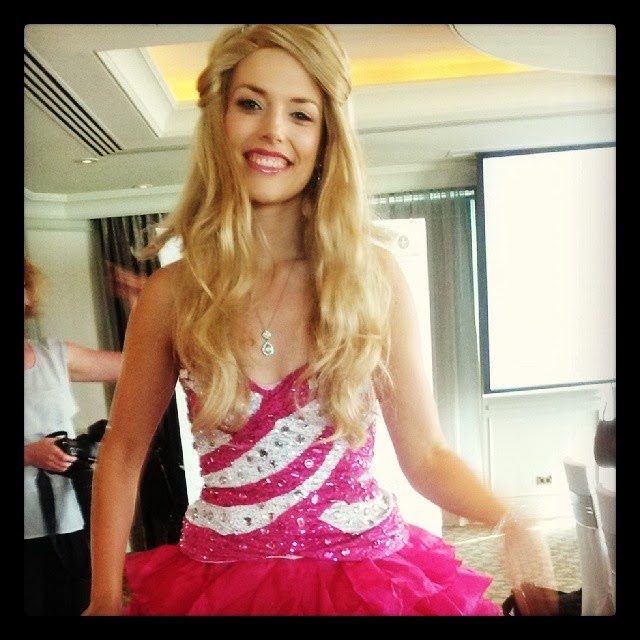
Tiaras and Tulle: Barbie does Melbourne

Barbie is 55 and let me tell you, she’s lookin’ good.

The real, live Barbie (looking 25 and very, very tall) popped in to Melbourne for a touch of high tea this afternoon and to promote her new movie, The Pearl Princess. The Langham, Melbourne, turned it on with a High Tea in Alto, the 28th floor of the Southbank hotel, with fabulous views across the city.

While the rest of the city is learning barista tricks, brewing their own cider or perfecting a sea urchin foam, a la the Melbourne Food & Wine Festival, we were served up the Princess Menu, featuring pearl cupcakes, fairy bread, sparkling pearl pink lemonade, and popcorn cups.

Hand on my heart, I’m not a pink person. My attempts to program my Small Girl into thinking that orange is the coolest (cue to bedsheets so orange they could turn you Buddhist) have failed. The little girls soaked up the pinkness as though they were born to it.

The Langham Melbourne’s GM, Ben Sington, popped in for a photo with Barbie (I note he waited till it all started to wind down) and commented that everyone seemed very well behaved. 

True, there were no tears and no screaming, but give a bunch of little girls a long table full of pink cakes, a movie, face painting and bunch of cooing (and quite possibly champagne-infused) mamas, and who’s going to complain?

There’ll be six Barbie Pearl Princess High Teas on March 29 and 30.

Adventure beckons: Metung, East Gippsland

Metung jetty at sunset. Pic: Belinda Jackson

Coastal chic meets village vibes on a svelte strip of land that dips into the Gippsland Lakes. 

Everything
happens around Metung’s Village Green: from kids on swings to cafe
culture to hopeful fishermen looking for a bite from a bream. The
village is surrounded on three sides by lakes, and the air here is
filled with the chimes made by the riggings on yachts.

Explore
Metung’s lakes King and Victoria on a traditional timber boat (no
licence necessary) and take a picnic to a deserted sand island where you
may spot wild goats, inquisitive seals and the occasional dolphin.

The
lakes’ waters are calm and clear, excellent for lazy-day swims, and are
well guarded from the crashing surf of Bass Strait by a long spit of
low-lying dunes: cross them and you’re on the wild, rugged Ninety Mile
Beach.

For panoramic views, boat to Barrier Landing, moor and
follow the path across the dunes to one of Australia’s great coastal
wildernesses. For an epicurean excursion, the hills above Metung include
the Nicholson River Winery, Tambo Estate and Lightfoot & Sons.

With the kids
Under fives
* Back Beach on Lake King is the place for the buckets-and-spades brigade.
* Press the big green button at the Rain Drop Water Play Area in Metung village’s Patterson Park.

Older children
* Try the new mountain-bike track at Nowa Nowa, a 40-minute drive from Metung.
* The best surfing conditions can be found at high tide at Red Bluff,
between Lakes Entrance and Lake Tyers Beach, a 30-minute drive from
Metung.

Teenagers
* Learn to water ski, wake board or tube ride at nearby Paynesville; aquamania.com.au.

While there Locals head to Bancroft Bites on Metung Road or The Metung Galley, just opposite, for a caffeine fix. Cruisers and day boats are available for hire at Metung Marina; rivieranautic.com.au, bullscruisers.com.au.

Getting there Metung is 3 1/2 hours’ drive east of Melbourne on the Monash Freeway.

Staying there Jetty
Road Retreat cabins at nearby Nungurner sleep four; jettyroadretreat.com.au. For holiday homes, apartments and B&Bs, see
stayz.com.au. Waterfront apartments overlooking Bancroft Bay include The Moorings at Metung; themoorings.com.au.

More information Visit discovereastgippsland.com.au and destinationgippsland.com.au

The writer was a guest of Gippsland Tourism. 

This feature by Belinda Jackson was published in the Sydney Morning Herald‘s Traveller section.

Get going: dreams can come true

Daydream Island

GO NOW

QUEENSLAND

Lie back on Daydream Island and save $180 on a four-night
stay until April 30. Includes return ferry transfers from the Great
Barrier Reef airport and water sports. Kids under 14 stay and eat free.
From $598 a person, twin share. Phone 1800 075 040, see daydreamisland.com.

BALI

Save up to 40 per cent on a Balinese holiday until March 31.
Staying in the three-star Centra Taum Seminyak, get breakfast, Wi-Fi and
a pool-view room on Seminyak’s hippest street, Petitenget. From $274 a
person, twin share, seven nights. Phone 1800 359 769, see lowcostholidays.com.au.

GO SOON

Ayers Rock Resort, NT

NORTHERN TERRITORY

Stay at the Ayers Rock Resort on April 24-27 and get free
entry to the inaugural Tjungu festival celebrating indigenous culture,
breakfast, airport transfers and kids under 15 stay and eat free. Quote
“Tjungu”. From $326 a person, twin share. Phone 1300 134 004, see ayersrockresort.com.au.

NEW ZEALAND

Book two nights at The Rees Hotel, Queenstown, on April
25-27, save 20 per cent and get tickets to the town’s first Blues &
Roots festival on April 26. Includes a jet boat ride down the Kawarau
River, breakfast and late checkout. From $866 a couple. Phone +64 3450 1100, see therees.co.nz.

Lake Crackenback
Resort & Spa, NSW Snowy Mountains

GO LATER

NEW SOUTH WALES

Sick of summer? Plan a winter escape at Lake Crackenback
Resort & Spa in the Snowy Mountains and save $226. Stay five nights
with breakfast daily, three dinners and ski hire and spa discounts, June
6 to October 6. From $1629, two adults, five nights. Phone 1800 020 524, see lakecrackenback.com.au.

VANUATU

Pay just $19 for kids under 9 to stay and eat free when you
book five nights in four-star accommodation in Vanuatu. Book by March 17
for stays April 26 to June 27, July 15 to September 21, October 8 to
December 19. Adults from $655, five nights. Phone 1300 301 711, see creativeholidays.com.au.

TOURWATCH
Top tastes

Discover the best of West Australian produce with a
seven-day Paddock to Plate tour through Margaret River and beyond.
Unearth truffles in Manjimup, take a chef’s masterclass in Denmark,
dine from a long table in a wheat paddock and shop at the Albany
Farmers’ Market. The tour departs June 24. From $4945 a person, twin
share. Phone 0429 385 642, see perthwatours.com.au.

KIDS

PLAY AT PARADISE

The Gold Coast’s Paradise Resort – voted Holidays with Kids’
2013 best family resort in Australia – teams up with Dreamworld and
WhiteWater World to offer a stay-and-play package. Stay five nights at
the resort, with its new ice-skating rink and waterpark, and get a
three-day family pass to the two theme parks, four hours of kids club
each day and discount vouchers, saving up to $640. Available until
December 24, 2014, from $995 a room, five nights. Phone 1800 074 111, see paradiseresort.com.au.

Sustainable Melbourne

EDIT: I am very pleased to note that this feature, originally published in Honda Magazine, has won the Australian Society of Travel Writers’ 2014 award for Best Responsible Tourism feature.

Little Hunter, 195 Little Collins St, Melbourne

Travel
can be a guilty pleasure for the green-minded, but Melbourne shows how to blend
ecology and exploration without stinting on the good times, discovers Belinda
Jackson.


SHOP SUSTAINABLY
For
clothes with karma, vintage clothing is the classic sustainable fashion option:
what goes around, comes around.  Forget
fusty, Melbourne’s top shops yield fabulous finds. Check out one of Australia’s
largest vintage stores, Retrostar,
in the equally vintage Nicholas Building (1st floor, Nicholas Building,
37 Swanston St), while Shag finds all its clothing in
Melbourne (Centreway Arcade) and Circa
Vintage
has fashion dating from the Victorian era (1st Floor, Mitchell House, 358 Lonsdale St). 
Serious hunters, book your spot on a Melbourne Op Shop tour (0421 431 2780421 431 278, melbourneopshoptours.com.au).
Don’t want to wear clothes made by small children or
workers in life-threatening factories? Melbourne’s Etiko sources eco-friendly range of footwear and clothing from
owner co-ops in Argentina and Pakistani micro-businesses, so you can look good
outside and feel good inside. Shop online or see etiko.com.au for stockists.
Lisa Gorman designs
You can go green with current fashion: each season, top
Melbourne designer Lisa Gorman releases her gorman organic range, which uses organic and sustainably produced
fabrics produced without pesticides or with non-chemical processing (GPO Melbourne, Bourke
St Mall, gormanshop.com.au).
Out of the CBD grid, make like a Melburnian and jump a
tram for the fashion label, shop and café that is Social Studio for limited-edition garments handmade from reclaimed
and up-cycled material (126-128 Smith St, Collingwood, thesocialstudio.org).  On Saturdays, dig for handmade treasures at
the artists’ haven of Rose Street
Markets
(60 Rose St, Fitzroy).
ON THE TABLE
You know organic
and sustainable production are on trend when the quest takes you to some of the
city’s top tables, including Vue de
Monde
, for its salt-cured wallaby (Level 55, Rialto, 525 Collins St) and the signature smoked trout broth at Attica,
recently voted number 21 in the world’s top restaurants (74 Glen Eira Rd,
Ripponlea). Even old-school can go new school, as Italian dining staple Cecconi’s has demonstrated, becoming
the first restaurant to compost its food waste through the Closed Loop system:
the compost is used to grow vegetables on its Bellarine Peninsula farm (61
Flinders La).
Head underground to a recent Melbourne edition, Little Hunter, tucked away beneath city
streets, and order up on beef from the remote Tasmanian locations of Cape Grim and Robbin
Island or tiny Chatham Island’s Blue Cod with seagrasses.
Chef Gavin Baker sources all produces from farmers committed to organic
production and humane treatment (downstairs, 195 Little Collins St)
Melbourne’s café
scene is justly famous: check out the winner of the 2012 Tourism Victoria
Sustainability award, Silo by Joost, a
café that doesn’t have garbage bin. Everything is recycled, renewed or
composted, including the bench you’re sitting at (123 Hardware St, 03 9600
0588). Meanwhile, newcomer Dukes
Coffee Roasters
is pushing toward a carbon-neutrality with its emphasis on
minimising waste and off-set power, with organic and ethically produced
products. What does that mean for you? Seriously fine coffee (247 Flinders La).
And shoppers at Melbourne Central can grab a cuppa at social enterprise STREAT Café, which has so far trained
60 young homeless and at-risk kids into a hospitality career (Cnr Elizabeth
& La Trobe St and 5 McKillop St).
Kinfolk cafe, 673 Bourke St, Melbourne
Kinfolk is a rare bird: it is environmentally sustainable and also socially
responsible, its staff training volunteers to run serve local, organic,
good-tasting food. A private enterprise by young entrepreneur Jarrod Briffa,
its high overheads are eased by the generosity of its patrons: coffee is
donated by crop-to-cup pioneers Di Bella, while meat is from renowned Barossa
organic producer Saskia Beer (673 Bourke St).


And
finally, self-caterers can find local produce at Queen Victoria Markets, which also has a section devoted to organic
fresh fruit and vegies (513 Elizabeth St).
PLAY NICELY
A night
on the town can also be good for your conscience when you start (or end) with a
drink at Shebeen, Australia’s first
not-for-profit bar. All profits go back to the countries where their drinks are
sourced: think Chilean wines, Sri Lankan beer, South African cider, (36
Manchester Lane).
Melbourne is also a playground for ‘green’ brewers. Pope Joan pours beers from Victorian independent
breweries such as Victoria’s Secret Hoppy Wheat Beer from North Melbourne and
Moondog ‘Love Tap’ Double Lager from Abbotsford (77 Nicholson St, Brunswick
East). Get on your bike into the Mountain
Goat Brewery
for real beer and pizza (Wednesdays & Fridays, 80 North
St, Richmond) or tram it to Monkey  for local, organic and biodynamic wine, beer and
cheese (181 St Georges Rd, Fitzroy North).
Alto on Bourke hotel
ECO-EXPLORE

Take a walking tour of the
city to orientate yourself (1300 311 0811300 311 081, melbournebyfoot.com)
and uncover the city’s vivid street art scene (03 9328 555603 9328 5556, melbournestreettours.com) or to get under the city’s skin, through its literature and laneways
(0407 380 9690407 380 969,meltours.com.au) Hit the shops with hunters of high quirk
(03 9663 335803 9663 3358, hiddensecretstours.com) or discover the city’s Aboriginal heart
(03 8622 260003 8622 2600, koorieheritagetrust.com)

SLEEP EASY

Alto on Bourke is Australia’s first carbon-neutral hotel
and winner of domestic and international sustainability awards. The 4-star
hotel uses 100 per cent renewable energy, harvests its rainwater, recycles and
uses energy-efficient cars. There are even beehives on the roof, as part of
Melbourne’s rooftop honey project: see the results on the breakfast buffet
alongside the fairtrade coffee (rooftophoney.com.au) There are 50 hotel rooms from petites to
three-bedroom apartments with full kitchenettes, employing the best environmentally
aware technology including LED lighting, low-water showerheads and an electric
Goget hire car on site, with free parking for all hybrid cars  (1800 135 1231800 135 123, altohotel.com.au)

GETTING AROUND GREEN
The best start to a green escape is to offset your airline flight, which
costs around $2 per flight. Melbourne’s CBD grid is a walker’s paradise: you
can cross the city by foot in about 20 minutes. Otherwise, it’s a short tram or
bus ride: the red Number 86 City Circle
tram
does free tours, as does the Melbourne
Shuttle Bus
(131 638, thatsmelbourne.com.au) If you need a car, consider a green car, which can be hired by the
hour from $15 (try flexicar.com.au,  greensharecar.com.au
or goget.com.au) or go
luxe with an eco-limo (ecolimo.com.au) Melbourne
Bike Share
hires bike for 30 minutes for free (1300 71 5901300 71 590, melbournebikeshare.co.au)

DIARY DATE
Keep a day free for the 2014 Sustainable Living Festival,
held annually in Melbourne. Expect fabulous fashion, thoughtful thinktanks,
green markets, gardening and art. Now on until 23 February, 2014, slf.org.au.
This article was published in Honda magazine. 

Adventure beckons: Aireys Inlet, Victoria

Rock-pool-hopping at Eagles Nest, Aireys Inlet, Victoria.
Photographer, Mark Chew.

We love a craggy, snap-tastic coastline, horse rides on the
beach, gourmet food and bush settings, which is why Aireys Inlet,
sitting pretty between the big guns of Anglesea and Lorne, is so
attractive.

Aireys is where the
artisan shop Lulu and Mr Q sells hand-made ice-cream, where the
shoreline has epic rock-pool-hopping potential to spot crabs and sea
urchins at low tide, where kids can snorkel in Mermaid Pool and where
crumbling cliffs above the sand burn a vivid ochre in the afternoon sun.

The
essential items for a summer holiday based at Aireys Inlet are a
well-stocked picnic basket and blanket: set up on the benches by the
barbecues at Moggs Creek or in a bushland setting at Sheoak Falls in the
Great Otway National Park.

If the kids whine, “But what else
are we going to do?” there’s an arsenal of off-sand activities at your
fingertips, from mountain biking around Distillery Creek to canoeing
down river where Painkalac Creek meets the ocean. See Great Ocean Road Adventure Tours; gorats.com.au.

Or
you can stretch your legs along the Surf Coast Walk from Aireys towards
Torquay, taking in sheltered nooks and windswept scenery alike. Then
there’s the White Queen – the Split Point Lighthouse – now open for
guided tours. See splitpointlighthouse.com.au.

With the kids
Under fives
* There’s sheltered swimming at Sunnymead and at Sandy Gully beaches.
* The reef at nearby Step Beach forms a swimming hole at low tide, while Aireys Inlet Beach suits experienced body surfers.
* It’s Victoria: sometimes it rains. Aireys Inlet’s Great Escape Books
hosts kids’ readings at 11am on Wednesdays in the summer school
holidays. Otherwise, order a hot chocolate and snuggle in for a read or
ransack the store’s toy box; greatescapebooks.wordpress.com.

Older children
* Explore Fairhaven Beach on horseback; blazingsaddlestrailrides.com.

Teenagers
* Take a photography walk along the coastline with a guide-teacher; surfcoastwalks.com.au.

Dining there
Pull
up a seat with water views at Aireys Inlet Foodstore & Cafe and
order home-made baked beans with Otway pork or free-range eggs. Then
stock the larder with local produce from its foodstore; aifsc.com.au.
It’s the perfect marriage: a parma and locally made beer at Aireys
Pub, which earns its stripes as a great all-rounder, with a sandpit in
the beer garden and live music every Saturday; aireyspub.com.au.
Add
a touch of the Mediterranean to your getaway with lunch at A la
Grecque. Order the seafood, order the wine – it’s your holiday;
alagrecque.com.au.

Getting there
Aireys Inlet is about a 90-minute drive west of Melbourne at the start of the Great Ocean Road.

Staying there
The
Aireys Inlet Getaway Resort has one-, two- and three-bedroom villas
with a pool, picnic spots and koalas and birds on the guest list; aireysinletgetaway.com.au.The Glen Farm Cottages are
self-contained, mud-brick stays on Old Coach Road, a few kilometres
inland from the beach; aireys.com.au.Private holiday homes are plentiful and listed on stayz.com.au. B&Bs are dotted throughout the region. Aireys
Inlet Holiday Park has cabin accommodation ranging from three-bedroom,
two-bathroom executive cabins to smaller cabins, aicp.com.au.

Camping there
Also at Aireys Inlet Holiday Park are ensuite sites with power and private bathroom, powered sites and grassed tent sites.

More information
See visitgreatoceanroad.org.au.

This feature by Belinda Jackson was published in Sydney Morning Herald Traveller.

Tripping the light fantastic: Northern Lights in Norway

On Deck 9, Midnatsol, Norway. Photo: Bob Stephan

There’s reindeer on the menu and light shows in the polar night, as Belinda Jackson cruises around Norway.

The temperature says it all: it’s 2.2 degrees C but the wind-chill
factor drags it down well below zero.

The ground is slippery with black
ice and it’s only 5pm, yet the sun has long given way to a dark, polar
night.

Norway’s extreme north is turning on a chilly welcome this November eve.

The town of Kirkenes is the starting point for my sea journey from high
up in the Arctic region to the gentler climes of Bergen in the south of
Norway, just a hop-skip across the North Sea to Scotland’s Shetland
Islands.

To help you place Kirkenes on the world map, it’s 400km past the Arctic
Circle, 7km from the Russian border and 37km west of Finland. There are
reindeer burgers on the hotel menu and rather prosaic tips on sleeping
during the midnight sun (close the curtains).

The next morning, my chariot awaits. More precisely, it’s the
Hurtigruten. Even more precisely, Hurtigruten is not one particular
ship, but a route (‘hurtig ruten’ = fast route) that links Norway’s
coastal towns and villages.

A ship leaves Bergen every day of the year for the journey to Kirkenes
and has been doing so since 1936, interrupted only by wars. My ship, the
MS Midnatsol (Midnight Sun), was built in 2003 and with 644 berths, can
take up to 1000 passengers (and not just tourists), drawn predominantly
from the UK, USA and northern Europe – not to mention more Australians
than you’d expect. Our ship has also a substantial smattering of
Norwegians using the ship for its original purpose: as a means of
transportation, and the staff are all locals, too, save a few
foreigners…from Sweden.

My cabin is a cosy little affair: two couches fold down to make
comfortable beds, there’s a little desk and a bathroom that can be
described kindly as ‘petite’. There are hooks and nooks to tuck your
gear away in, though the ship’s lounges, cafes and libraries are
preferable, with their panoramic windows and wi-fi which,
understandably, gets a bit shaky when the weather is tossing the ship
around on the stretches of open sea.

Panorama Lounge, Midnatsol, Norway.

Unlike most cruise ships, there’s no grand piano chained to the floor,
there are no dancing chorus girls, and the stars are not belting out
their ’70s hit parade but glittering overhead in the black depths of the
winter sky.

“You won’t starve on the journey,” a waitress tells me sorrowfully at my
first meal. My induction to the chef’s hand is lunch, which today
features five types of fish including roasted cod, gravalax and tubes of
Mills Caviar, as well as reindeer casserole with onions and mushrooms.

Stopping at coastal habitations, sometimes for as little than 15
minutes, we’re encouraged to jump off and explore: from the excellent
polar bear museum in Hammerfest to walking the mediaeval streets of
Trondheim or feeling your skin prickle during an eerie, uplifting
midnight concert in Tromso Cathedral.

Cruising in winter has a couple of fairly obvious disadvantages:
firstly, it’s seriously cold and secondly, you’ve got to cram your
sightseeing into the brief hours of daylight. Nobody’s worried – we’re
all here for the big winter drawcard: the lure of spotting the Northern
Lights.

They’re fickle beasts, those lights. They flicker and swirl without a
care who’s watching, but winter 2013/14 and 2014/15 are considered the
best in a decade for seeing what local legends describe as the dancing
souls of the departed, or a shining bridge to the heavens. There are two
astronomy groups on board, so we’re treated to guest lectures and the
ship hands out a memo of photography tips.

And we get lucky.

Rugged to the eyeballs – literally – we camp out on
Deck 9, the open deck at the top of the ship, which also houses two
outdoor jacuzzis that steam invitingly. The wind’s agile fingers tear at
our clothes and the ship rolls and churns as we strive to catch the
roiling clouds of green light in our camera lenses as, for two
spectacular nights, the Aurora Borealis deigns to put on a show.

Down below, we break from viewing to drink hot tea and peel back the
layers of clothing. The talk is all about the lengthy light show and
photos are admired and emailed onward. Many travellers slip into a
reflective state, absorbing the daytime scenery of fresh snow on
dramatic peaks and revelling in the nocturnal adventures in the sky.

There’s a sense of camaraderie among us all: we have tripped the light fantastic.

Belinda Jackson was a guest of Bentours.

This article was published in Get Up & Go magazine. 

2013: a year in the world

Sri Lanka masks

Happy New Year!
By now, most of you in the northern hemisphere should be scrounging around for the asprin or box sets of Dr Who – or, judging from Facebook, run a marathon or some other such oxygen-sucking activity. Here in the southern hemisphere, there are thoughts of work tomorrow. Ugh. Let’s not go there.

It’s raining here, the Christmas pudding is back on the boil and it’s time for tea and reflection. The tea is Russian Earl Grey, from Harrods, which seems a good way to kick off a year in the world…

…I’m not going to win points for originality, but I fell in love with London again: the cheesy, the touristy, the lot, from Harrods to London Bridge.
The city’s on a high, with energy levels up there with the London Eye. The Tate Britain has
just opened after a £45-million renovation, the Shard glimmers over
Southbank, the grungy quarters have reinvented themselves as edgy design
destinations, cashing in on their bad old days, when the High Street
might be known as the Murder Mile… it was all fabulous (except the serious cold snap, but hey, that’s London in November).

Leopard spotted in Yala National Park, Sri Lanka


For sheer sell-your-pants-off stories, Sri Lanka left all other destinations in the shade. It didn’t hurt that the Lonely Planet named it one of 2014’s must-visit countries.The food, the fabulously quirky fantastic shopping, the leopard spotting and the warmth and security of the country all stitch together for a great holiday destination, without overwhelming the sub-continental novice.

This was also the year I learned to make gnocchi, rekindling a post-Aitkin love of pasta.
The destination: the King Valley, in northern Victoria, just a shade
under our modest little Alps. The teachers: the Pizzini and the Simone
families. Forget milk and honey, this is the land of pork and prosecco.

The year 2013 also finally brought a return to Egypt, this time
to bring the Small Girl to her other spiritual (and ethnic) home. I saw
how a population can survive when all the news reports we see tell us
they are being gassed in the streets and chased by tanks. They just keep
going on: going to work, to school, to the market. And they just keep
hoping the generals and the politicians – the big men – treat them
better than pawns on a chessboard.

Fashion parade in Thimphu, Bhutan

I know Egypt will recover, hopefully
soon after the next presidential elections. But in the meantime, Tahrir
Square, the scene of the revolutions, is lush and green, well maintained
and clean. I have never seen it look better. So there is some good come
out of this whole, messy Arab Spring.

The most unexpected experience was attending Bhutan‘s first indigenous fashion parade, beneath the stars in the mountain kingdom. Visiting two tiny countries at either end of India – Sri Lanka and Bhutan – was an eye-opener as to the powerhouse of the sub-continent, and how these tiny nations fight to maintain their identities in the face of ‘a billion shouting Indians’ (their words, not mine).

This year and next mark a flurry of solar activity, resulting in the best showings of the Northern Lights, the Aurora Borealis.

Deck 9, Midnatsol,

About the same time as I was teetering on a rolling deck of the Hurtigruten, somewhere in northern Norway,
trying to take a photo that wasn’t just a series of squiggles, the
Southern Lights, the Aurora Australis, were reportedly putting on a
great show in Tasmania, about an hour’s flight from home. With another winter of high solar activity ahead, maybe that’s next year’s goal?

Here’s wishing you peace and happiness for 2014 (with the Year of the Horse promising prosperity, to complete the trifecta).

20 reasons to visit Colombo, Sri Lanka

Colombo classic: The historic Galle Face Hotel.
Colombo classic: The historic Galle Face Hotel. Photo: Getty Images

1 PETTAH
Brave the streets of Pettah to pick up everything from
fabrics and fruit to watches and wedding invitations. “It’s utter
chaos,” the locals cheerfully admit. “You can get a suit made in two
hours, though it may last only three.” The streets are crammed with
saris, electronics and ayurvedic medicines, while the fruit and
vegetable market heaves with sacks of outrageously fierce-looking
chillis.

2 GALLE FACE GREEN
 It’s easy to forget Colombo is a seaside city when you’re
stuck in a 1pm traffic snarl on the Galle Road. The best way to
reconnect with the Indian Ocean is by making like a local and
promenading on the Galle Face Green. Sundays are a big day for local
families, kite flyers and food trucks serving deep-fried snacks.

3 SRI LANKAN CRAB
Singapore’s famed chilli crabs actually come from Sri Lanka,
so go back to the heart of it all at Ministry of Crab, one of
Australian-Sri Lankan chef Peter Kuruvita’s top picks on the Colombo
dining scene. It may be the priciest place in town, but chef Dharshan
Munidasa’s cooking is worth it (ministryofcrab.com). Crab gets the Tamil
treatment on Sundays in a Jaffna-style crab curry at Yarl (56 Vaverset
Place, Wellawate, Colombo 6) or little sister Yarl Eat House (Cnr Galle
and Station roads, Wellawatte).

4 OLD DUTCH HOSPITAL
Until recently, the Old Dutch Hospital was a crumbling ruin.
Dating from 1677, it’s the oldest building in town and now its long, low
courtyards are Colombo’s new heart. It’s a one-stop shop for clothes
and gifts, spa treatments, chic dining, serious tea drinking at Heladiv
Tea Club or more relaxed pizza and steins of beer at Colombo Fort Cafe.
Come nightfall, it’s a buzzy hotbed of locals and tourists.

5 CLOTHES SHOPPING
Odel is Colombo’s fashion house of choice (5, Alexandra Pl,
Col 7) and KT Brown its designer, with ethnically inspired designs (7
Coniston Place, Col 7, ktbrownstudio.com).
For leaner budgets, Cotton Collection (143 Dharmapala Mw, Col 7) has
fab finds and nearby Kelly Felder (117 Dharmapala Mw) employs only local
designers with new stock every Tuesday. For cool beachwear, check out
the super-colourful Arugam Bay label, in Odel, Barefoot and their
showroom (32 Ward Place, Col 6), which is also home to contemporary
Buddhi Batiks. Grab a tuk-tuk and skip between ’em.

6 BAREFOOT
It’s a cafe, an art gallery, a performance space and shop.
Established 40 years ago by Sri Lankan artist, entrepreneur and
philanthropist Barbara Sansoni, its signature style is hand-woven,
hand-dyed yarns made into brightly coloured children’s toys,
free-flowing clothing and fabrics manufactured ethically by women across
the country. Also one of the best places for books on Sri Lanka (704
Galle Road, Colombo 3 and Old Dutch Hospital, barefootceylon.com).

7 BOUTIQUE HOTELS
It’s a small country and Sri Lanka has embraced the small,
boutique hotel concept. Lovers of classic interiors head to style guru
Shanth Fernando’s 10-room Tintagel (tintagelcolombo.com) while Casa Colombo is a playful (some would say over-the-top) 12-suite remake of a 200-year-old mansion (casacolombo.com). Park Street Hotel mixes minimalism and antiques (asialeisure.lk) while Lake Lodge’s 13 rooms overlook South Beira Lake (taruhotels.com). Newcomer Colombo Courtyard doesn’t have the design pedigree but it’s small and centrally located (colombocourtyard.com). Because of a government tariff, Colombo hotels aren’t cheap. They also book up quickly, so get in early.

8 AYURVEDIC SPAS
The subcontinent’s traditional ayurvedic medicine morphs into
a sublime spa experience at the Siddhalepa Ayurveda Spa (33 Wijerama
Ma, Col 7, siddhalepa.com) or Spa Ceylon, with its scents of white tuberose, red sandalwood and jasmine (Dutch Hospital, Park Street Mews, spaceylon.com).
A warning: be prepared for days of oily hair or plenty of hair washing
if you’re signing in for Shirodhara, where warm oil is continually
dripped onto your third eye (forehead).

9 ART MARKET
Support local artists with a visit to Colombo’s kala pola
(art market) on Sunday mornings, where affordable artwork is hung around
Viharamahadevi Park (Col 7). If you miss the market, Saskia Fernando
Gallery exhibits Sri Lanka’s top artists (61 Dharmapala Ma, Col 7) or
cool down at artist Harry Pieris’ serene Cinnamon Gardens mansion, the
Sapumal Foundation (34/2 Barnes Place, Col 7). Barefoot and Paradise
Road Gallery and Cafe (2 Alfred House Road, Col 11) show and sell the
country’s greats.

10 GEM & JEWELLERY SHOPPING
Sri Lanka is most famous for its blue sapphires, as worn by
the British royals. Slip in to premier gem dealer Colombo Jewellery
Stores for a quick education and check out the well-priced men’s watches
while you’re there (1 Alfred House Gardens, Col 3, also Old Dutch
Hospital, Galle Face Hotel, cjs.lk). Ridhi is a good stop for affordable silver jewellery (74 Lauries Road, Col 4, ridhi.lk).

11 SUNDOWNERS
The verandah of the Galle Face Hotel, looking over the Indian
Ocean, is the place to be seen for a sunset cocktail or dinner
aperitif. The grand dame has been swizzling sticks since 1864. Budget
alternatives include the sleepy rooftop bar of the Colombo City Hotel
beside the Dutch Hospital, or join the locals on Galle Face Green with a
bottle of pop.

12 CRICKET
Go to a cricket match. “There’s no sledging here, it’s just a
big party,” swear the locals. Catch the internationals at the R.
Premadasa Stadium. For more slap of leather on willow, pop in for lunch
and current matches or old classics on the many big screens at the
Aussie-owned Cricket Club Cafe, (34 Queens Road, Col 3, thecricketclubcafeceylon.com).

13 TEA TASTING
Taste some of the world’s finest teas at Mlesna Tea Centre
(89 Galle Road, Col 3) or the Australian favourite, Dilmah Tea Shop (5
Alexandra Pl, Col 7). If you can endure the seriously lacklustre service
in the government-owned Sri Lanka Tea Shop, you’ll find a broad range
of teas, from working-class brews to elaborately packaged gifts.

14 WALKING TOUR
Colombo local Mark Forbes takes you by the hand through the
Portuguese, Dutch and British architecture and influences on Colombo.
Pause for a cuppa, butter cake and harbour views at the Grand Oriental
Hotel, which dates from 1837, before continuing on through the Pettah
markets and into the ramshackle 180-year-old mansion that is the Dutch
Period Museum (colombocitywalks.com).

15 SHORT EATS & HOPPERS
Colombo’s short eats are a vast collection of pastries with
such fillings as curried chicken, seeni sambol (caramelised onion) and
fabulous fish rolls. Kollupitiya, in Colombo 3, is fertile hunting
ground for short eats cafes: try Perera & Sons’ modern, super-clean
branches (2 Dharmapala Mw), stalwart The Fab (474 Galle Road), Cafe on
the 5th (108 5th Lane) or Sponge, which many rate the top short eatery
in town (347 Galle Road). Hit local fave Green Cabin for hoppers, thin
pancakes made with coconut milk, designed to scoop up curry sauces (453
Galle Road). Don’t expect gushing service.

16 UNIQUE SOUVENIRS
Resist globalisation and discover unique, locally produced
artisan products: find textural elephant dung paper, ceramics at the
government-owned handicrafts shops Laksala (60 Fort St, Col 1) and
Barefoot’s signature bright woven linens. Sri Lanka’s premier homewares
store, Paradise Road, prints the curvaceous Sinhalese alphabet and
elephant motifs on to household linens in a palette of black and French
beige (213 Dharmapala Mw, Col 7). Find affordable gifts at Casa Serena
(122 Havelock Rd, Col 5) or try Lakpahana (14, Phillip Gunawardena Mw,
(Reid Ave, Col 7), Suriya (39 Layards Rd, Col 5).

17 FEEL-GOOD TOURISM
Shop for fair-trade toys, ethically produced food and craft
at the kid-friendly Good Market, every Thursday from noon-8pm (Water’s
Edge Park, Battaramulla, thegoodmarket.lk). The Warehouse Project gives
good reason to eat more cake: profits from its Wonderbar soul food and
Cakes for a Cause projects help run community programs for the local
Maradana population. Email for a tour of the watta (shanty community).
See warehouseproject.lk.

18 MULTI-FAITH VOYEURISM
Pick a religion, you’ll find an elaborate place of worship in
Colombo: the Buddhist Gangaramaya temple on Beira Lake was designed in
part by the influential architect Geoffrey Bawa. Wolvendaal Church is
the country’s oldest Protestant church, from 1749, while the red and
white striped Jami-Ul-Alfar is open for visitors except during prayer
times. For a hit of intricacy, visit a Hindu kovil: the old and new
Kathiresan Kovils in Pettah were built to appease the war gods. The
Catholic St Lucia’s Cathedral is modelled on St Peter’s Basilica in the
Vatican and the Sambodhi Chaitiya is a shining white dagoba (stupa)
raised so seafarers could see it offshore.

19 THE FORT DISTRICT
Fort is the heart of Colombo, named for the 17th-century,
Dutch-built ramparts pulled down by the Brits in 1879. Its modern face
is the glitzy World Trade Centre (where you can get a decent coffee) and
the revitalised Old Dutch Hospital. Its British Raj face is undoubtedly
the gothic pink-and-white Cargills Building on York Street, the Old
Parliament building (1930), the old GPO (1891) and the Lighthouse Clock
Tower, built two years before London’s Big Ben, in 1857, now towered
over by skyscrapers.

20 MOUNT LAVINIA
Dive into the Indian Ocean at Mount Lavinia, half an hour
north of central Colombo. The waters are far cleaner than off the Galle
Face Green and the beach is lined with seafood restaurants. For a taste
of luxury, check into the five-star British colonial Mount Lavinia Hotel
for colonial-style High Tea overlooking the ocean, from 3.30pm daily (mountlaviniahotel.com).


By Belinda Jackson, published in the Sun-Herald newspaper.

Bill Clinton, Norwegian chess and the depths of the polar night: on the Hurtigruten

The view from the Panorama Lounge on
decks 8 and 9, MS Midnatsol.

This morning was spent eavesdropping on two old fellas from San Diego: from taking photos with Bill
Clinton, to Russia as a re-emerging military power and car parking in downtown San Diego.
On this
journey on the Hurtigruten, from Kirkenes in far northern Norway to Bergen in the south, the guests are predominantly British, American and German. I catch Australian accents more times than I
expected, many drawn by the lure of spotting the Northern Lights.  

There is also a substantial
smattering of Norwegians using the ship for its original purpose: as a means of transportation between the country’s coastal towns and cities.

The
Hurtigruten is a route, not one particular ship (‘hurtig ruten’ = fast route’). A ship leaves Bergen every day of the year and has
been doing so since 1936, interrupted only by wars. My ship is the MS Midnatsol,
(Midnight Sun) built in 2003 and with 644 berths, can take up to 1000
passengers.
One of the many lounges on the MS Midnatsol,

The oldest
ship, the MS Lofoten, was built in 1964 and takes just 153 passengers.
Apparently it’s very popular with tourists, though locals fight to understand
why. “It’s just an old barge, compared with the Midnatsol,” one tells me. 

Our cabin
is a cosy little affair: two couches fold down to make comfortable beds,
there’s a little desk and a bathroom. There are hooks and nooks to tuck your
gear away in, though the ship’s lounges, cafes and libraries are preferable,
with their panoramic windows and wi-fi which, undestandably, gets a bit shaky when the weather is tossing the ship around on the stretches of open sea.
“You won’t
starve on the journey,” a waitress tells me sorrowfully. Our induction to the chef’s
hand is lunch, with five types of fish including roasted cod, gravalax (smoked
salmon), tubes of Mills Caviar and yes, today features a reindeer casserole
with onions and mushrooms.
The dining room on the MS Midnatsol.

Stopping at
coastal habitations, sometimes for less than 15 minutes, we’re encouraged to
jump off and explore, be it a polar bear museum, taking a dip in the Arctic pool on the open Deck 9 or listening to a midnight concert when we reach Tromso. With restaurants, gym,
auditoriums, laundry and saunas, it’s a floating world, yet unlike the global
cruise liners, all the staff are local or from neighbouring Sweden. 

And with reindeer pate
and caramelised cheese on the menu, live chess broadcasts on the local tv station and a gift shop full of toy trolls and
snowflake knits, it’s undeniably Norwegian.
Global Salsa

Well, you’ve scrolled this far. What do you think? Drop me a line, I’d love to hear from you.

Privacy Settings
We use cookies to enhance your experience while using our website. If you are using our Services via a browser you can restrict, block or remove cookies through your web browser settings. We also use content and scripts from third parties that may use tracking technologies. You can selectively provide your consent below to allow such third party embeds. For complete information about the cookies we use, data we collect and how we process them, please check our Privacy Policy
Youtube
Consent to display content from - Youtube
Vimeo
Consent to display content from - Vimeo
Google Maps
Consent to display content from - Google