I’m a journalist, travel writer, editor and copywriter based in Melbourne, Australia. I write pacy travel features, edit edifying websites and fashion flamboyant copy. My articles and photographs have appeared in publications worldwide, from inflight to interior design: I’ve visited every continent, and have lived in three. Want to work together? Drop me a line… 

Follow


Lattes all round at Naked for Satan

Can you choose a cafe just because you like the name?

If so, a newcomer to Fitzroy’s Brunswick St should pack ’em in, with the catchy name, ‘Naked for Satan’. Let’s try it.

‘Hey groover, let’s get to Naked for Satan for skinny lattes!’

Yeah, it works. The coffee’s not bad, either. And the $2 pintxos (that’s mini-tapas, for you down the back who haven’t been paying attention) looked super scrummy as well, featuring healthy-sized chunks of bread layered with jamon or cheeses, and rows of glistening green olives, each dish spiked with a toothpick.

Proving it’s not trying to lure the mum’s clubs (ooh, nasty!), it doesn’t open till midday and there’s a refreshing absence of large, tasteless muffins, with just one sweet on offer, a groovy little three-bite chocolate-cream cannoli that won’t have your skinny girlfriends angsting too much.

Open just four weeks, it also serves vodka (but we were talking business yesterday) and apparently the go with the pintxos is you grab as many as you like, and count your toothpicks at the end to tote up the bill.

Cheap, tasty, fresh Spanish food? That’ll give those money-hungry CBD big names a boot in the pantalones.

Naked for Satan, 285 Brunswick St, Fitzroy, 9416 2238

A country drive: Kyneton exposed

It’s a town where the espresso consumption equates the population of 4300 people: surely 4300 espressos, macciatos, afogatos, cappucinos and lattes were dished up this weekend in Australia’s most happing country town, Kyneton.

How groovy can one town be? The answer is: impossibly so. Cafes and galleries open at a rate of knots, yet there’s still a tractor shop in the middle of the hip Piper Street strip. Gothic florists, truffle degustation dinners, lazy Sunday organic breakfast scenes and hideaway of celebrated chefs, designers, musicians and writers…amazing stuff.

There are two sides to the town: the High Street, where the burger shop is doing one with the lot and a can of coke for $8, Videoworld (for your viewing pleasure) and Best & Less is hidden out the back. At first sight, it appears there are more vets than doctors, but there’s a hospital there too.

The other side is chic Pipers St, home of all those pumping cafes, pinot dinners and food from the Middle East, continental Europe, India and beyond. I would like to have shown you a photo, but it was bucketing down rain all weekend.

Every town has its own dark secret, and residents were more than happy to pull up a chair at a wooden table, put the tea pot down … and spill. The broken hearts, street rivalry, the spooky-sounding Exclusive Brethren who appear to own the furniture shops stuffed with blue micro-fibre sofas and whose website spends much energy defending bad TV coverage.

Food, fury and fiefdoms…love it…

Travel guide to Dublin

Ta-daaaaaaaaaah! It’s Dublin. Hopefully all you need to know (and some you didn’t). But try to squish a city into two pages, and there’ll be some casualties.

Click here to get the lowdown. Slainte!

Barra dreaming

Rugged canvas ... Kimberley Coastal Camp sits on the shores of Admiralty Gulf.The fish are elusive, the ancient rock art sensational and camp conditions suited to gourmet tastes at Kimberley Coastal Camp, in northern Australia.
”You’ll be right at Mitchell Plateau airstrip,” says an old Kimberley hand on hearing I’m flying up to the remote northern corner of Western Australia. “I hear they’ve upgraded the terminal.”
Funny bugger. What he means is an eco-loo with a door has replaced nipping behind a tree, and someone’s strung some green shade netting above a wooden log. Aaah, they’ve redecorated the departures lounge.
There’s nothing else at this isolated plateau. Just two runways carved out of the bush, where light aircraft pull in from Broome and Kununurra, and helicopters take sightseers for a spin over the roaring Mitchell Falls or out to one of the remote tourism camps. more

A quick drive in the Kashmir Valley

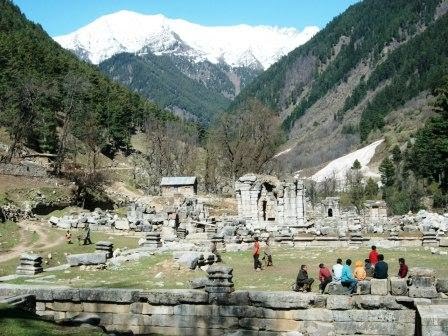
So we’re in the jeep gunning it to the hiking trailhead of Naranagh, in central Kashmir. We are: my guide, Salim, the driver Daba and a small white chicken from Delhi.

Daba, who’s young and cheerful, has an eye for the ladies, and the flash of a sequined dupatta (scarf) has his attention wandering from the road to the fields where such well-dressed winsome creatures are working.

Thankfully, the chicken kicks up a racket if Daba takes the corners too sharply, which send the little white bird skidding across the back seat. His rebuke makes Daba slow down, and for that I’m happy.

The fields are lined with fresh green poplars and fields of bright yellow mustard flowers and there’s still snow on the high peaks.

A hundred roadsigns flash by. Reading roadsigns in Kashmir is like reading a Forrest Gump book: “Life is a journey. Complete it.” “Mountains are for pleasure. Only if you drive at leisure.” And my favourite, obviously targeting female Punjabi tourists, “Don’t gossip, let him drive.”

For a region so torn apart by war (which of course everyone here blames on Pakistan), Kashmir is obsessed with safety.

We reach the camp and dump our gear and I check out my tent for the night. Lots of blankets. Hot water bottle. Torch. Toilet paper. Excellent. But I’m worried about the chicken. Will it survive the cold night? I should have let the guys sacrifice it on the butcher’s concrete steps the minute we bought it.

However, back in the kitchen tent for hot milky tea and macaroons, I hear a familiar squeak and it’s the chicken, nosing around the camp stove. It gets greedy for warmth and with a squawk, it’s singed its features and is running around the tent, screeching. Into your box this minute, chicken.

The village of Naranagh is dominated by an old Hindu temple, whose picturesque ruins sit on green grass nibbled to MCG levels by a battalion of trekking ponies, making it the perfect place for … a game of cricket.

All Kashmiri boys play cricket and, it appears, all Kashmiri boys can bowl. After admiring their skill while the girls are schlepping past with urns of water on their heads, we take a preparatory trek up to a local beauty spot, two hours up, an hour back along a rushing river fed by the summer thaw. It’s good to be in the clean air after the fug of Delhi, but my thighs aren’t so grateful.

That night, the scent of fragrant Kashmiri tea, with its cardamom, cinnamon and sugar, pervades the tent, the guys joke in a mix of Kashmiri and the local gypsy dialect, the chicken is having chicken dreams and chirrups in its sleep and all is well in the world.

Life in the slow lane…in Delhi

“Breathe in, stretch up. Breathe out, palms on the ground.” Rajneesh is taking me through morning yoga by the mirror-like 50-meter pool that stretches out along the ground level of the incomparably beautiful Aman New Delhi.

Billed as a ‘city retreat’, it is serene and peaceful – when the nearby workmen hacking up the roads in the name of the Commonwealth Games are stopping for a chai break.

This is luxe on tap. Only 40 suites, each one has its own plunge pool and 24-hour butler service. When I ring to book a wake-up call, the operator asks: would you like tea delivered at that time? And the freshest, most pure Earl Grey in fine bone china cups is carried to my door.

The spa offers India’s own Auryvedic treatments, tuned to your dosha, or personality. But over coffee, the spa’s high-energy Californian manager dug a thumb into my shoulder and another above my elbow, grabbed the phone and ordered 90 minutes in the hamman to scrub my grotty aura back to pure white and another hour-and-a-half on the massage table to experience the resort’s signature spa with Tensing, his “new Tibetan”.

The gym is staffed by a ranked tennis pro and a rugby player who has represented India, there is a hair spa that caters for media magnates and rock stars’ wives, private yoga in the nearby historical gardens and even a tapas bar tucked away.

Guests pootle around town in a beautiful silver Ambassador, India’s quaint, English-style cars that are a common sight as yellow-and-black taxis, not so common when polished to a sheen and nosing through the narrow streets of the backpacker enclaves, where I was the other day.  We had to hit the horn to get all the cheesecloth-clad hippies from blocking our path. Elitist? You bet. But oh, so comfortable.

Singh is King

And so the formula goes: every Sikh is a Singh, but not every Singh is a Sikh.

Dharamasala is behind us as we gun it down to the plains of the Punjabi and the city of Amritsar. Just a few hours after coming down from the mountains, the air is hot and dry.

Tibetan caps have been replaced with turbans, or paghi, and patkas, the black stocking-like headcovers worn by observant Sikh men to keep their untrimmed hair in check. While only 4.5% of India’s total population is Sikh, they make up about half the Punjabi state, and the town of Amritsar is famous not only for its fish tikka, leather shoes and the invention of the pappadum – all excellent things, I’m sure you’ll agree – but also for the most holy of Sikh temples, the Golden Temple.

Shades of Borneo the other week, the domes are covered in 400kg of 24-carat gold and every morning and every night, the sacred text of Sikhs, considered a living god, is woken up and put to bed via a palanquin garnished with garlands of fresh roses and marigolds in great pomp that draws up to 10,000 visitors in one day alone.

Harpreet, a local Sikh, took me round the temple, visiting the massive kitchen full of cauldrons of dhal and a chapatti machine that can churn out 30,000 cooked chapattis an hour. Yes, an hour. Not bad when the average man eats four or five rounds of the bread at each sitting. The 24-hour kitchen, run by a small staff and an army of volunteers, feeds up to 40,000 people every day. Every. Day. Every Sikh temple offers the same service to all comers regardless of religion: which is surely welcome considering the World Bank estimates that 80% of India – that’s 800 million people – earn less than $2 a day.

Lots of men were taking a dip in the waters that surround the temple, and I was reminded of the phrase from the former JJJ reporter Sarah MacDonald’s awesome Indian travelogue, ‘Holy Cow’ that Indians can ‘look without seeing’. Moving on…

Of yak butter, tantric meditation and why I’m not a supermodel…

Walking through the streets of Dharamsala is like walking through a Benetton ad: you can see the broad Central Asian faces of Tibetan exiles, narrow, dark faces from southern India, pink skin and pale hair of sunburnt western European tourists and the placid Nepalese influence all jumbled into India’s mix.

The menus are equally pan-global: chow mein, mutton curry and fried eggs all on the one menu.Will I the only foriegner to gain weight in India??? My plans to lose the cruise ship’s generous bestowal of a second backside have been, to date, thwarted by India’s lush fried breads – parantha, roti, chapatti, poori, naan…

Last night, I ate at a little Tibetan restaurant, where butter tea was on the menu.

“We put tea, water, salt and yak butter in the tea,” explained the waiter happily. Then his face then fell. “But there are no yaks here in Dharamsala, so we use Indian butter. You have yaks in your country?” Not as far as I know, I confessed. I watched him mentally scratch Australia from his list of desired alternative residences.

Higher on the mountain, north of Dharamsala, is McLeodganj, the English-established hilltown that’s the home of the Dalai Lama’s monastery in exile. Three narrow streets link the main square with the temple, and are crammed with shops selling everything from Tibetan dresses to tailors whipping up clothes on the spot, pretty junky jewellery, prayer bowls, as well as espresso.

It is a mark of the town’s tearaway prosperity that it is absolutely jam-packed with espresso cafes, heavily patronised by groovy backpackers regaling each other with wild tales of hairy adventures and narrow escapes, and Buddhist monks texting each other over lattes.

Yoga retreats and meditation ashrams line every corner, cheap guesthouses offer sagging beds for $4 a night, while flashier options are springing up daily, but still charging no more than $15 with views of the towering Himalayan mountain range, Dhamladhar, along with breakfast: fried eggs…fried Indian breads… Despite the absolutely perfect high 20s temperatures, the town is not in peak season. That comes in the next month or two, when it really hots up.

Although I’m not bald and also sans dreadlocks, I stuck my nose in to the new meditation ashram presenting the teachings of controversial guru Osho, and listened to a long-winded lecture about how I must worship the Divine Mother, the world-famous Her Holiness Shri Mataji Nirmala Devi, who also teaches meditation (but for a lot less money than Osho’s mob).

I enjoyed the calmness of HH’s ashram and the sensibility of meditation, but all calm was lost as her devotee refused to pause for breath while telling of miracles across the world, and did that annoying thing of pointing out a deity’s face as appearing in a natural formation: this time in a cloud formation over Australia’s Thredbo village, where she has visited and spoken. Hello, has ANYONE heard of PhotoShop in this town?

Bollywood movies and butter chicken

The fabulous Hong Kong has come and gone in a flash. Now, on an Air India flight, I’m having a few qualms. Not least because the toilet doors don’t lock and three hours into the five-hour flight, there has appeared to be no food apart from unsalted peanuts.

The movie, broadcast on a pull-down communal screen, is a film of a 40 year old hulk with shocking bags under his eyes, who plays the bad boy to the village’s beautiful 18-year-old good girl. Their love thwarted by corrupt police, it ends him saving her one last time (he does it quite a lot) from being ravaged by the bad local mafia boss who has the coppers in pay, and he rips off his shirt to reveal not only an astonishing oiled body that doesn’t burn even when flames lick his skin, but also that he’s an undercover cop, then takes on 10 at once, killing them all. There are quite a few dance scenes with some pretty raunchy dancing, and lots of almost-kisses. Pure Bollywood.

Ooh, but wait! It’s the drinks trolley. And now the food is being wheeled down the aisle, great steaming piles of it with buckets of yoghurt, and strong wafts of onion pervade the cabin. After three days running – literally running – through the streets of Hong Kong in the name of work, I need to eat. Weird, considering I ate myself a doppelganger on the sea cruise. Oh god it smells good. My first Indian meal in India. Well, possibly Indian airspace. The moral of this story is: India is a waiting game.

Although I’ve never been to India before, its food smells more familiar than last night’s meal in a Hong Kong hole-in-the-wall diner that recently earned a Michelin star. Yes, a Michelin star for the smoked chicken, the deep fried logs of 1000-year-old egg and pickled ginger, and the pomelo peel, cooked to a flaccid, taro-like consistency and dressed with a glutinous brown sauce scattered with dried shrimp, to make what’s known as poor-man’s abalone.

Bollywood movies and butter chicken on the flight? Bring it on, hostie.

Because you asked…

Well it’s been three weeks since I hit home after almost a year in Egypt. There’s a definite pattern in the questions I’ve been asked since I’ve been back, so let me run you through the answers (I probably should have done this weeks ago, which would have saved me sounding like a parrot).

Did you wear a headscarf? No. I’m Christian and I’m foreign. People don’t expect me to cover my hair. However, I did cover my knees and usually upper arms. Having said all that, in the chic nightclubs and private beaches, anything goes, from belly button rings to crop tops and miniskirts.

Were you scared living in Egypt as a lone woman? No. Cairo is an incredibly safe city. Like any place, there are some areas you don’t want to go (and not just women, but men, too!) – such as super-poor districts – but to get there, you’d really have to work hard: either take a cab or coax someone into to driving you. Hordes of drunks cruising the streets causing havoc are unheard of in Cairo. In fact, I attribute a large part of Cairo’s safety to the lack of alcohol in the country. Which brings me to the next question…

Could you drink alcohol? See Answer 1. Christian and foreign means alcohol is fine. However, wandering around drunk is very poor form. Some waiters were uncomfortable with serving women alcohol, but I am not quite sure why they were working in such establishments if they felt this way. Compared to average consumption in Australia, it was all severely curtailed. The local wine, friends, was generally dreadful, but alcopops, spirits and beer are in easy reach…24-hour delivery, if you really need it.

And what about pork? I think when you travel to places with different diets to your own, you either (a) obsess about the food you can’t eat – think Australians’ obsession with the thick, black, salty paste called Vegemite that we slather on our toast – or (b) you just forget about it. There was some pork floating around Cairo – most notably at the Italian Club and in an Italian-style café in Zamalek, but after Egypt knocked off all its pigs, ostensibly to prevent swine flu, neither love nor money would get you a slab of bacon. However, there were rumours going around the expat network recently there was a guy in Alexandria…

Work or holiday? Well, since my rich great-aunt died, I have spent my life on cruise ships and safari, without needing to work. That was sarcasm. Yes of course I worked, but Egypt being a far less expensive country to live in compared with Australia (no car registration, insurance, overpriced taxis and cheap, fresh food) meant I didn’t have to chain myself to a desk five days a week, and could instead travel to surrounding countries which I’m still publishing the stories for.

Did you learn any Arabic? Yes. Well, it was either learn Arabic or spend a year doing Marcel Marceau mime impersonations. While plenty of Egyptians told me I didn’t need to learn any Arabic, they are obviously delusional as to how much English is actually spoken in Egypt. And I think it’s pretty shoddy if you can’t at least say thanks. Also, if you can’t count, you’re just leaving yourself open to being fleeced (a nice way of saying ‘ripped off’).

So… were you fleeced? Of course. But then Egyptians are an indiscriminate bunch, and will try the same tricks on their fellow Egyptians. It’s just that as a foreigner, I’m obviously insanely wealthy and therefore fair game. The more Arabic I spoke, the less it happened.

Any essential travel things you would never go to Egypt without? An enormous cotton scarf. I bought an awesome one in Cairo and, as I’ve mentioned elsewhere, it has worked as a headscarf when entering mosques, to wrap up in freezing planes and um…. as an emergency towel. And Lonely Planet’s fantastic Egyptian phrasebook. I carried it every day. It is still recuperating from its year-long workout.

And finally, do you miss Egypt? Cairo’s a dirty, crazy city of 20 million people. The pollution is ridiculous, the noise intense, and you can stick out your finger and poke the energy. I miss it every day.

Global Salsa

Well, you’ve scrolled this far. What do you think? Drop me a line, I’d love to hear from you.

Privacy Settings
We use cookies to enhance your experience while using our website. If you are using our Services via a browser you can restrict, block or remove cookies through your web browser settings. We also use content and scripts from third parties that may use tracking technologies. You can selectively provide your consent below to allow such third party embeds. For complete information about the cookies we use, data we collect and how we process them, please check our Privacy Policy
Youtube
Consent to display content from - Youtube
Vimeo
Consent to display content from - Vimeo
Google Maps
Consent to display content from - Google