I’m a journalist, travel writer, editor and copywriter based in Melbourne, Australia. I write pacy travel features, edit edifying websites and fashion flamboyant copy. My articles and photographs have appeared in publications worldwide, from inflight to interior design: I’ve visited every continent, and have lived in three. Want to work together? Drop me a line… 

Follow


Cruising Norway and sustainable Melbourne: ASTW 2014 awards for excellence

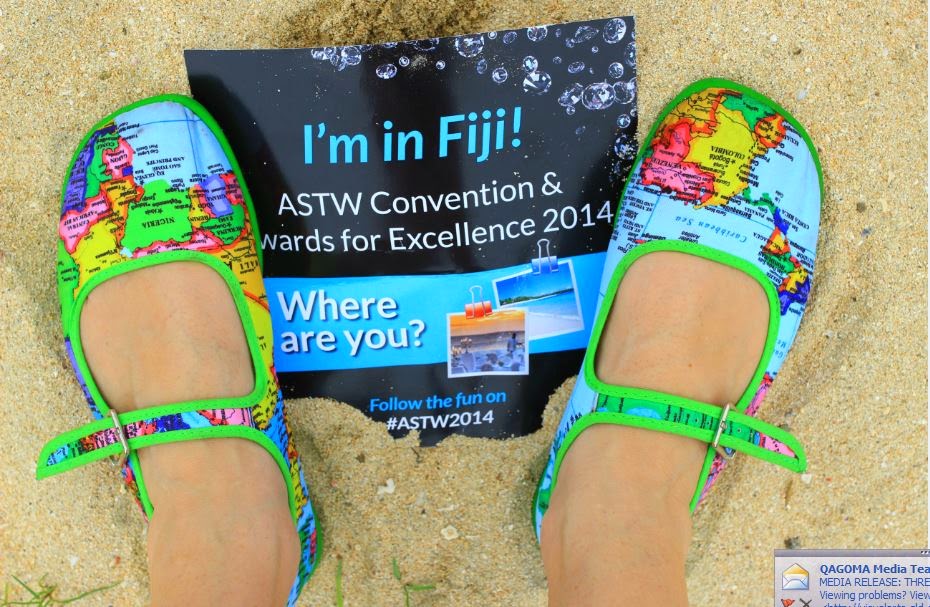
I’m super-chuffed to announce that I’ve won two awards at the Australian Society of Travel Writers’ 2014 awards, which were presented at the annual conference, this year in Fiji.

The awards were for best responsible tourism story, sponsored byTreadRight Foundation, under The Travel Corporation. This story, published in Honda magazine, is about travelling with a light eco-footprint in my hometown, Melbourne.

And the best cruise story, sponsored by TravMedia. This piece, published in the Sun-Herald newspaper, was about the journey of the Hurtigruten, down the Norwegian coastline. I reckon I deserved the award purely for hauling a 2 1/2  year old through Norway in mid-winter!

A massive thanks to the sponsors and the judges! I will post up the stories tomorrow.

Thanks also for all your messages of support and congratulations: it was my first ASTW AGM, and a great success all round.

Here’s a list of all the winners of each 2014 Journalism Awards for Excellence:

  • Travel Writer of the Year Award, sponsored by Tourism Fiji:

Ben Groundwater for Night Visions After Dark, The type of town that makes travelling great and Gone Native, no Bula

  • PR Communicator or Communications Team of the Year Award, sponsored by TravMedia:

Kim McKay, Klick Communications

Cameron Cope for Fist and Magic – Senegal Wrestlers

Cameron Cope for Myths and mountains

Kerry van der Jagt for Saltwater Dreaming

Daniel Scott for Bar/fly Wimbeldon Common

Robert McFarland for Working on the chain gang

Roderick Eime for Spirit of Africa

  •  Best Responsible Tourism Story Award, sponsored by The Travel Corporation’s TreadRight Foundation:

Belinda Jackson for Sustainable Melbourne

  • Outstanding Tourism Organisation or Travel Product Award, sponsored by PPR:

World Expeditions for the Larapinta Trail

Christine Retschlag for Rough road from prison gate to plate

  • Best Cruise Travel Story, with a prize provided by TravMedia:

Belinda Jackson for Search for the glow

Louise Southerden for Wildly indulgent

  • Best use of Digital – Writer, with a prize provided by Wotif:

Christina Pfeiffer for TRAVELTHERENEXT

  • Best Travel Book, with a prize provided by TravMedia:

Danielle Lancaster for 4WD Treks Close to Brisbane

Tiana Templeman for Racing road trains in a campervan

  • Best PR Campaign Award, with a prize provided by Sidekicker:

PPR for South African Tourism Australia

Travel news: Takeoff September 28, 2014

The High Roller observation wheel, Las Vegas, USA

KIDS

What happens in
Vegas…
Can’t hold off till the kids hit 21 to visit Vegas? The
new Children’s Discovery Museum (US$12, discoverykidslv.org)
proves the desert casino town isn’t just an adult playground. The museum has a
desert-themed toddler zone, an eco city, art play and detective mysteries to
solve for primary school kids. Vegas does have non-gaming, non-smoking hotels
such as Vdara (vdara.com) and most have buffets and pools aplenty. Many hotels
also let kids under 12 stay free in their parents’ room. If your hotel is a
roller-coaster free zone, head to Caesar’s 167-meter High Roller observation wheel, which
opened in March. Family packs for Saturday
morning cost $56 (two adults, three children, caesars.com). For more
ideas, from feeding twin white tiger cubs at the Mirage to feeding sharks in Mandalay
Bay, see lasvegas.com.
HOTEL
Dial-a-room
Unlock your stay in Brisbane with your mobile phone at
the NEXT hotel, which opened this week on the Queen Street Mall. Using the
hotels’ NEXT App, you can check in, unlock your room, control air-conditioning, lights
and TV, even from outside. If that’s too prosaic, use it to call for cocktails.
Wi-Fi is free throughout the hotel and the app is available for iPhones and
Androids. Don’t have a smartphone? Each of the 304 rooms has a Samsung Galaxy S4
phone for use during your stay. Also, the free club lounge is open to guests
who arrive earlier than the 3pm check-in and includes an outdoor pool, 24-hour
gym, showers and sleep pods. Catch NEXT’s opening special, from $179 a room
(weekends) until January 21. Book direct and get a $25 food and beverage
voucher. Phone 1300 272 132, see nexthotels.com/brisbane.
The Charisma by Victorinox.

GEAR

Luggage to Love
Finally, ’s
a luggage designer realises women need to stash a lipgloss amongst
the laptops, smartphones and power pens. In stores this month, the new Victoria
Collection comes from Swiss luggage specialist Victorinox, better known as the
inventor of the ultimate travel tool, the Swiss Army knife. With names such as Aspire, Divine and Sage,
the 10 styles include tote bags, crossbody day bags, four-wheel laptop cases, a
sleek backpack and the Charisma, a carryall that whips you from work to
weekend. It packs a 15.6-inch laptop and a tablet and its micro-suede zip-up
pockets are equally ideal for sheltering sunglasses as a clutch of USB sticks
and cables. The Charisma costs $309, in orchid (pictured), sand and black. See victorinox.ch.

TECH
Cruise control
Find the boat of your dreams (or the boat of your budget)
on the GetMyBoat app, which links would-be sailors with private boat owners and
boat rental companies. The free app lists more than 17,000 boats in 90
countries, including Australia, with a heavy emphasis on the US. It enables
direct messaging between renters and owners to book a boat for an hour, a day,
a week or whatever’s your whimsy, from $20 to eye-blistering sums. All boats are
vetted for safety standards before they’re listed on the site and insurance is
available. Available for iPhones and Androids. See getmyboat.com.
Floriade, Canberra.

NEWS

Floriade frolic
Kids, pets and manicured flowerbeds are an unlikely grouping, but Canberra’s celebration of spring, Floriade, bravely mixes
dogs, wildlife and cubby houses with a million blooms. The third week of the
month-long festival welcomes wildlife warrior Bindi Irwin on October 4 and 5;
lets you take your hounds in on October 7; and unleashes the professionals –
your kids – on six architecturally designed cubby houses on October 12. The
cubbies will then be auctioned to raise funds for The Centenary Hospital for
Women and Children and the National Children’s Playground Project.
The final week of the extravaganza has an Outdoors and Adventure
theme, with sustainability workshops and DIY demos from The Living Room’s
handyman hero Barry Du Bois, on October 11 and 12. And former former Raiders captain Alan Tongue will run a Big Boot Camp, also on October 11. Visit
Floriade, in Commonwealth
Park, until October 12. Entry is free. Phone 1300 852 780, see floriadeaustralia.com.
Good Food month.

FOOD

A state of good
taste
Get out of town for good food during October in The Sydney Morning Herald Good Food
Month
 and The CanberraTimes Good Food Month, presented by Citi. While Sydney will be
awash with night noodle markets and celeb chefs including our own David
Thompson of Bangkok’s celebrated Nahm restaurant, key gigs in the Blue
Mountains include the 80km-radius dinner highlighting local producers, at the
Fairmont Resort in Leura and a cider sampler lunch at Megalong’s new Cider
Barn. There are farmers’ markets by the seaside in Kiama, a long lunch down
Bowral’s Bong Bong Street and the foodie gems of Wollongong on show at TAFE
Illawarra. In Canberra,  you can bar-hop
around Braddon on gin cocktails, go country at the regional table of Le Tres
Bon Restaurant in Bungendore or step even further afield to experience Taste
Riverina, from Wagga to Griffith. See
goodfoodmonth.com.

Edited by Belinda Jackson, Takeoff is published in the Sun-Herald‘s Traveller section every Sunday.

Traveller: Takeoff travel news July 27, 2014

Budapest
AIRLINES:Budapest bound
In the aviation world, you’re nobody if you don’t have an
Airbus or 50. The Dubai-based Emirates airline has just received its 50th A380,
cementing its position as the world’s largest international airline. New destinations
connected by A380s include Kuwait and Mumbai this month, with Frankfurt,
Dallas, San Francisco and Houston coming online in the next five months. The
airline expects its cache of A380s to increase to 90 by late 2017. Emirates is
also adding three new European destinations to its network –Oslo and Brussels
in September and Budapest on October 27. 1300 303 777, emirates.com/au.

KIDS:Trump the parents
If your children are full of bright ideas, hook them up
with Donald Trump. No, really. The five-star Trump SoHo New York’s Young
Entrepreneurs program is open to hotel guests from 3 to 17 years as well as Manhattan
neighbourhood kids. Previous events including Children’s Museum of the Arts
film screenings, business and cooking classes as well as downtime in the spa
(for those busy kids, not you).  They’ll
also get business cards, free meals and a quarterly newsletter about NYC
family-friendly events. Kids get a monogrammed robe, candy buffets and
cocktails, local maps from a pint-sized point of view and free rollaway beds. A
new partnership with phil&teds lets you use their strollers and baby
backpacks during your stay. The NYC Family Getaway package costs from $687 a
night. +See trumpsohohotel.com/kids.  
FOOD: River courses
You won’t find 2009 Masterchef winner Julie Goodwin
hiding in the ship’s galley when she stars on her third Murray River celebrity
cook cruise. The PS Murray Princess paddlewheeler cruises the river while Julie
conducts three cooking demonstrations and hosts a three-course dinner for 120
guests on the four-night cruise between Mannum and Blanchardstown, SA. The
stately paddlewheeler journeys past redgum forests and limestone cliffs and
also pulls in to historic ports, a sheep station, a vineyard and a cellar door.
Departs March 9, 2015, but book early, she’s a lady in demand. Costs from $1229
a person, twin share. (02) 9206 1111, captaincook.com.au.
Mandarin Oriental Bodrum, Turkey
HOTEL: Turkish delight
The new Mandarin Oriental has thrown opened its
doors on Turkey’s south-eastern coastline, 30 minutes from beautiful Bodrum on
the Turkish Riviera. Each of the hotel rooms – the creation of Italian design powerhouse Antonio
Citterio -looks out over the Aegean, with terraces
and decks primed for sun soaking. The suites have plunge pools and
outdoor showers. Set on the waterfront on Cennet
Koyu (Paradise Bay), the hotel has 109 rooms and suites with a spa and
10 restaurants and bars. The Discover Paradise Bay opening offer
costs from $2587 for three nights,
and includes $215 credit to spend in the spa or restaurants, available until
December 31. Phone 1800 123 693, see mandarinoriental.com.
GEAR:Bag it

The Toby iMail laptop
bag.
Be prepared to suffer bag envy when you spot the Jackson
Casual Messenger slung over a hardened traveller’s shoulder some time soon. The
new range from Australian design company Zoomlite will be released in late
August, with the Jackson coming in olive, khaki or navy. The heavy-duty washed
canvas bag (25x32cm) features a vintage leather trim with a cross-body strap, leaving
your hands free for adventure. Keep an eye out also for the Toby iMail laptop
bag, for those who don’t need to shriek geek. The vintage-leather bag comes in
camel or deep brown and its padded section lets you truck a 13-inch laptop with
discretion (29x35cm).  Jackson Casual
Messenger, $69.95. Toby iMail, $229.95. zoomlite.com.au.
Designer Kash O’Hara
FASHION: Super styler
Get under the skin of chic Hong Kong and its
mainland cousin, Shenzhen, with Sydney fashion stylist and designer Kash O’Hara.
Kash will do a style analysis and help write your shopping list beforehand. She’ll even help you
design pieces that are then tailored in Shenzen. But it’s not all hard
shopping. The tour includes high tea at The Peninsula hotel, a swish dinner and
guided tours. “It’s partly a holiday, 
partly a shopping trip,” says Kash. From $3630 a
person, twin share. Includes international flights, four nights’ accommodation
in Hong Kong and one night in Shenzen. Departs October 1. Phone 0411 166 623,
see oharadesigns.com.
FAMILY: Self-catering in
Phuket

Face painting, Teen Idol and mini discos need to be balanced with
adult playrooms – and the swim-up bar and massage pods at Phuket’s two
Sunwing resorts, Kamala Beach and Bangtao, do the trick. Sunwing’s
Happy Baby Studios are designed for families with babies: the
ground-floor rooms have enclosed terraces and locking gates and all the
accoutrements, from pots to cots, baby recliners and unsmashable
crockery and cutlery. Happy Baby Studios cost from $138 a night,
off-peak (until October 31). sunwingphuket.com.

This weekly travel news column, Takeoff, is published in Sydney’s Sun-Herald‘s Traveller section each week. Visit smh.com.au/travel 

Boasters with the mostest: ultimate travel experiences

The world’s highest bar, Ozone, in the Ritz Carlton Hong Kong

 Biggest, highest, most blindingly expensive. Belinda Jackson
rounds up the ultimate travel experiences, from super-luxe to just plain
boastful. 

LAND
Longest walking track

The Pacific Crest Trail runs 4264 kilometres from the US-Mexico
border to Canada through California, Oregon and Washington. Budget five
months to walk it entirely, or you can jump a pony, as the trail is also
open to equestrians. Yep, there are bears in there (pcta.org).

Longest train journey
The legendary Trans-Siberian generally wins this category,
with the 9289km journey from Moscow to Vladivostok via Lake Baikal
taking seven days. But as train guru the Man in Seat 61 points out (seat61.com),
the honour for the longest continual journey should go to the No. 53
Kharkiv (Ukraine)-Vladivostok route, about 9714km, another seven-day
epic.

The world’s highest train journey, on the Qinghai-Tibet railway

Highest train journey
More than 550km of the 1956km Qinghai-Tibet railway is laid
on permafrost. Every train has a doctor and enough oxygen for every
passenger, and the highest point is Tanggula Pass, at 5072m. It also
passes through the world’s highest and longest rail tunnels.

Highest bar

Drink in the views of Victoria Harbour at Ozone bar in the
Ritz-Carlton Hong Kong, Kowloon side. Set on level 118, it’s 468.8
metres above sea level (ritzcarlton.com).

Biggest building
Dubai’s Burj Khalifa is the world’s tallest building at 828
metres, with 124 levels. It also has the world’s fastest elevators and
highest restaurant (At.mosphere on level 122, 442m) (burjkhalifa.ae).

It holds the crown until 2018, when the 1000-metre Kingdom Tower in
Jeddah, in neighbouring Saudi Arabia, is complete. Another design by
Burj architect Adrian Smith, expect fewer nightclubs (kingdomtowerskyscraper.com).

Noma restaurant, Copenhagen

Best restaurant
Copenhagen’s Noma restaurant (noma.dk)
is back on top, bumping Spain’s El Celler de Can Roca off the perch as
the 2014 winner of the authoritative San Pellegrino 50 Best Restaurants (theworlds50best.com). Judges name the winter potato cooked in fermented barley as chef-owner Rene Redzepi’s standout dish.


Best ethical travel destination
The Bahamas has been named Ethical Traveler’s greenest
destination, taking into account its environmental protection, social
welfare and human rights.
Others in the top 10 include Chile, Latvia and Mauritius (ethicaltraveler.org).


Most expensive tours
With a spare million dollars, you can spot 18 endangered
species in 12 countries, with one-tenth going toward conservation
projects (naturalworldsafaris.com). Otherwise, $1.5 million will let couples visit all 962 UNESCO
World Heritage sites. Put aside two years. Its other tours include the
10 best photo spots, for $130,000 (includes cameras), and the 10 most
luxurious suites in 21 days for $359,000 (veryfirstto.com).


AIR
Biggest airport
The busiest airport by passenger numbers is
Hartsfield-Jackson Atlanta International Airport, US, handling 92
million travellers a year, but yet again, Dubai gets in on the act: on
completion in 2027, its $32-billion Al-Maktoum International airport
will be able to accommodate 160 million passengers a year (dwc.ae).

Best airport
Singapore’s Changi airport consistently rates one of the
world’s best, taking out first place in Skytrax 2014 World Airport
Awards, followed by Incheon (Seoul) and Munich airports.
Sydney Airport was ranked Australia’s best, at No. 21 (worldairportawards.com).

Best airline
Air New Zealand was named AirlineRatings.com’s 2014 airline
of the year, with Qantas the best economy airline, while Skytrax 2013
World Airline Awards rates Emirates as the world’s best, followed by
Qatar Airways and Singapore Airlines, with Qantas coming in at No. 10. (worldairlineawards.com).

Safest airline
Qantas holds the record as the world’s safest airline, with a
fatality-free record since 1951, says airlineratings.com, rivalled by
Air New Zealand, according to jacdec.de.

Most luxurious airline lounge
For those of us fortunate enough to get a look in, Lufthansa
first class lounges were named the world’s best first-class lounges
while Qatar Airways took the business class gong at Skytrax’ 2013 World
Airline Awards (worldairlineawards.com).

Longest flight
Like to watch movies? Qantas’ ultra long-haul flight from Sydney-Dallas is the longest flight by distance, at 13,804km (qantas.com.au).
Should Turkish Airlines enact its plans for an Istanbul-Sydney route,
it would take the crown for its 17-hour, 14,956km flight (turkishairlines.com).

Ultimate airline travel experience: A three-hour flight on
Virgin Galactic’s SpaceShipTwo will cost $260,000, taking you 100km
above the earth, travelling at three times the speed of sound. Includes three days’ space training (virgingalactic.com). For a more modest $128,300, you can fly around the world in 24 days on Four Seasons’ new Boeing 757 private jets (fourseasons.com/jet).

SEA

Allure of the Seas, a Royal Caribbean International ship

Biggest cruise ship
The godmother of Allure of the Seas, a Royal Caribbean International ship, is super-sized Shrek ogress Princess Fiona. At 362 metres long and more than 225,000 tonnes, it can take
6295 passengers. The liner has 24 elevators, the first Starbucks at sea
and Broadway hit Chicago on show.
Its position will be usurped by another RCI ship, as yet unnamed, in 2016 (royalcaribbean.com).

Largest superyacht
With two helipads and a missile defence system, you can hire
Eclipse, owned by Russian oligarch and Chelsea football club owner Roman
Abramovich, for $2 million a week, excluding running costs.
At 162.5 metres, it’s the world’s second-biggest private
yacht after UAE President Sheikh Khalifa bin Zayed Al Nahyan’s new
180-metre yacht, Azzam, complete with armour-plated master suite.
The Azzam is not for hire.

Best beach
Brazil’s Sancho Bay on the remote island of Fernando de Noronha wins best beach, according to TripAdvisor.com.

Longest beach
Brazil wins again, with the 241km Praia do Cassino Beach. Gippsland’s Ninety-Mile Beach comes in fourth place. Whitest sand beach in the world: One for the home team,
according to the Guinness Book of Records, the whitest beach is Hyams
Beach in Jervis Bay, 2½ hours from Sydney.

Hyams Beach, Jervis Bay, NSW Australia

Best island
If money is your measure, you can rent the Caribbean’s
Calivigny Island in Grenada, for a cool $1.55 million a week. Sleeping
50 guests, it comes with a 173-metre yacht for your use (calivigny-island.com).More accessibly, the TripAdvisor community has voted Ambergris Caye, in Belize, its top island for the second year running (tripadvisor.com).

World’s highest pool
The Ritz-Carlton Hong Kong’s pool, is the world’s highest at 490 metres (ritzcarlton.com), towering over Marina Bay Sands’ dizzying infinity pool, 55 storeys, or 198 metres, above Singapore (marinabaysands.com).

World’s biggest pool
Running alongside the ocean, the lagoon pool at the San
Alfonso del Mar resort, in Valparaiso, Chile, is 1013 metres long,
earning its Guinness Book of Records entry. The 8 hectare, 250
million-litre saltwater pool is a pleasant 26 degrees and has a
100-metre waterslide (sanalfonso.cl).
Its sister lagoon, in the Egyptian resort city Sharm el-Sheikh,
reportedly covers 12 hectares and a Dubai project, under way, will cover
40 hectares.

The world’s largest pool, San Alfonsa del Mar, Chile

BEDS
Largest hotel
By room count, the three-star Izmailovo Hotel in Moscow,
Russia, with 7500 rooms, is largest. Most of the world’s mega-hotels,
with 4000-plus rooms, are in Las Vegas.

Most expensive hotel room
At $73,177 a night, the Royal Penthouse Suite at the Hotel
President Wilson is on the banks of Lake Geneva, with views of Mont
Blanc. There are 12 rooms, 12 bathrooms, a Steinway grand piano and yes,
it’s bulletproof. More modest rooms start at $483 (hotelpresidentwilson.com).

Tallest hotel
Six of the top 10 tallest hotels are in Dubai, including the tallest, the JW Marriott Marquis Dubai, which tops 355 metres (marriott.com). At 488 metres, the Ritz-Carlton Hong Kong is taller but is ruled out as the building is not solely a hotel.

Smallest hotel
Central Hotel, Copenhagen, 2.4m by 3m, including a minibar and photos of Ronnie Barker (the owner’s a fan), $360 a night. (centralhotelogcafe.dk).


This article by Belinda Jackson was published in the Sydney Morning Herald and The Age newspapers.

Search for the glow: Norway’s Northern Lights

The Aurora throws out a curtain.


EDIT: I am very pleased to note that this feature, originally
published in the Sydney Morning Herald newspaper, has won the Australian Society of Travel
Writers’ 2014 award for Best Cruise feature.

Dodging trolls and and black ice, Belinda Jackson rugs up to hunt the Northern Lights. 

Boarding the MS Midnatsol, the first thing we see is a tall
Norwegian woman welcoming us on to the ship. The second spectacle is of a
tall English woman being stretchered off the ship.

“She slipped and fell on the ice,” reports one of the crew.
Instinctively, I want to crawl. Happily, the lady reappears several days
later, smiling but in a wheelchair. Norwegian winter cruising, it
appears, has a touch of the blood sport about it. Forget bikinis and sun
loungers: there’s a layer of difficulty travelling in the far northern
winter.

Actually, there are many layers. Going outside for anything more than
a quick photo on the promenade deck becomes an epic exercise in
wrestling with thermal underwear. And two pairs of socks. Fleece.
Waterproof jacket. And the boots with ice grips (hmmmm – the casualty).

Crown it all with a tight beanie that will resist the wind’s
insistent fingers. Some people even pull on a balaclava, but that’s all
just a little too Douglas Mawson for me, though I am sporting a dangling
pompom that holds a 90-degree angle to my head in prevailing winds.

We do it because we’re hunting the light: the Northern
Lights. Yes, there’s reindeer sledding, midnight concerts and hot
tubbing on the top deck while it snows. But right now, our sun is in the
midst of exceptional solar activity, and boffins say that this winter
and next are the best in a decade to see the elusive Aurora Borealis.

Norway is one of the world’s top viewing locations and
doesn’t require frostbitten fingers, drinking sterilised wee or eating
your own dogs to get there.

Light-hearted: the Aurora from the deck of the Midnatsol.
Photo: Bob Stephan

In fact, it’s all rather civilised on the Midnatsol, one of
12 Hurtigruten ships that undertake an 11-day round trip that traverses
the length of the Norwegian coastline. A ship sails every day.

The coastal express mail and goods run started in 1893, with
passengers hopping on and off between farming villages and port towns.
Norwegians still use the Hurtigruten as public transport, but they are
now outnumbered dramatically by tourists keen to cruise the fiords and
wild coastline as the ship pushes up into the Arctic Circle. There’s a
healthy showing of Aussies among them, forsaking a southern summer for
temperatures so low, the locals don’t even bother to say “minus”.

You can pick the Norwegians: they’re the ones glued to the
live chess tournaments on the television in the main lounge, silently
sculling black coffee from tall thermo-mugs. The rest of us have our
noses stuck to the ship’s panoramic windows, waving at fishing trawlers
and making such blindingly obvious statements as “Gosh, it’s cold!”.

Doing nothing to dispel opinions of Norwegians as a teensy
bit boring, Norway’s national TV station NRK’s home-grown programs
includes 12-hour documentaries on stacking firewood, knitting and a
minute-by-minute program of the Hurtigruten journeying down the
Norwegian coastline, from Bergen to Kirkenes. It was a 134-hour,
non-stop broadcast, and it rated!

“Did you see the program?” the urbane concierge at Oslo’s
beautiful Grand Hotel asked me several days before boarding. “It was
great!” His patriotism makes me almost forgive Norway for being so
expensive that it makes my muscular Aussie dollars wimper and
hyperventilate.

Back on the ship, it’s time to throw out all my cruising
expectations: there are no little towel animals at the end of the bed
each night, the theatre hosts astronomy lectures instead of chorus
girls, and all the staff are locals.

It’s a dramatic change from the United Nations of staff that
you meet on most cruise ships, and it’s lovely to have locals’
experience and advice (“It’s Sunday night. This town is dead. Don’t
bother getting off.”)

But hey, it does a mean buffet. Scandinavians invented the
smorgasbord. The Norwegianised breakfast buffet features caramelised
cheese, mustard herrings and salmon done three ways (roasted, smoked,
cured) every morning. There’s reindeer pate and cloudberries at
lunchtime and a local salmon served, classically, with dill steamed
potatoes at dinner. And yes, there is a gift shop, full of hideously
misshapen trolls and heart-breakingly expensive snowflake knits. The
Hurtigruten is undeniably Norwegian.

The total journey from Kirkenes to Bergen is 2465 kilometres,
stopping in at 33 ports, some as little as 15 minutes, just long enough
to sling a crate of parcels overboard. After a few days, we slip into
the routine of busy mornings exploring towns and afternoons of quiet
contemplation and panoramic viewing.

It’s dark by 4pm but we don’t care: we’re here to see the
light. The Japanese say a baby conceived beneath the lights is a special
child. The Sami believe the lights are a trail left by a fox scampering
across the sky. Everyone from ancient Chinese to American Indians have a
theory: the lights are souls, they’re a bridge to heaven, a good omen, a
bad omen.

But let me blow a few myths: if you were standing on deck in
sub-zero temperatures at midnight waiting for a ray of green light to
zap you between the eyes, you’d be waiting a long time. Guest lecturer
and British astronomer Dr John Mason says most of the colours in the
Northern Lights are invisible to our eyes: we just can’t see the red and
turquoise bands with the naked eye.

MS Midnatsol

“You probably won’t see colour, but
you will see movement.” Green is the most apparent colour, followed by
violet, but even then they’ll most likely show up as a hazy grey cloud
against the clear black sky, he warns.

Point a camera at the grey clouds and you’ll see the eerie
green rays appear in your final photo – and even then only when you open
the lens for up to 15 seconds or more.

To see the lights, the sky has to be dark, with no light
pollution. You also need a cloudless sky and your eyes also need to be
dark adapted, which can take up to 10 minutes, which is a long time on a
windswept ship’s deck in the black of a polar night. “When the lights
appear, we’ll make the announcements over the ship’s PA, and you have to
hurry,” Dr Mason says. “We don’t know how long they’ll last – You’ve
got to be ready.” We’re all so ready.

“We’ve been on six nights, from Bergen, and haven’t seen
anything yet,” says glass artist Bob Stephan, from North Carolina. Armed
with a fish-eye lens and balaclava, he helps me lash my camera to a
deck chair in lieu of my lost tripod.

There are two important things to note from this
conversation: one is that most tourists tend to stay on the ship for the
entire 11-day round journey, from Bergen up to Kirkenes and back again.
The second is that the Northern Lights are fickle.

But we strike it lucky: second night on board, and the show
is on. The deck is jam-packed as people point cameras to the sky. The
sky swirls and a soft grey-green light gusts and drifts into view. It’s
not the “hit-me” colours of the brochures, or a white night. But the
wild wind, the snow gusts and the dancing sky leave us light-hearted and
light-headed: we are but mesmerised little people dwarfed by the glory
above.

The Lofoten archipelago.

The serious photographers are rugged up and settled in for
the night, but the crowd drifts off after an hour or so. The next night,
the lights show even longer, a static display that has the astronomers
scratching their heads, though the ship is pitching wildly.

It’s also cold enough to bite your nose off.

We dash down below decks to thaw out, when one of the
astronomy tour members, Patch, pulls out his phone. The Aurora Australis
has been putting on a spectacular show in Tasmania, just an hour and
$100 from my Melbourne home. Groans from we Australians. Tasmania?
That’s next year’s plan.

The writer was a guest of Bentours.

AHOY! Norwegian Getaway has a three-storey sports complex that includes an eight-foot over-sea “walk the plank”.

FIVE MORE GREAT PLACES TO HUNT THE AURORAS
TASMANIA The Aurora Australis has been seen as close to Hobart as
Seven-Mile Beach (near Hobart Airport), on the Overland Track and Bruny
Island. Get viewing tip-offs from this local alerts page facebook.com/groups/215002295201328/.
ALASKA Fairbanks and nearby Denali National Park are Alaska’s
playground for aurora hunting, and boast an 80 per cent chance of
spotting the lights from August to April, see explorefairbanks.com.
ICELAND Make sure you’re in the glassed-in bar of the Ion Hotel when
the lights deign to shine. The new eco-hotel is an hour’s drive from
Reykjavik, see ioniceland.is.
CANADA Head for Whitehorse, Yukon, on the edge of the wilderness and
hunker down in a yurt while you wait for the performance to begin, see arcticrange.com.
FINLAND Tuck up in a snow igloo in Kakslauttanen Arctic Resort, in Finnish Lapland, a thousand kilometres north of Helsinki, see kakslauttanen.fi.

TRIP NOTES
GETTING THERE Fly Sydney to Oslo via Bangkok with Thai Airways or via London with British Airways (britishairways.com). From London or Bangkok, book early to catch Norwegian Air’s cheap flights (norwegian.com).
CRUISING THERE The nine-day Best of Norway Cruise departs daily from Bergen
or Kirkenes, with astronomy tours available in winter. From $2877, twin
share (winter) to $4448 (summer), 1800 221 712, see bentours.com.au.
MORE INFORMATION visitnorway.com.

Get going: party on the Pacific Jewel

Explore Antarctica with Abercrombie & Kent

Hit the high seas or relaxing rivers with this week’s international and travel deals, featuring cruises from Broome to Botswana. 


GO NOW
BOTSWANA & NAMIBIA
Cruise the Chobe River on the African Queen and save $420 a
couple on a three-night adventure, until June 30. See water-loving
elephants and hippos and take a game drive. From $1865 a person, twin
share, $2295 singles, phone (02) 9290 2877, see benchinternational.com.au.

SYDNEY SEA BREAK
Time poor? Escape for a three-night sea break on the Pacific
Jewel. The ship features seven restaurants, nine bars and clubs, spa,
zip-liner and big screens galore. Depart May 30, save $150. From $339 a
person, quad share. Phone 132 494, see pocruises.com.au.

P&O’s Pacific Jewel.

GO SOON
EUROPE
Save 30 per cent on selected seven-night cruises on the
88-guest River Cloud II between April and August. Cruise the Rhine, from
Basel to Amsterdam, with all meals and a bottle of champagne to say
hello. Book by March 31. From $2195 a person, twin share. 1300 583 572, seacloud.com.

SOUTH AUSTRALIA
Cruise the Murray River in winter (June to August) and save
up to 25 per cent on three, four or seven-night cruises. Includes meals,
shore excursions and coach transfers from Adelaide to Mannum. From $674
a person, three nights. Phone (02) 9206 1111, see captaincook.com.au.

GO LATER
ANTARCTICA
Save up to $3350 a person on three 2014-15 specialist
Antarctic journeys, covering climate change, photography or family
Christmas cruising. The 12-day Classic Antarctica journey costs from
$12,850 a person, twin share. Book by March 31. Phone 1300 590 317, see abercrombiekent.com.au.

WESTERN AUSTRALIA
Follow the historical Kunmunya Wilderness Walk, a shore tour
on three Kimberley cruises from Broome to Darwin on June 2, 13 and 23.
Book by March 31 and get a free stay and camel ride in Broome, worth
$500. From $7390 a person, 11 days. Phone 1800 637 688, see auroraexpeditions.com.au.

MV River Orchid on the Mekong River.

Mekong meander

Spend 15 days exploring Vietnam and Cambodia by land, air
and water including seven nights aboard the River Orchid on the Mekong
River. From Ho Chi Minh City to Hanoi, you’ll sail the delta of
southern Vietnam then head into Phnom Penh and the Tonle Sap river.
Includes flights from Siem Reap to Hanoi. Book by November 30 for
travel until December 23. From $5814 a person, twin share. Phone 1300 939 414, see flightcentre.com.au.


Alaskan adventures

Multi-generational travel – a fancy name for holidays with
the grandchildren and grandparents – is so hot right now. “Take the
grandkids to Alaska” is the call for families of four to join the
Disney Wonder in Vancouver and cruise up to Ketchikan, Alaska.

The nine-night tour includes two nights in Vancouver, all
meals, kids, teen and adult clubs, first-run movies and Broadway-style
Disney musicals. From $1899 adults, $1299 kids two-11 years, quad
share. Phone 1300 886 940, see worldwidecruisecentres.com.au.

Belinda Jackson‘s Get Going column is published every Sunday in Sydney’s Sun-Herald newspaper.

Tripping the light fantastic: Northern Lights in Norway

On Deck 9, Midnatsol, Norway. Photo: Bob Stephan

There’s reindeer on the menu and light shows in the polar night, as Belinda Jackson cruises around Norway.

The temperature says it all: it’s 2.2 degrees C but the wind-chill
factor drags it down well below zero.

The ground is slippery with black
ice and it’s only 5pm, yet the sun has long given way to a dark, polar
night.

Norway’s extreme north is turning on a chilly welcome this November eve.

The town of Kirkenes is the starting point for my sea journey from high
up in the Arctic region to the gentler climes of Bergen in the south of
Norway, just a hop-skip across the North Sea to Scotland’s Shetland
Islands.

To help you place Kirkenes on the world map, it’s 400km past the Arctic
Circle, 7km from the Russian border and 37km west of Finland. There are
reindeer burgers on the hotel menu and rather prosaic tips on sleeping
during the midnight sun (close the curtains).

The next morning, my chariot awaits. More precisely, it’s the
Hurtigruten. Even more precisely, Hurtigruten is not one particular
ship, but a route (‘hurtig ruten’ = fast route) that links Norway’s
coastal towns and villages.

A ship leaves Bergen every day of the year for the journey to Kirkenes
and has been doing so since 1936, interrupted only by wars. My ship, the
MS Midnatsol (Midnight Sun), was built in 2003 and with 644 berths, can
take up to 1000 passengers (and not just tourists), drawn predominantly
from the UK, USA and northern Europe – not to mention more Australians
than you’d expect. Our ship has also a substantial smattering of
Norwegians using the ship for its original purpose: as a means of
transportation, and the staff are all locals, too, save a few
foreigners…from Sweden.

My cabin is a cosy little affair: two couches fold down to make
comfortable beds, there’s a little desk and a bathroom that can be
described kindly as ‘petite’. There are hooks and nooks to tuck your
gear away in, though the ship’s lounges, cafes and libraries are
preferable, with their panoramic windows and wi-fi which,
understandably, gets a bit shaky when the weather is tossing the ship
around on the stretches of open sea.

Panorama Lounge, Midnatsol, Norway.

Unlike most cruise ships, there’s no grand piano chained to the floor,
there are no dancing chorus girls, and the stars are not belting out
their ’70s hit parade but glittering overhead in the black depths of the
winter sky.

“You won’t starve on the journey,” a waitress tells me sorrowfully at my
first meal. My induction to the chef’s hand is lunch, which today
features five types of fish including roasted cod, gravalax and tubes of
Mills Caviar, as well as reindeer casserole with onions and mushrooms.

Stopping at coastal habitations, sometimes for as little than 15
minutes, we’re encouraged to jump off and explore: from the excellent
polar bear museum in Hammerfest to walking the mediaeval streets of
Trondheim or feeling your skin prickle during an eerie, uplifting
midnight concert in Tromso Cathedral.

Cruising in winter has a couple of fairly obvious disadvantages:
firstly, it’s seriously cold and secondly, you’ve got to cram your
sightseeing into the brief hours of daylight. Nobody’s worried – we’re
all here for the big winter drawcard: the lure of spotting the Northern
Lights.

They’re fickle beasts, those lights. They flicker and swirl without a
care who’s watching, but winter 2013/14 and 2014/15 are considered the
best in a decade for seeing what local legends describe as the dancing
souls of the departed, or a shining bridge to the heavens. There are two
astronomy groups on board, so we’re treated to guest lectures and the
ship hands out a memo of photography tips.

And we get lucky.

Rugged to the eyeballs – literally – we camp out on
Deck 9, the open deck at the top of the ship, which also houses two
outdoor jacuzzis that steam invitingly. The wind’s agile fingers tear at
our clothes and the ship rolls and churns as we strive to catch the
roiling clouds of green light in our camera lenses as, for two
spectacular nights, the Aurora Borealis deigns to put on a show.

Down below, we break from viewing to drink hot tea and peel back the
layers of clothing. The talk is all about the lengthy light show and
photos are admired and emailed onward. Many travellers slip into a
reflective state, absorbing the daytime scenery of fresh snow on
dramatic peaks and revelling in the nocturnal adventures in the sky.

There’s a sense of camaraderie among us all: we have tripped the light fantastic.

Belinda Jackson was a guest of Bentours.

This article was published in Get Up & Go magazine. 

Bill Clinton, Norwegian chess and the depths of the polar night: on the Hurtigruten

The view from the Panorama Lounge on
decks 8 and 9, MS Midnatsol.

This morning was spent eavesdropping on two old fellas from San Diego: from taking photos with Bill
Clinton, to Russia as a re-emerging military power and car parking in downtown San Diego.
On this
journey on the Hurtigruten, from Kirkenes in far northern Norway to Bergen in the south, the guests are predominantly British, American and German. I catch Australian accents more times than I
expected, many drawn by the lure of spotting the Northern Lights.  

There is also a substantial
smattering of Norwegians using the ship for its original purpose: as a means of transportation between the country’s coastal towns and cities.

The
Hurtigruten is a route, not one particular ship (‘hurtig ruten’ = fast route’). A ship leaves Bergen every day of the year and has
been doing so since 1936, interrupted only by wars. My ship is the MS Midnatsol,
(Midnight Sun) built in 2003 and with 644 berths, can take up to 1000
passengers.
One of the many lounges on the MS Midnatsol,

The oldest
ship, the MS Lofoten, was built in 1964 and takes just 153 passengers.
Apparently it’s very popular with tourists, though locals fight to understand
why. “It’s just an old barge, compared with the Midnatsol,” one tells me. 

Our cabin
is a cosy little affair: two couches fold down to make comfortable beds,
there’s a little desk and a bathroom. There are hooks and nooks to tuck your
gear away in, though the ship’s lounges, cafes and libraries are preferable,
with their panoramic windows and wi-fi which, undestandably, gets a bit shaky when the weather is tossing the ship around on the stretches of open sea.
“You won’t
starve on the journey,” a waitress tells me sorrowfully. Our induction to the chef’s
hand is lunch, with five types of fish including roasted cod, gravalax (smoked
salmon), tubes of Mills Caviar and yes, today features a reindeer casserole
with onions and mushrooms.
The dining room on the MS Midnatsol.

Stopping at
coastal habitations, sometimes for less than 15 minutes, we’re encouraged to
jump off and explore, be it a polar bear museum, taking a dip in the Arctic pool on the open Deck 9 or listening to a midnight concert when we reach Tromso. With restaurants, gym,
auditoriums, laundry and saunas, it’s a floating world, yet unlike the global
cruise liners, all the staff are local or from neighbouring Sweden. 

And with reindeer pate
and caramelised cheese on the menu, live chess broadcasts on the local tv station and a gift shop full of toy trolls and
snowflake knits, it’s undeniably Norwegian.

Catching the light fantastic: the Northern Lights in Norway

The view from deck 9, MS Midnatsol. Photo: Belinda Jackson

I have seen
the light! The Northern Lights! That shimmering curtain of luminescent green
that cloaks the Arctic Circle in the winter months. 
Coy and as unpredictable
as the Sydney bus service, we struck it lucky by spying the lights on our very
first night on the ship. The lights made a brief appearance before dinner –
which only keen watchers managed to catch – but put on a post-dinner show for
all. They reappeared around midnight after the crowds had gone to bed, to dance
and skate across the sky for just a few of us well-rugged travellers on the
Hurtigruten, here in northern Norway.
“We waited
six nights before we saw anything,” a fellow cruiser told me, while helping me
set my camera to catch the phenomenon, which is the result of solar flares
hitting the Earth’s atmosphere. ISO ramped up, exposure 10 seconds, manual
focus, camera tied to a deck chair: for we photographic amateurs, it’s really a
case of pointing, shooting and hoping that something shows up at the end.
But let me
blow a few myths: if you were standing on deck in sub-zero temperatures at
midnight waiting for a ray of green light to hit you in the face, you’d be
waiting a long time. According to the ship’s guest lecturer Dr John Mason, most
of the colours in the Northern Lights are invisible to our eyes: we just can’t
see the red and turquoise bands with the naked eye. Green is the most apparent
colour, followed by violet, but even then, when you look into the sky, they show
up more like a hazy grey cloud against the clear black sky.
Point a
camera at the grey clouds and you’ll see the eerie green rays appear in your
final photo – and even then only when you open the lens for up to 15 seconds.
It’s not always like this, otherwise the Lights wouldn’t be in Sami folklore, long
before cameras became a natural extension of our arms.
The band of
green light was a bridge between earth and heaven upon which departed souls
would travel, a mystical, powerful force that is as strong a lure for us today. 

Norway asks: what does the fox say? ‘Brrrrrr.’

The new Astrup Fearnely museum, by too-hot architect Renzo Piano.
“I hear
it’s a bit of a backwater,” says an unnamed expat living in Sweden, looking
across at neighbouring Norway. Talk about winning friends… but I’ve heard this before, Swedes sniffing at what
they see as hard-smoking, hard-drinking Norwegians who are rich from oil, not
from hard work.
It’s the classic ‘fight-with-your-neighbours’ scenario. Think Britain and France. The USA and Canada. Australia and New Zealand.

If you
tuned into Norway’s national tv station NRK, you’d probably agree. Previous
programs include 12-hour features on stacking firewood, knitting and a minute-by-minute
program of the cruise/cargo ship route, the Hurtigruten, which makes its way up
and down the Norwegian coastline, from Bergen to Kirkenes. It was a 134-hour, non-stop
broadcast from one of the ships, and it rated its pants off.
“Did you
see the program?” an urbane concierge asks me at Oslo’s beautiful Grand Hotel. “It
was great!”
Elkburger at the face of new Nordic food, Kolonihagen,
in Oslo’s gritty Grunerlokka district.

“Sorry, can’t
say I did,” I reply. “But I’m going to be living it instead.”

After a day
in Oslo, where the nonsensical Norwegian hit song ‘What does the fox say?” blares
from cosy-looking bars, we fly to icy Kirkenes, way up in the northernmost tip
of Norway, in the Finnmark region, to start our trip.
To give you
an idea of the locale, Kirkenes is two hours’ flying time from Oslo, heading
due north, in the Arctic Circle. It’s 7km from the Russian border and 37km west
of Finland. Murmansk is 250km away, about four hours’ drive.
Looking out
of the plane window, the blackness is spotted infrequently with orange lights indicating
some sort of dwelling. The ground is white with snow and ice, slick with
running water and while the temperature reads a relatively balmy 2.2 degrees
(positive), the wind chill factor drags it down somewhere below zero.
“It’s quite warm for this time of year,” the
taxi driver tells me. “A few years ago, it was -20C in early November.” My face
starts to crack just at the thought of that cold.
Dinner is a
very red chowder with pepper, king crab and chunks of cod, and a reindeer
burger the size of a side plate: for all its insanely low temperatures, this is not a desert. The land provides.
Global Salsa

Well, you’ve scrolled this far. What do you think? Drop me a line, I’d love to hear from you.

Privacy Settings
We use cookies to enhance your experience while using our website. If you are using our Services via a browser you can restrict, block or remove cookies through your web browser settings. We also use content and scripts from third parties that may use tracking technologies. You can selectively provide your consent below to allow such third party embeds. For complete information about the cookies we use, data we collect and how we process them, please check our Privacy Policy
Youtube
Consent to display content from - Youtube
Vimeo
Consent to display content from - Vimeo
Google Maps
Consent to display content from - Google