I’m a journalist, travel writer, editor and copywriter based in Melbourne, Australia. I write pacy travel features, edit edifying websites and fashion flamboyant copy. My articles and photographs have appeared in publications worldwide, from inflight to interior design: I’ve visited every continent, and have lived in three. Want to work together? Drop me a line… 

Follow


Should I swim with whales? An ethical debate

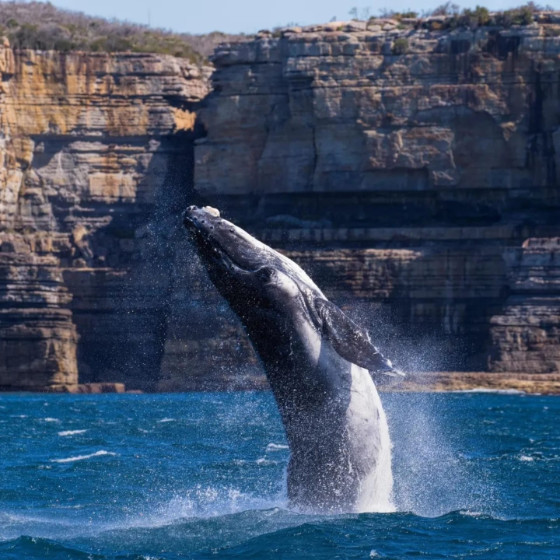
A few months ago, I jumped in the chilly waters to swim with whales, as a pod of over-excited humpback whales were tearing up the NSW South Coast on what’s known as the humpback highway.

Swimming with whales in Australia is still a fledging tourism activity – should we even be doing it?

This swim with whales is run by Jervis Bay ecotourism company Woebegone Freedive, and we also had whale scientist Dr Vanessa Pirotta on board, and together, we teased out the ethics of whale swimming and interaction, for this feature in the Sydney Morning Herald and The Age newspapers’ Traveller section.

For some whale background, every year, thousands of humpback whales migrate from the chilly waters of Antarctica to southern Australia, where the split around the continent – some going to the western coast, and others up the east coast, where they find their favourite creche to nurture and teach their babies about life on the humpback highway.

Interestingly, one of those creches is near Fraser Island, where I also spent my childhood. We never knew anything about whales, because by the 1960s, we’d killed most of them for a lucrative whaling industry.

Thankfully, Australia banned killing these marine giants, and the population has begun to swell again. Some scientists put the population at about 40,000, so now we can see them in places like Fraser Island, Warrnambool in Victoria and Albany in Western Australia which, ironically, was the site of Australia’s last whaling station. It now makes its money from tourism, as people come to see the majesty of the animals we used to slaughter.

The trip was hosted by Bannisters Hotels, which offers a stay-and-swim Mollymook Migration package  https://www.bannisters.com.au/mollymook-migration/

To read my discussion about whether we should swim with whales, jump to https://www.smh.com.au/traveller/inspiration/i-swam-australia-s-humpback-highway-but-should-i-have-20240917-p5kbb7.html

State of the nation: Jimmy Rees’s Australia

What saved you during Australia’s lockdowns? Was it cake? Boxes of wine or chocolates? Netflix, or perhaps it was Jimmy Rees.

The Melbourne-based comedian found himself unemployed at the beginning of the pandemic, and in his own words, just started mucking around with videos that he posted on social media – see media www.jimmyrees.com.au And he went viral.

In parodying states and territories’ stances on such issues as border closures, mask-wearing and the convoluted rules around daily exercise and social interaction (“yes, you can book a restaurant for 20 people. No, you can’t have 20 people over to your home for a dinner party”) he revealed much about Australia and Australians.

I’m a fan – I’ve been a fan since I watched him as a children’s TV presenter (yes, I may have potty-trained my daughter while watching him play Jimmy Giggle to a stuffed owl). So I leapt at the opportunity to interview him for this travel feature in the Sydney Morning Herald and The Age newspapers’ Traveller section, where we asked him to cast his laser eye over the states and territories.

You can click here to read this cover story, where I play straight woman to Jimmy’s wild  wanderings, as he covers bogans, wild animals, closed rooftop bars and the Flannelette Curtain (it’s in Tassie, if you’re interested…)

Ah, the Gold Coast. The weather, the beaches, the cruisy lifestyle. Everyone’s got a sports car, and there’s lots of bling. It’s flashy and it’s full of cashed-up bogans. (Actually, I don’t think you really need to say there are bogans in Queensland. It’s like a silent “k”). But Queenslanders are like, ‘yeah, we know, and it’s fine. But we have the best weather, so where would you rather be?’ Well, perhaps not Brisbane. You fly into it and then realise it really doesn’t have a beach and you ask yourself ‘Why did I come to Brisbane? I should have just gone to the Goldie or the Sunshine Coast to be with all of the cashed-up bogans’.

Enjoy our wander through the Lucky Country!

Camp Island the Great Barrier Reef’s newest private island escape, Queensland Australia

On a quiet Sunday afternoon in locked-down Melbourne,  my beautiful daydream is of Camp Island, on the Great Barrier Reef.

The little island is at the top of the Whitsunday Islands group, and when you take it, you take the whole island. To get there, I had to dodge two cyclones, a COVID outbreak and several COVID scares, but it was worth it. While the island is located in the curve of Abbot Bay, in between Airlie Beach and Townsville, there was almost no sight of another human.

To discover more about Camp Island, click here to read my story in the Sydney Morning Herald/The Age‘s Traveller section.

Budget isles: cheap stays on Australia’s islands

This was going to be my year of the islands. My list included a food festival on Tasmania’s Flinders Island, a visit to another Bass Strait island, King Island, where my grandparents farmed the land after WWII, and  Queensland’s sparkly jewels were also on the list.

My latest story, published this week in the Traveller section of the Sydney Morning Herald and The Age newspapers, is in response to a recent story that Australia’s millenials don’t enjoy travelling around their own country because it’s expensive and boring (if you want to delve more deeply into it, have a look here).

Yeah, we’re never going to be another Bali, because we have minimum wages, we try to discourage exploitation of animals etc etc. But you can still camp on Whitehaven Beach, internationally lauded as one of the world’s most beautiful beaches (that’s a debate for another time), for under $40 a night.

From Kangaroo Island in South Australia to Magnetic Island off Townsville on the Queensland coast, here are a few suggestions to get you going. One thing to remember: islands are islands and therefore take a bit more work to get to. But while you’re kayaking through turquoise waters, or flying over a pod of dolphins to get to said island, isn’t the journey as important as the destination?


Heart to Heart: visiting the Great Barrier Reef’s most iconic reef

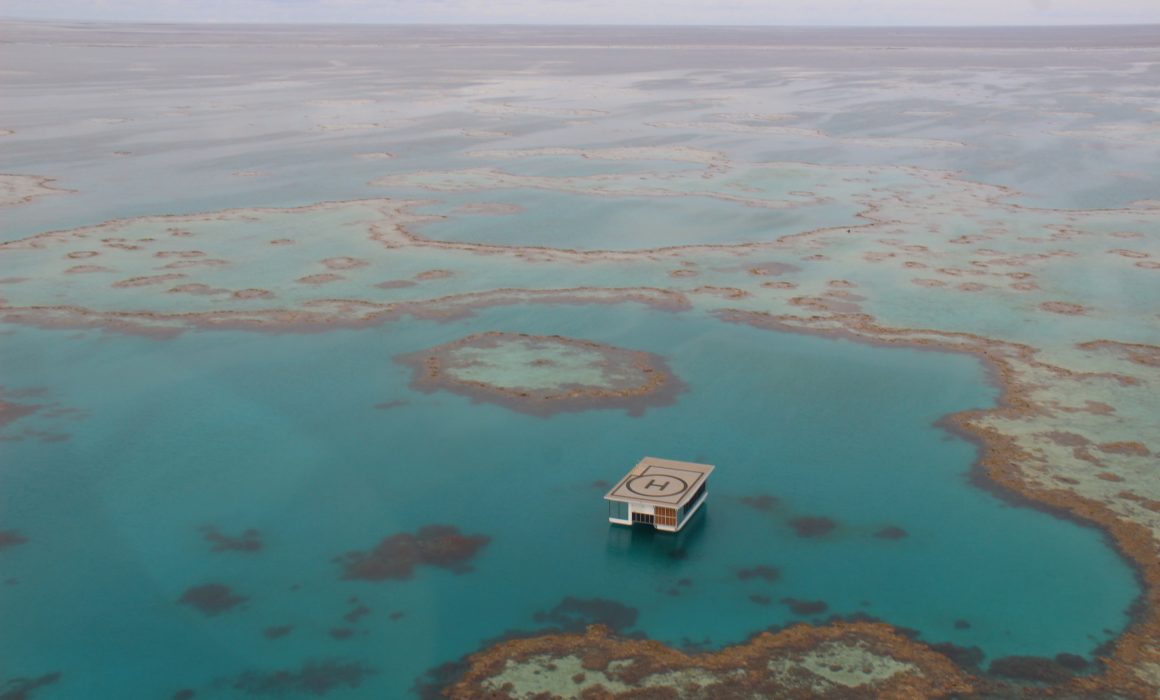
Alone, but not unloved, tiny Heart Reef is the pin-up star of everything that’s beautiful on the Great Barrier Reef – its perfect heart shape, its glittering lagoon, its intricate corals and its romantically remote location.

If you’ve seen an ad for Australia’s Great Barrier Reef in the past few years, you’ve probably been looking at an aerial shot of Heart Reef, the little heart-shaped bommie (“It’s NOT A REEF!” clarifies the Great Barrier Reef Marine Authority, with some asperity) set within Hardy Reef, north-east of the Whitsunday Islands.

The vastness of the reef, the oceans and the deepest blue of the channels between the coral platforms send shivers down my spine. To read more about how to visit Heart Reef and this luxury Heart Island pontoon, click here to take a look at my story for Traveller section of the Sydney Morning Herald and The Age.

Rise of the regions: new hotels in rural Australia

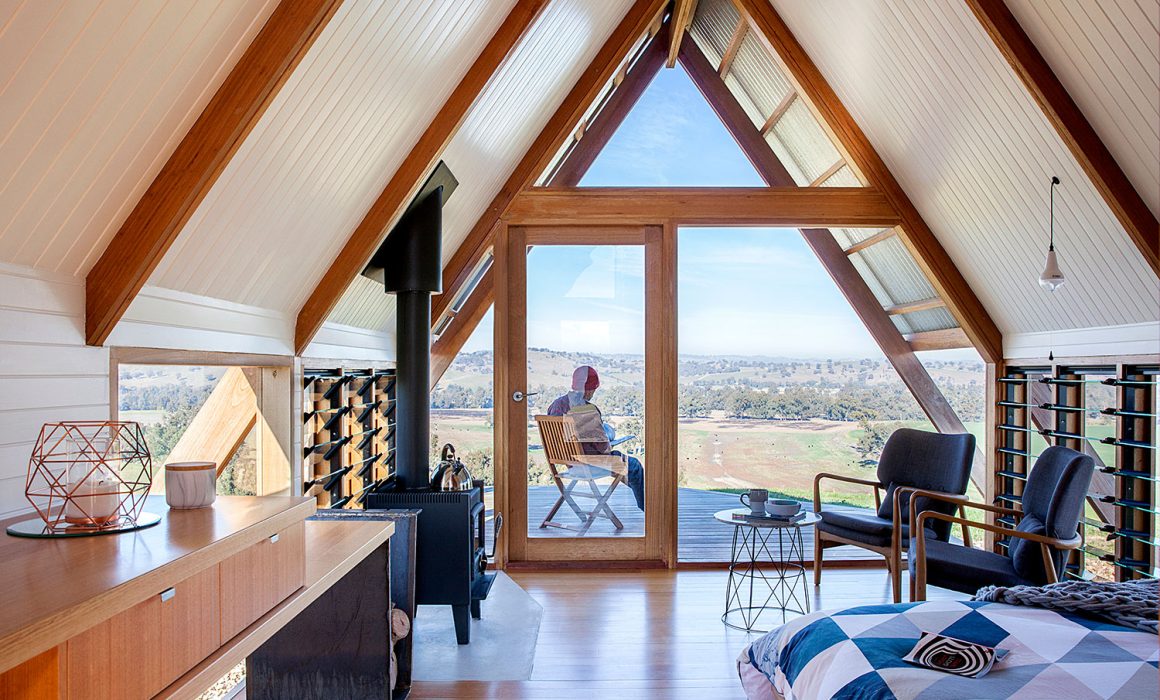
Rural retreat hunters are spoilt with a swag of stylish new properties away from the bright lights.

We take a look at Kimo Estate in rural NSW and Mt Mulligan Lodge in far north Queensland, where back roads are back, and slow travel establishes as one of today’s key travel trends in a world that never hits the off button.

With plenty of sparse spaces across the country, Australia’s regions have responded to the demand for dalliance – click here to read on for the Rise of the Regions, first published in Essentials Magazine.

How to respect the Reef

Recently, I was up on Heron and Hamilton Islands on Australia’s Great Barrier Reef, which is constantly in the news for being beautiful, but also for dying.

In my regular series in the Sydney Morning Herald and The Age’s Traveller section, I chat with experts about travellers’ conundrums, and this trip sparked a column on how to respect the Reef.

The expert is Andy Ridley, creator of the global Earth Hour movement (which asks individuals and businesses to switch off their lights – in the house, in skyscrapers, on the streets – for just one hour). His newest project is Citizens of the Great Barrier Reef,  a network of individuals, organisations and businesses working to conserve the Great Barrier Reef and reefs around the world.

His steps to respecting the reef include:
  • carbon-offsetting your flights
  • using reef-friendly sunscreen
  • visiting the Reef responsibly – using eco-accredited tour companies, not touching coral
  • and promoting the reef: if you see damage, report it. If you find beauty, tell the world.

To read the full article, click here

To become a Citizen, sign up at citizensgbr.org

scUber dives into the Great Barrier Reef

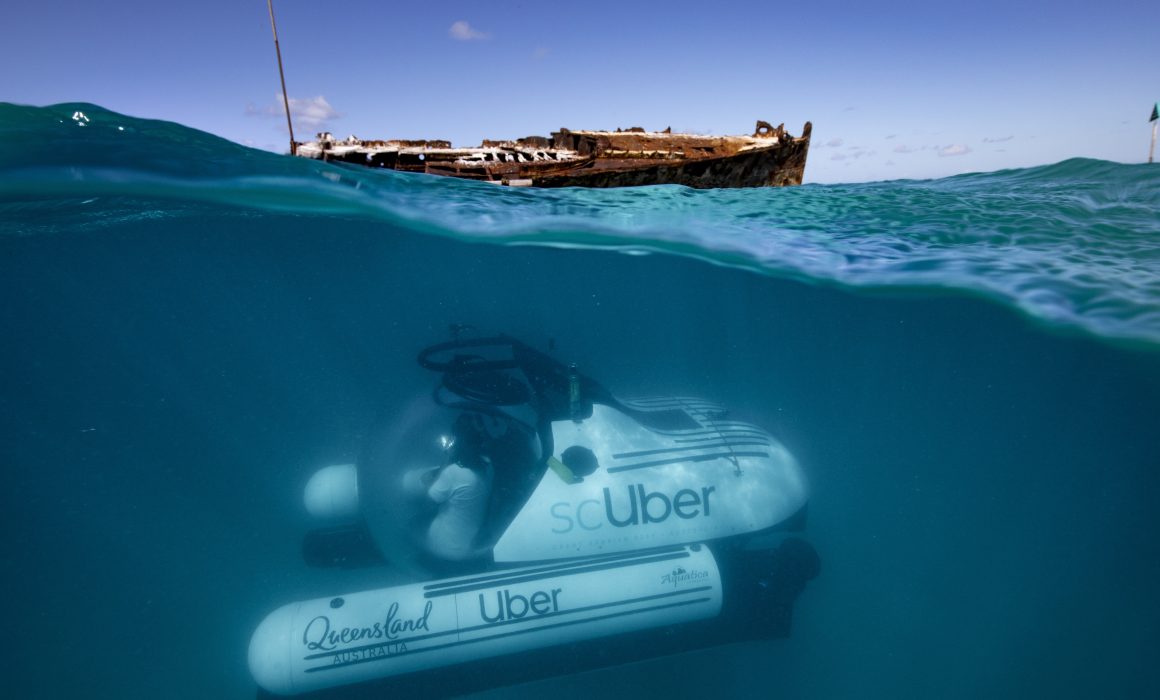
It’s been a big week on the Great Barrier Reef, with the launch of the world’s first ridesharing submarine, appropriately named scUber.

Uber has teamed up with a baby sub named Barry, for a month of dives to explore the Great Barrier Reef – currently hovering around Heron Island, off Gladstone, it moves up to Cairns this coming week.

Fancy a seat? They’re $1500 a pop, book on the app.

If you think it’s just a publicity stunt, you’re right. Queensland’s tourism board has teamed up with Uber to highlight the health of the reef, to encourage people to come and see it for themselves. Hopefully, they’ll learn to love our marine icon – the world’s largest living thing – and therefore help protect it.

You can read more in my news story for the Sydney Morning Herald’s/The Age Traveller section, there’s even a competition to win a seat on the mini submarine. Click here to check it out.

Seven dishes you must try on the Sunshine Coast

Seven_dishes_sunshine_coast

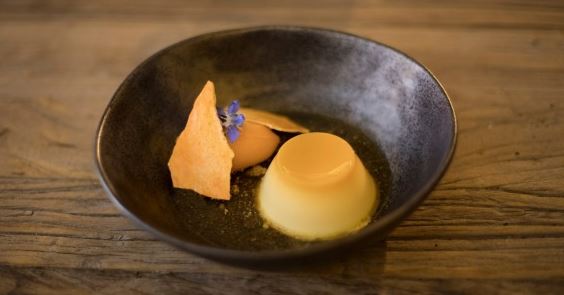
Koji creme caramel, Spicers Tamarind

The path to the Sunshine Coast beach town of Noosa is a well-worn path for southerns. However, chef Cameron Matthews’ recommendations of what to eat will send you up into the cool hinterlands to try Asian-inspired creme caramel, wash-rind cheeses and fresh feijoas.

You can find out what his seven must-eat dishes are by clicking here

This article appears on the Sydney Morning Herald and The Age‘s Traveller website.

Tom Roberts’ cigar box lids a touchstone of Australian impressionism

I recently wrote a couple of pieces on one of Australia’s leading artists, Tom Roberts, and was surprised to find the lengths that he travelled in Australia during his career, from the 1870s till his death in 1931. Not only did he criss-cross from his birthplace in England to his eventual homeland in Australia, but he also went bush, painting up in the Torres Strait, in outback NSW and in the far south of Tasmania.

One of the pioneers of Australia’s plein-air landscape paintings, he would set off on the weekends with fellow artists to the ends of Melbourne’s rail, to camp at Box Hill and Mentone for a few days’ painting. There are more shopping malls and beach boxes at these mid-city suburbs today, so we should be thankful he documented the times when European settlers were still eking out a home amongst the scrublands.

“Think of artist Tom Roberts and you’ll probably recall grand works: his muscular Shearing the Rams, painted in 1890, is more than six feet long (183 centimetres). The Big Picture, commemorating the opening of Parliament, is a “17-foot Frankenstein”.

However, Roberts’ small paintings, known as 9 by 5s, cemented
his position as one of the nation’s eminent artists and along the way
created a new school – Australian impressionism.”

Click here here to read the full story (and to see pictures!)

Tom Roberts is on at the National Gallery of Australia until March 28.
nga.gov.au/Roberts. Tickets are on sale through Ticketek


Global Salsa

Well, you’ve scrolled this far. What do you think? Drop me a line, I’d love to hear from you.

Privacy Settings
We use cookies to enhance your experience while using our website. If you are using our Services via a browser you can restrict, block or remove cookies through your web browser settings. We also use content and scripts from third parties that may use tracking technologies. You can selectively provide your consent below to allow such third party embeds. For complete information about the cookies we use, data we collect and how we process them, please check our Privacy Policy
Youtube
Consent to display content from - Youtube
Vimeo
Consent to display content from - Vimeo
Google Maps
Consent to display content from - Google