I’m a journalist, travel writer, editor and copywriter based in Melbourne, Australia. I write pacy travel features, edit edifying websites and fashion flamboyant copy. My articles and photographs have appeared in publications worldwide, from inflight to interior design: I’ve visited every continent, and have lived in three. Want to work together? Drop me a line… 

Follow


Should I swim with whales? An ethical debate

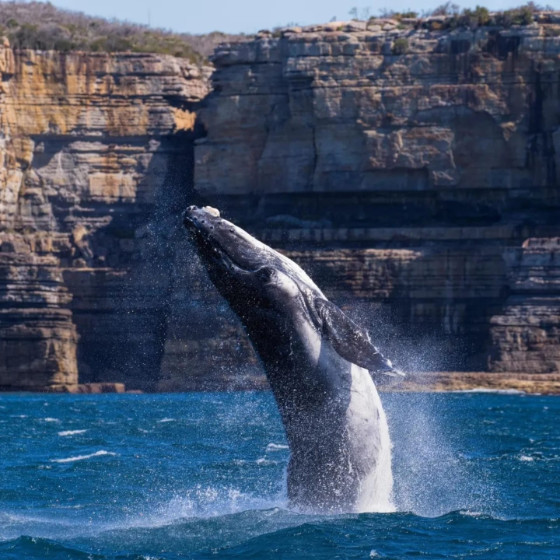
A few months ago, I jumped in the chilly waters to swim with whales, as a pod of over-excited humpback whales were tearing up the NSW South Coast on what’s known as the humpback highway.

Swimming with whales in Australia is still a fledging tourism activity – should we even be doing it?

This swim with whales is run by Jervis Bay ecotourism company Woebegone Freedive, and we also had whale scientist Dr Vanessa Pirotta on board, and together, we teased out the ethics of whale swimming and interaction, for this feature in the Sydney Morning Herald and The Age newspapers’ Traveller section.

For some whale background, every year, thousands of humpback whales migrate from the chilly waters of Antarctica to southern Australia, where the split around the continent – some going to the western coast, and others up the east coast, where they find their favourite creche to nurture and teach their babies about life on the humpback highway.

Interestingly, one of those creches is near Fraser Island, where I also spent my childhood. We never knew anything about whales, because by the 1960s, we’d killed most of them for a lucrative whaling industry.

Thankfully, Australia banned killing these marine giants, and the population has begun to swell again. Some scientists put the population at about 40,000, so now we can see them in places like Fraser Island, Warrnambool in Victoria and Albany in Western Australia which, ironically, was the site of Australia’s last whaling station. It now makes its money from tourism, as people come to see the majesty of the animals we used to slaughter.

The trip was hosted by Bannisters Hotels, which offers a stay-and-swim Mollymook Migration package  https://www.bannisters.com.au/mollymook-migration/

To read my discussion about whether we should swim with whales, jump to https://www.smh.com.au/traveller/inspiration/i-swam-australia-s-humpback-highway-but-should-i-have-20240917-p5kbb7.html
Southern Spain by train for fino & flamenco – Seville, Jerez & Cadiz

It’s standing room only at the bar, glasses of the golden, dry sherry called fino and plates of tissue-thin jamon at our elbows.

Low stools are huddled closer to the small stage for those who like to book ahead, but the rest of us stand; it’s a loud, friendly scene while the flamenco musicians warm up. Then Maria bursts through the crowd to demand our absolute attention.

And she gets it.

The cantaor (singer’s) voice cuts into my heart, even though I’ll understand his words only much, much later, his voice is wrought with melancholia.  As the late flamenco documenter Pierre Lefrance wrote, flamenco singing sees “deep grief … simultaneously expressed and controlled”.

Maria, on the other hand, is defiant and proud, a fury that lets her crash her shoes onto the timber floor, in time with the rapid hand clapping from the musicians.

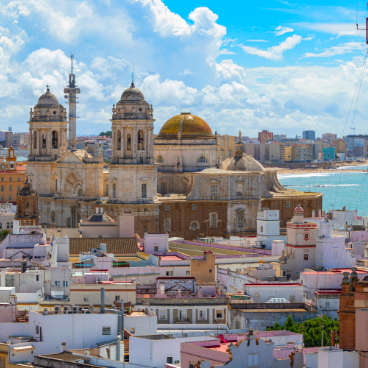
I undertook a six-day tour, travelling Spain by train between Seville, Jerez and Cadiz to explore flamenco and sherry, both which claim their origins are here in southern Andalucia. A solo traveller, I found myself standing at bars to snack, to listen to flamenco, to shoot morning coffee and sip evening Oloroso, a dark, sweet sherry that is just one of the iconic sherries form this region.

Travelling with British slow travel experts Inntravel, they booked the hotels and train tickets, and issued me with a series of suggested walking tours, leaving me to guide myself through these three wonderful cities. My hotels were Las Casas de la Juderia, Seville, Casa Grande in Jerez and the 18th century Hotel Argantonio in Cadiz.

You can read my cover story about fino and flamenco in the Sydney Morning Herald and The Age newspapers.

See https://www.smh.com.au/traveller/inspiration/this-southern-spain-train-odyssey-is-ruled-by-two-f-words-20240822-p5k4cs.html

Spain by train

Tour
Inntravel’s self-guided six-night Fino & Flamenco tour travels between Seville, Jerez and Cadiz by train. Includes pre-booked train tickets, six nights’ bed and breakfast and suggested walking tours. The trip starts any day of the week from Seville. From $1300 (excludes flights). See inntravel.co.uk

Qualified sherry educator Annie B runs tapas and tabanco tours through Jerez and Cadiz (anniebspain.com)

The writer travelled as a guest of Inntravel.

Hotels reborn: 10 historic buildings that are now luxury hotels

Where are you sleeping tonight? In a prison cell? A castle? A monastery. A jam factory? I’m talking about rooms inside buildings that have been reborn as hotels – buildings that may otherwise have fallen into irretrievable disrepair, or worse.

Traveller cover photo Pentridge Prison

Traveller cover photo The Interlude @ Pentridge Prison

This weekend, my cover story in the Traveller section of the Sydney Morning Herald and The Age newspapers is about hotels whose buildings have served a previous life – I rounded up 10 across Australia and abroad, with an extra serve of five Australasian hotels on the side. I looked at hotels as far apart as London, Peru and Turkey, which have been train stations, palaces, even a state Department of Education. Some, like the Las Casas de la Juderia, in Seville and London’s St Pancras Renaissance, were from recent travels. Some, like The Interlude here in Melbourne’s Pentridge Prison complex, are only just about to open. All are close to my heart.

Sometimes, it’s the location or the beauty of a building that lures developers to imbue it with renewed life. Other times, it’s the building’s backstory that a visionary can weave into its incarnation, to be reborn with new purpose.

“Heritage is the art of saving what is useful and beautiful, but also updating it for modern use,” says Terry Fripp, of Kerry Hill Architects, whose projects include Perth’s much-lauded COMO The Treasury, formerly Western Australia’s historic State Buildings.

It’s the ultimate act of recycling: reusing existing resources while also giving back, in the form of hotel restaurants, bars, spas and event spaces that are, for the most part, accessible by the public.

Click here to read my story on the 10 great hotels reborn, with another serve of five Australasian hotels on the side.

or see https://www.theage.com.au/traveller/inspiration/10-historic-buildings-reborn-as-stunning-luxury-hotels-20230512-p5d7vp.html

Global Salsa

Well, you’ve scrolled this far. What do you think? Drop me a line, I’d love to hear from you.

Privacy Settings
We use cookies to enhance your experience while using our website. If you are using our Services via a browser you can restrict, block or remove cookies through your web browser settings. We also use content and scripts from third parties that may use tracking technologies. You can selectively provide your consent below to allow such third party embeds. For complete information about the cookies we use, data we collect and how we process them, please check our Privacy Policy
Youtube
Consent to display content from - Youtube
Vimeo
Consent to display content from - Vimeo
Google Maps
Consent to display content from - Google