I’m a journalist, travel writer, editor and copywriter based in Melbourne, Australia. I write pacy travel features, edit edifying websites and fashion flamboyant copy. My articles and photographs have appeared in publications worldwide, from inflight to interior design: I’ve visited every continent, and have lived in three. Want to work together? Drop me a line… 

Follow


Of myth, graves and art: Tasmania, Australia

Photo courtesy of Henry Jones Art Hotel

Back in the mists of time, nobody used to admit they were from Tassie, the heart-shaped island state of Australia. If you escaped from Tasmania, you rebranded and moved on.

Now, it’s deeply fashionable to be from somewhere other than Melbourne or Sydney, and Tassie is as hot as it gets, with a bumper food scene, fabulous scenery and its Henry Jones Art Hotel, which claims is position as Australia’s first art hotel.

I popped down just as winter was kicking in – a little too early to catch snow on kunanyi / Mount Wellington – but with a wind imported directly from Antarctica, which howled down the wharves, sending shutters shuddering and reminding me,  in the dead of the night, of the myth and graves on which this island is founded.

You can read my review of the recently renovated Henry Jones, which was published in the Sydney Morning Herald and The Age newspapers here .

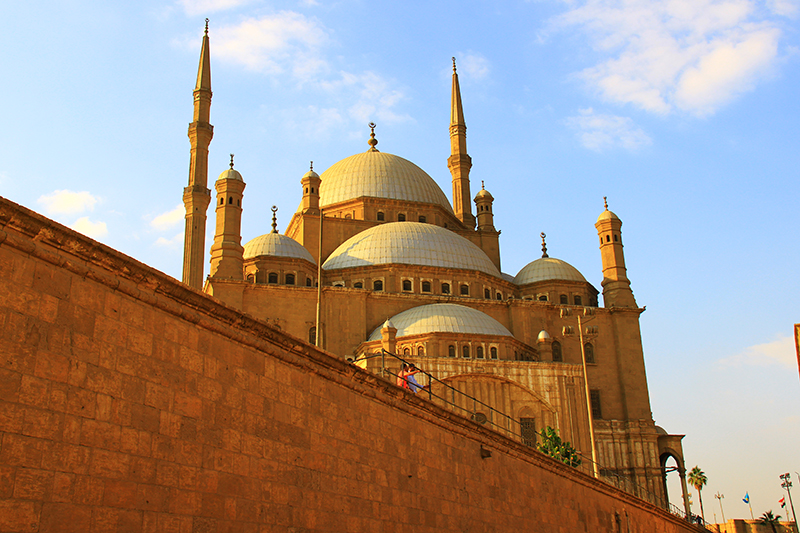
Cairo: The palace walk

Lined with palaces, mosques, merchant’s mansions and markets, Cairo’s Al-Muizz is a contender for the Middle East’s most beautiful street.

It’s the ancient thoroughfare of medieval Cairo, the lifeblood of a dozen centuries: every time I return to Cairo, I find myself walking the length of Al-Muizz li-Din-Allah. Like most before me, I’m lured by the street’s imposing palaces and caravanserais, its dusty mosques and vivid markets.

I’ve walked this street countless times over a decade, and each time, I make a new discovery. A forgotten tomb. A synagogue. Cool, dark water cisterns that plunge deep underground or a merchants’ mansion, instructive in the ways of generations of traders, aristocrats, craftsmen and families who filled the streets of Islamic Cairo when it was established by the Shi’ite Fatamid regime in 969AD.

In case you haven’t twigged, Egypt is back on the tourism trail after seven years languishing in the doldrums after its revolution in 2011, which overthrew dictator Hosni Mubarak, who’d run the country as his personal fiefdom for 30 years. They’ve now got another army brass running the country – plus ça change, plus c’est la même.

Cairo’s Citadel, which overlooks the city. Photo: Belle Jackson

But finally, with stability and growth taking place around the country (think, highways remade, new airports open, Nile cruise boats dusted off), it’s fabulous to see the return of one of Egypt’s major industries.

Cairo often gets but a cursory glance while everyone rushes to the Pyramids then down to Luxor, but spend the turn of the day in El Muizz for what I think is one of the world’s most beautiful streets.
Thanks to Vacations & Travel for again going ahead of the trend and publishing my feature on this beloved street.

https://www.vacationsmag.com/palace-walk-cairo/

Expat: Tips from Long Island City/Manhattan

EXPAT Manhattan Denise GreenAustralian expat Denise Green is originally from Brisbane, and has been living in NYC and working from her Long Island City studio for four decades.
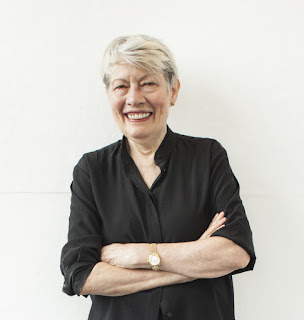
The artist suggests strolling around Columbus Circle. ” I am deeply interested in how we collectively and individually remember historic events, and explore it in my exhibition at Gallery 9 in Sydney this month at gallery9.com.au,” she says.
Denise will be in Sydney for the opening of her exhibition at Gallery 9 on April 18, 2018.
Click here to read Denise’s insights into her stomping ground, published in the Traveller section of the Sun-Herald and Sunday Age newspapers.

Expat: Long Island City/Manhattan

We’ve got a great series of interviews at Traveller now: I get to chat with expat Australians all around the world, who share their tips and tricks from their adopted hometowns. 
This week, it’s artist Denise Green from Brisbane, who has been living in NYC and working from her Long Island City studio for four decades. 
She suggests strolling around Columbus Circle. ” I am deeply interested in how we
collectively and individually remember historic events, and explore it
in my exhibition at Gallery 9 in Sydney this month at gallery9.com.au,” she says.   
Denise will be in Sydney for the opening of her exhibition at Gallery 9 on April 18, 2018.
Click here to read Denise’s insights into her stomping ground, published in the Traveller section of the Sun-Herald and Sunday Age newspapers.

Expats: tips from Chiang Mai, Thailand

I’ve been on the hunt for Aussie expats around the world to share
tips from their adopted home towns for a column in Sydney’s Sun-Herald
and Melbourne’s Sunday Age.

Melburnian Chris Chun is a fantastic artist and illustrator living in
Chiang Mai, in Thailand’s north, so I tapped him for some great places
to eat, drink, see and what to avoid (He says: “keep your shirt on,
men!”)

Click here to read about Chris’ Chiang Mai, on the Traveller website.

You can see Chris’ beautiful work here.

Tang: Treasures from the Silk Road capital

If you wanted to brush up on your knowledge of China’s Golden Age,
the Tang Dynasty, you could do worse than regressing to a 1970s
childhood. Grab the beanbags and binge on the campy Japanese kids’ TV
show, Monkey.

Let’s leave aside that the lead character, Monkey, is a celestial
monkey warrior and king of primates who’d conjure up an army from a few
plucked chest hairs, ride a white cloud and could transform himself into
a hornet to irritate and defeat evil: the TV program is rooted in fact.

Monkey is based on the 16th-century Chinese epic Xi You Ji
(Journey to the West), which traces the 17-year pilgrimage of the monk
Xuanzang from China to India, in search of Buddhist scriptures. In Monkey,
which was dubbed hilariously into English, the monk is called
Tripitaka, an honorary title used during the Tang Dynasty for those who
had mastered the Buddhist scriptures.

To read more about the Tang: treasures from the Silk Road capital exhibition, on display at the Art Gallery of NSW until 10 July, click here.

Roberts’ portraits the ‘selfies’ of their day

With her huge blue eyes, plump rose-kissed cheeks and a tumble of
golden curls spilling over her fashionable fox-fur trimmed coat, Lily
Stirling is the perfect face of a beautiful new nation.

Born in Melbourne’s Lonsdale Street, Lily was about six years
old when her father, a physician friend of prominent Australian artist
Tom Roberts, commissioned her portrait in 1890. Roberts wrote cheeky
ditties of painting children, “… I’ve painted kids in every pose,
A’kissing their mammie or smelling a rose …”

Many of Roberts’ finest portraits are showcased at the blockbuster Tom Roberts exhibition at the National Gallery of Australia, on until March 28 in Canberra.

To read more about artist Tom Roberts’ portraits, click here.  

This feature by Belinda Jackson was published in the Sydney Morning Herald.

Tom Roberts’ cigar box lids a touchstone of Australian impressionism

I recently wrote a couple of pieces on one of Australia’s leading artists, Tom Roberts, and was surprised to find the lengths that he travelled in Australia during his career, from the 1870s till his death in 1931. Not only did he criss-cross from his birthplace in England to his eventual homeland in Australia, but he also went bush, painting up in the Torres Strait, in outback NSW and in the far south of Tasmania.

One of the pioneers of Australia’s plein-air landscape paintings, he would set off on the weekends with fellow artists to the ends of Melbourne’s rail, to camp at Box Hill and Mentone for a few days’ painting. There are more shopping malls and beach boxes at these mid-city suburbs today, so we should be thankful he documented the times when European settlers were still eking out a home amongst the scrublands.

“Think of artist Tom Roberts and you’ll probably recall grand works: his muscular Shearing the Rams, painted in 1890, is more than six feet long (183 centimetres). The Big Picture, commemorating the opening of Parliament, is a “17-foot Frankenstein”.

However, Roberts’ small paintings, known as 9 by 5s, cemented
his position as one of the nation’s eminent artists and along the way
created a new school – Australian impressionism.”

Click here here to read the full story (and to see pictures!)

Tom Roberts is on at the National Gallery of Australia until March 28.
nga.gov.au/Roberts. Tickets are on sale through Ticketek


The 16 must-see new architecture projects for 2016

An artist’s impression of WTC transportation hub, US

In what’s becoming an annual story for the Sydney Morning Herald, here’s my round-up of next year’s great architectural openings. Thanks, as ever, to Sydney architect and founder of Sydney Architecture Walks, Eoghan Lewis. 

Who doesn’t love an architectural icon? While rising prices and
global uncertainty have slowed many building projects around the world –
the ambitious Grand Egyptian Museum is once again on ice – eyes are
open for key cultural offerings in Hamburg, New York and London.

Sure,
the skyscraper industry isn’t going out of business any time soon –
just take a look at the new Trump Towers going up in Vancouver, while
skinny is inny as New York discusses the rash of slim skyscrapers
overshadowing Central Park and the first super-tall skyscraper has been
approved for Warsaw. However, take your head out of the clouds to see
what’s trending in the world of architecture.

“Analogue seems to
be coming back … less slick, less same-same,” says Sydney architect and
architecture walking guide Eoghan Lewis. “Authenticity is trending, and
there is a new focus on refinement and simplicity.” (see www.sydneyarchitecture.org)

Click here to see what we’ve named the top 16 architectural openings in 2016. 

(This feature by Belinda Jackson was first published in the Sydney Morning Herald/The Age newpapers.) 

Homecoming for Australia’s cultural treasures

Part of Kebisu’s headdress, collected in the Torres Strait
from Maino by Alfred Cort Haddon in 1888.
Photo: © The Trustees of the British Museum

The day he pressed his father’s treasured ceremonial headdress into
the hands of an Englishman, Torres Strait Islander Maino must have known
life was changing for his people. 

“Maino gave me the headdress his father King Kabagi [Kebisu]
used to wear when on the warpath and a boar’s tusk ornament!” wrote
English anthropologist Alfred Cort Haddon in his journal in 1888. “We
were such good friends he … wanted them exhibited in a big museum in
England where plenty of people could see his father’s things.”

Skip forward several generations and Maino’s
great-grandson Ned David, a prominent Torres Strait traditional
owner, could not be more proud. “Maino was an absolute strategist,” Mr
David says. “He must have realised change was on the way, and [ensured]
the interests of his own people were looked after.”  

The headdress has returned to Australia for the first
time, more than 120 years later. With its thick black
cassowary feathers, it’s one of the hero objects in Encounters,
an exhibition of key Aboriginal and Torres Strait Island artefacts at
Canberra’s National Museum of Australia, from November 27-March 28,
2016. 

To read more of my story about this exciting exhibition at the National Museum of Australia, click here
Global Salsa

Well, you’ve scrolled this far. What do you think? Drop me a line, I’d love to hear from you.

Privacy Settings
We use cookies to enhance your experience while using our website. If you are using our Services via a browser you can restrict, block or remove cookies through your web browser settings. We also use content and scripts from third parties that may use tracking technologies. You can selectively provide your consent below to allow such third party embeds. For complete information about the cookies we use, data we collect and how we process them, please check our Privacy Policy
Youtube
Consent to display content from - Youtube
Vimeo
Consent to display content from - Vimeo
Google Maps
Consent to display content from - Google