Should I swim with whales? An ethical debate
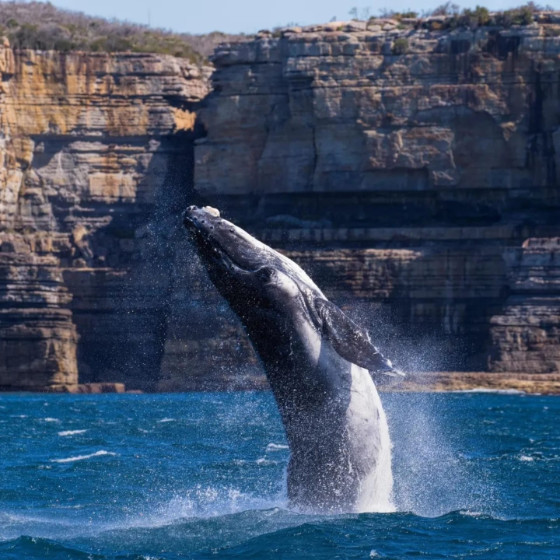
A few months ago, I jumped in the chilly waters to swim with whales, as a pod of over-excited humpback whales were tearing up the NSW South Coast on what’s known as the humpback highway.
Swimming with whales in Australia is still a fledging tourism activity – should we even be doing it?
This swim with whales is run by Jervis Bay ecotourism company Woebegone Freedive, and we also had whale scientist Dr Vanessa Pirotta on board, and together, we teased out the ethics of whale swimming and interaction, for this feature in the Sydney Morning Herald and The Age newspapers’ Traveller section.
For some whale background, every year, thousands of humpback whales migrate from the chilly waters of Antarctica to southern Australia, where the split around the continent – some going to the western coast, and others up the east coast, where they find their favourite creche to nurture and teach their babies about life on the humpback highway.
Interestingly, one of those creches is near Fraser Island, where I also spent my childhood. We never knew anything about whales, because by the 1960s, we’d killed most of them for a lucrative whaling industry.
Thankfully, Australia banned killing these marine giants, and the population has begun to swell again. Some scientists put the population at about 40,000, so now we can see them in places like Fraser Island, Warrnambool in Victoria and Albany in Western Australia which, ironically, was the site of Australia’s last whaling station. It now makes its money from tourism, as people come to see the majesty of the animals we used to slaughter.
The trip was hosted by Bannisters Hotels, which offers a stay-and-swim Mollymook Migration package https://www.bannisters.com.au/mollymook-migration/
To read my discussion about whether we should swim with whales, jump to https://www.smh.com.au/traveller/inspiration/i-swam-australia-s-humpback-highway-but-should-i-have-20240917-p5kbb7.html